
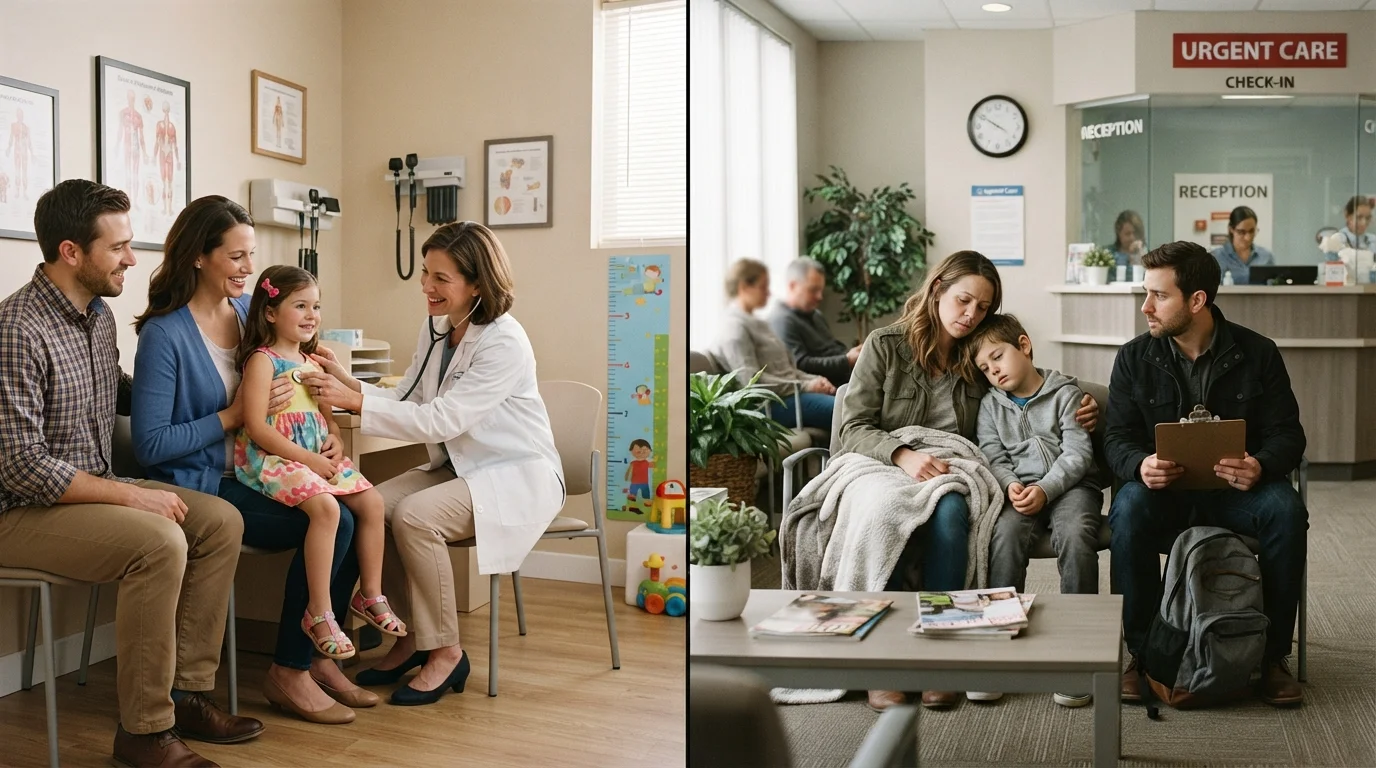
What Reactive Health Care Actually Looks Like
Reactive health care means responding to a problem after it shows up - a fever, a nagging cough, a sudden injury. It's the urgent care visit at 8 p.m. on a Sunday, the antibiotic prescription after strep has already swept through the household, the ER trip that catches something nobody saw coming.
There's nothing wrong with reactive care itself. It's essential. Medical treatment when you need it is one of the most important things a family can access. The concern arises when reactive care is the only framework a family operates within - when checkups get skipped because nothing hurts, or when symptoms get ignored until they escalate.
Relying heavily on reactive care also tends to create financial strain. Urgent visits, diagnostic tests, and emergency treatment typically cost more than routine prevention. Families who skip annual exams to save money often find themselves spending more when conditions surface later and more advanced. See why families keep skipping preventive appointments for a closer look at how this pattern plays out over time.
What a Proactive Approach Involves
Proactive health care is about building systems that make good health more likely - before anything goes wrong. It includes scheduled wellness exams, age-appropriate screenings, vaccinations, and daily habits that support physical and mental wellbeing. It's also about recognizing early warning signs rather than waiting until something is undeniable.
For families, proactive care looks like maintaining consistent sleep schedules, serving reasonably balanced meals, talking openly about stress and emotions, and keeping up with annual checkups for every family member. These aren't glamorous actions, but they compound over time. To understand what this looks like in structured practice, what preventive care really means for families breaks down the specific services involved beyond just the annual physical.
Mental health is a meaningful part of proactive family wellness too, and it's often overlooked. Starting mental health conversations at home is one of the most impactful proactive steps a family can take, particularly with children and teenagers.
| Reactive Care | Proactive Care | |
|---|---|---|
| When it kicks in | After symptoms or illness appear | Before problems develop |
| Typical setting | Urgent care, ER, sick visits | Annual exams, screenings, daily habits |
| Cost pattern | Higher per-episode, often unpredictable | Lower over time, more predictable |
| Planning required | Minimal - responds to need | Moderate - requires scheduling and consistency |
| Mental health inclusion | Rarely addressed unless crisis | Encouraged as part of routine wellness |
| Family health culture | Crisis-oriented, reactive mindset | Prevention-oriented, forward-looking |
Where Each Approach Falls Short
Reactive care's weakness is timing. By the time a problem demands attention, it may already be more serious - and more expensive - to address. It also creates a health culture in the household built around crisis rather than maintenance.
Proactive care isn't without limitations either. It requires consistency, planning, and some upfront investment of time and sometimes money. Families stretched thin by work schedules, cost pressures, or lack of access to primary care face real structural barriers to being proactive. Acknowledging those barriers honestly matters more than simply telling families to do better.
There's also a risk of over-medicalizing normal life. Proactive doesn't mean anxious. Not every headache needs a specialist visit. Some home health habits worth reconsidering draw a useful line between harmless supportive care and patterns that delay real treatment.
Start Smaller Than You Think You Need To
If building a proactive health routine feels overwhelming, pick just one anchor: schedule one overdue wellness visit for a family member this month. Research consistently suggests that establishing even a single recurring health habit makes others easier to add. Proactive health is built incrementally, not all at once.
Building a Realistic Balance for Your Family
The goal isn't to eliminate reactive care - it's to make sure it isn't the whole strategy. A workable balance for most families involves a few anchoring habits: annual wellness visits for kids and adults, consistent sleep and movement, and a household culture where health concerns get voiced rather than suppressed.
Small systems help here. A shared family calendar with checkup reminders, a go-to pediatrician or family doctor you trust, and a basic understanding of when symptoms warrant a call versus a wait - these are low-effort, high-return investments. For help turning these habits into something that actually sticks, see building a family health routine that actually sticks.
Most families won't get this perfectly right every year. That's normal. The shift from reactive-only to a more proactive posture doesn't require perfection - just a pattern of decisions that lean forward rather than waiting for the alarm to sound.
This article is for general informational and educational purposes only and does not constitute medical advice. Always consult a qualified healthcare professional for guidance specific to your family's health needs.