Why Start With a Foundation, Not a Full Closet
Most wardrobe frustration doesn't come from having too little - it comes from having a lot that doesn't connect. Shirts that match nothing, pants in sizes that don't quite fit, and a drawer full of impulse buys that seemed clever at the time. Sound familiar?
Building intentionally means starting small and expanding logically. This approach is part of a broader philosophy covered in the everyday American style guide: dress well without overspending by treating your wardrobe as a system, not a collection. Every piece should earn its spot.
Before adding anything new, it's worth taking stock of what you already own. A wardrobe audit helps you identify true gaps - so you're shopping to fill actual needs, not emotional ones.
Capsule wardrobe
A small collection of versatile, mix-and-match clothing items that covers most everyday needs without excess. The goal is maximum outfit combinations from minimum pieces.
Neutral palette
A color scheme built around tones like white, grey, black, navy, and tan that pair easily with each other and with accent colors, reducing mismatch risk.
Cost-per-wear
A way of thinking about clothing value: divide the item's price by how many times you expect to wear it. A pricier piece worn often can cost less per use than a cheap item worn rarely.
Wardrobe gap
A missing type of item that prevents you from completing certain outfits or covering specific occasions - distinct from wanting something new just for the sake of it.
Layering piece
An item worn over a base layer - like a blazer, cardigan, or denim jacket - that adds versatility by adjusting the formality or warmth of an outfit.
The Core Pieces Every Starter Wardrobe Needs
A starter wardrobe isn't about having the most pieces - it's about having the right ones. Versatile foundations typically fall into a few reliable categories:
- Bottoms: Well-fitting trousers or chinos in a neutral tone, a pair of dark jeans, and one casual option like straight-leg or relaxed shorts depending on your climate.
- Tops: A mix of plain crew-neck or V-neck tees in white, grey, or navy; one or two button-down shirts (chambray or Oxford cloth work across casual and semi-formal settings); and a light knit or pullover sweater.
- Layering pieces: A structured blazer, a denim jacket, or a versatile zip-up that can elevate or tone down an outfit.
- Footwear: Clean white sneakers, one pair of leather or leather-look shoes, and a casual sandal or boot depending on season.
Fit is non-negotiable at every price point. A well-fitted mid-range piece looks sharper than an ill-fitting premium one. When you're ready to go deeper on what works for your proportions, body-shape dressing principles can offer useful starting guidance.
Color Logic: How to Make Everything Work Together
Color is where most beginner wardrobes break down. When every piece is a different color family, nothing mixes easily - and you end up with more clothes but fewer outfits.
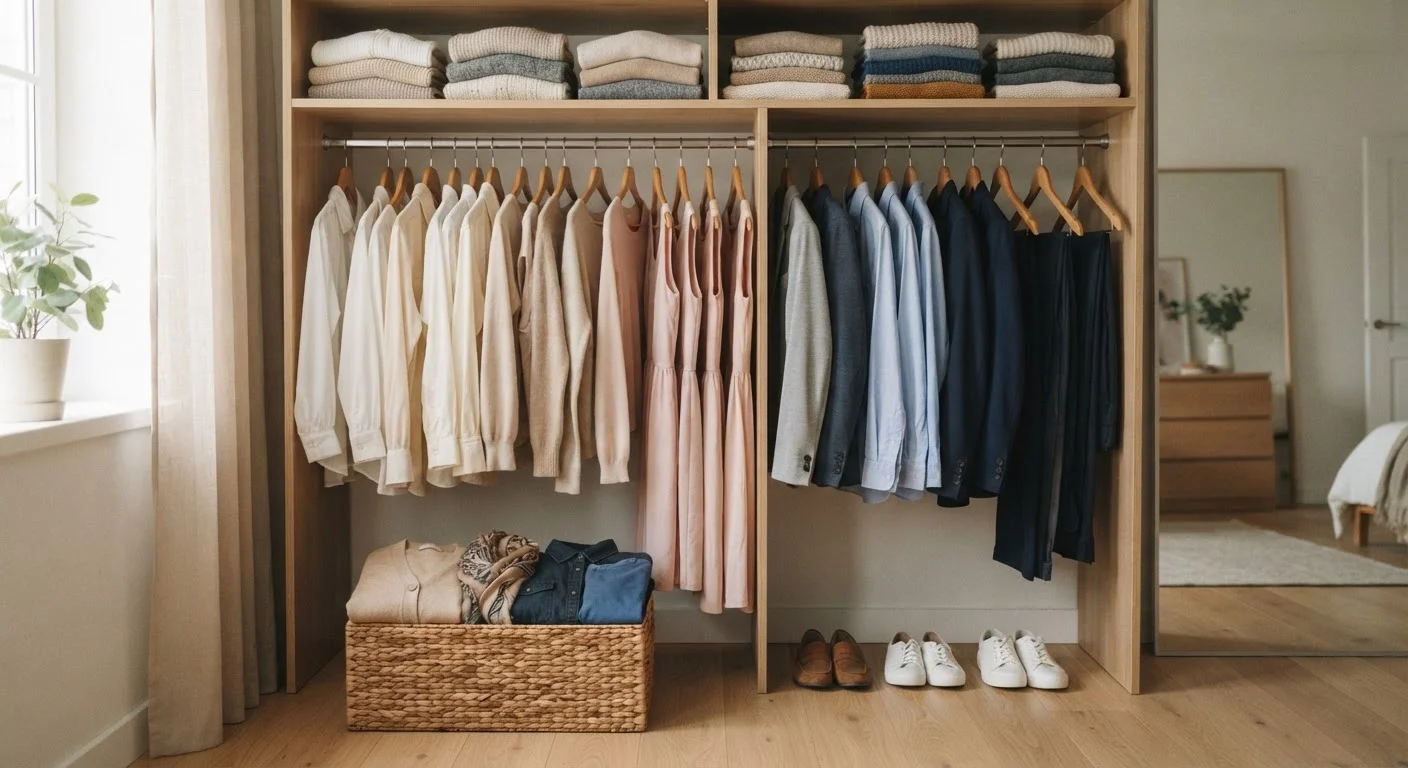
The simplest approach: build your base in neutrals, then add depth with one or two recurring accent colors. Neutrals include white, off-white, grey, navy, black, tan, and camel. These tones pair with each other and with almost any accent without effort.
The 80/20 Rule for Wardrobe Colors
A useful rule of thumb: aim for roughly 80% neutrals and 20% accent colors in your wardrobe. This ratio naturally produces cohesive outfits without making your closet feel monotonous. You can adjust the split as your confidence grows.
Once your neutral base is solid, choose one or two accent colors you genuinely like and are drawn to repeatedly - olive, burgundy, rust, and cobalt are popular choices that hold up across seasons. Keeping accent colors consistent prevents the wardrobe from fragmenting.
When you're ready to experiment with prints and patterns, pattern mixing principles break down how to combine them without clashing.
Shopping Habits That Prevent Costly Mistakes
The way you shop matters as much as what you buy. A few habits separate deliberate dressers from chronic impulse buyers:
- Make a list before you browse. Know what you're actually looking for - a specific type of item, a color, a function - before entering a store or opening an app.
- Apply the three-outfit rule. If you can't immediately picture three real combinations the new piece fits into, leave it.
- Prioritize fit over price. Alterations are possible, but buying something hoping it'll eventually feel right rarely works out.
- Understand occasion coverage. If you're unsure what level of formality a new piece works for, dress code guidance can clarify where different styles land.
Tying shopping to a broader spending strategy makes these habits stick. The smarter spending beginner's roadmap is a solid companion read for anyone approaching intentional purchasing for the first time.
Avoid Buying for a Hypothetical Life
One of the most common wardrobe mistakes is purchasing items for occasions you rarely encounter - formal events, travel, or a lifestyle you aspire to but don't currently live. Build for your actual week, not an imagined one. Aspirational pieces that go unworn are simply expensive clutter.
Building Outfits From What You Already Own
Once your foundation pieces are in place, the real skill is combination - getting maximum variety from a limited number of items. Think of your wardrobe as a small but well-stocked kitchen: great meals come from knowing how the ingredients interact, not from having every possible ingredient.
Start by identifying your three most-worn items. Build outward from those: what pairs with each? What's missing that would unlock more combinations? This exercise often reveals that one or two targeted additions - a versatile layering piece, a second neutral trouser - can multiply your outfit options significantly.
Seasonal shifts don't have to mean starting over, either. Seasonal wardrobe transition strategies show how layering and smart storage can stretch what you already own across changing weather without a full refresh.
Building a wardrobe is a gradual process, not a one-time event. Be patient, stay intentional, and trust that fewer, better choices compound into a closet that genuinely works for you.