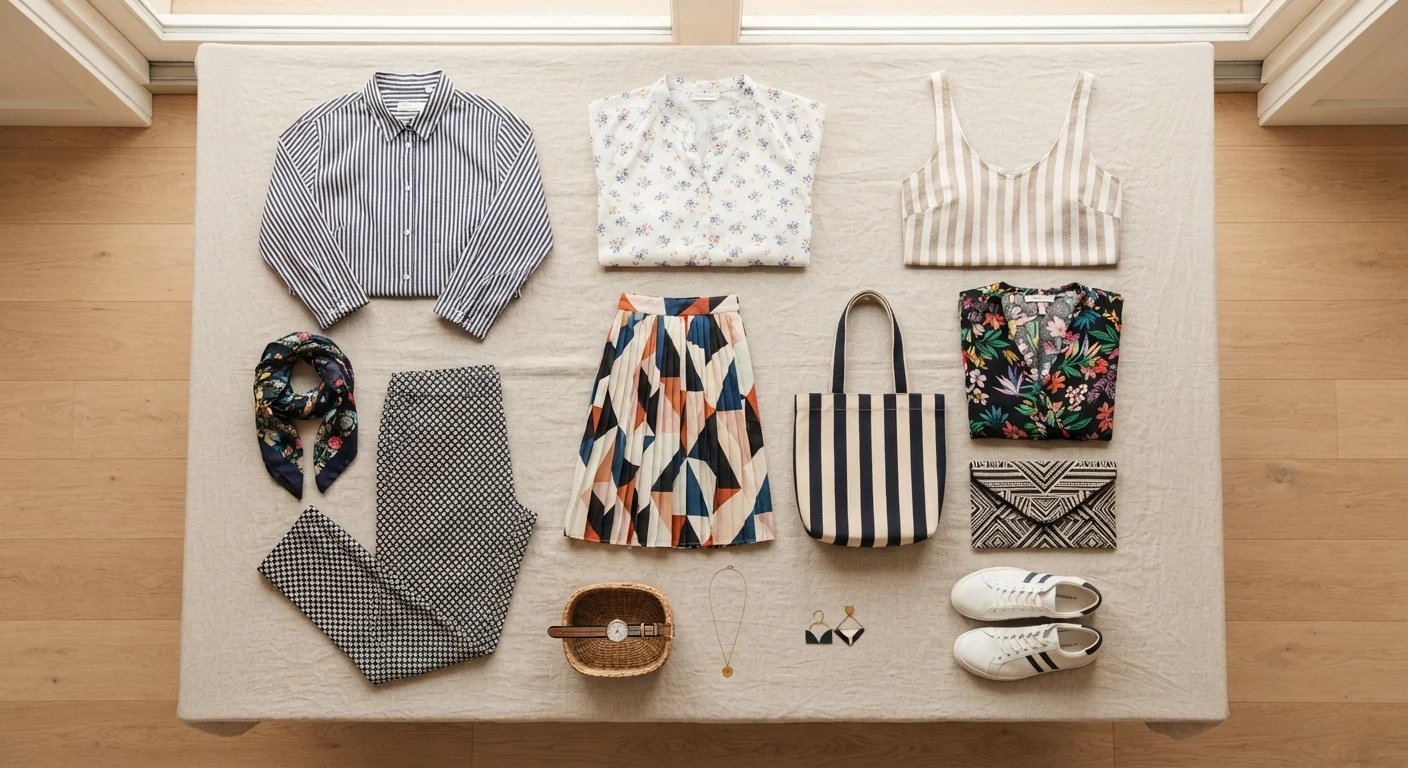

Where Body-Shape Rules Come From - and Why They're Imperfect
Body-shape dressing guides became widely popular in the mid-20th century, when fashion journalism needed accessible frameworks to help readers navigate clothing choices. The underlying idea - that certain silhouettes create visual balance on certain body types - has a genuine logic to it. Proportion and contrast do affect how an outfit reads. The problem isn't the concept itself; it's that the rules became rigid prescriptions rather than flexible principles.
Most published shape guides were written with a narrow range of body types in mind and assumed that the goal of dressing was always to approximate an hourglass silhouette. That assumption is simply outdated. Today, the more useful question is: what do I want this outfit to do for me? - whether that's looking polished at work, feeling comfortable on a long day, or expressing something personal about your style identity.
If you're starting from scratch building a wardrobe around your real preferences rather than prescribed rules, this end-to-end style guide offers a practical framework grounded in fit and function.
Myth
Every person fits neatly into one of five body shapes, and those shapes determine exactly what you should wear.
Fact
Body shapes exist on a spectrum, and most people don't fit cleanly into a single category - fit, proportion, and personal comfort are more reliable guides.
The classic shape categories - hourglass, pear, apple, rectangle, inverted triangle - were popularized by fashion media as a shorthand for styling advice. While they can offer a starting point, real bodies rarely match these idealized silhouettes precisely. Factors like torso length, shoulder slope, and weight distribution vary enormously. Focusing on how individual garments fit your actual body - rather than on which category you belong to - produces more consistent, satisfying results.
Myth
Horizontal stripes always make you look wider and should be avoided if you want to appear slimmer.
Fact
Research on optical illusions in clothing is more nuanced than the blanket rule suggests, and stripe width, color contrast, and garment cut all influence the effect.
The idea that horizontal stripes universally add visual width has been repeated so often it feels like fact. However, studies on visual perception - including work referenced by fashion academics - suggest the effect depends significantly on stripe thickness, contrast, and placement. A wide stripe in a low-contrast colorway on a well-fitted shirt may not 'widen' at all. More practically, if you love horizontal stripes, wearing them in the right fit is far more flattering than avoiding them entirely out of fear.
Myth
If you have a larger midsection, you should always wear loose, flowing tops to hide it.
Fact
Concealment is one approach, but structured garments that skim the body - rather than drape away from it - often create a more defined, intentional silhouette.
The instinct to 'hide' a body part with excess fabric often backfires. Very voluminous tops can add bulk rather than reduce it, because they obscure the waist and hips together. A better approach for many people is choosing pieces with some structure that follow the body's outline without clinging - a knit with a defined seam, or a button-down left open over a fitted layer. That said, comfort and confidence are individual: wear the silhouette that makes you feel most like yourself.
Myth
Petite people should avoid oversized clothing because it will overwhelm their frame.
Fact
Oversized silhouettes can absolutely work for petite people when proportions and styling are handled thoughtfully.
Proportional dressing is a real concept worth understanding - pairing volume on top with something fitted on the bottom, or vice versa, helps create visual balance. But the rule that petite people must always wear fitted clothes is too broad. An oversized blazer worn with slim trousers and a clean shoe creates a deliberate, editorial look that works at any height. The key is contrast: when one element is oversized, balance it with something more tailored elsewhere. See how proportion principles work in practice for more on this approach.
Myth
Wearing all black is the most reliable way to look slimmer and more polished.
Fact
All-black dressing can create a streamlined look, but tonal dressing in other colors works just as well, and color can actually enhance a polished appearance.
Black is versatile and easy to coordinate, which makes it a practical wardrobe anchor - but it isn't magic. A monochromatic outfit in any color creates a long, unbroken visual line that reads as intentional and put-together. Navy, camel, burgundy, and even soft grey produce similar effects. Over-relying on black can also make a wardrobe feel flat. Building a versatile foundation across several neutrals gives you far more to work with without sacrificing the streamlined look you're after.
Myth
Style rules are based on objective standards of beauty, so following them will always improve your appearance.
Fact
Most body-shape style rules reflect cultural beauty standards of a particular era - they are not objective or universal truths.
Fashion guidelines have historically been written to approximate a narrow beauty ideal that has shifted considerably across decades and cultures. Rules that once instructed people to 'minimize' certain features now look outdated as style culture has broadened. The most durable dressing advice isn't about achieving a specific silhouette - it's about fit, fabric quality, and personal coherence. If an outfit feels aligned with who you are, it reads as intentional and confident, which is the actual goal. As you build your own style language, identifying why outfits feel 'off' is often more instructive than memorizing prescriptive rules.
What Actually Works: Principles That Hold Up Regardless of Shape
While specific rules can be limiting, a few broader principles tend to serve most people well across a range of body types and style goals.
- Fit is the foundation. A well-fitted garment in an inexpensive fabric almost always looks better than a poorly fitted one in a luxury fabric. When trying something new, prioritize how it sits on your shoulders, chest, and waist before anything else.
- Proportion creates intention. Pairing something voluminous with something streamlined - a full skirt with a tucked-in top, or wide-leg trousers with a fitted knit - creates visual balance that reads as deliberate. This principle works across body types.
- Color coherence matters. Outfits that share a tonal family or a consistent level of saturation tend to look cohesive without much effort. This is more reliable than memorizing which colors flatter which skin tones.
- Comfort affects posture - and posture affects everything. If you're uncomfortable in an outfit, it shows. Clothes that allow you to move, sit, and breathe normally tend to look better in practice than anything you're managing rather than wearing.
Avoid Letting Rules Override How You Feel
Following style prescriptions too rigidly can lead to a wardrobe full of 'correct' pieces you never actually enjoy wearing. If you find that rule-based dressing causes stress or shame rather than helping you get dressed with ease, it may be doing more harm than good. Dressing well should feel achievable, not restrictive.
For a deeper look at how proportion principles apply to mixing patterns and layering, see this guide to proportion and everyday style.
Style Rules Should Serve You, Not Limit You
Body-shape dressing frameworks were developed as general guidance - not universal law. No style rule should make you feel that certain clothes are off-limits based on your size or shape. If a guideline helps you feel more confident, use it. If it doesn't, set it aside without guilt.
Using Rules as a Starting Point, Not a Finish Line
The most effective way to use body-shape dressing guides is as a prompt for exploration, not a prescription. If a guideline suggests A-line skirts work well for your shape, try one - but also try a straight-cut skirt, a wrap style, and a midi hem. Notice which fits you actually reach for, and let that real-world feedback guide your wardrobe decisions rather than the initial rule.
Fit inconsistencies across clothing brands can make rule-following tricky anyway. US sizing varies significantly between manufacturers, and what's labeled the same size in two different stores may fit very differently. Building the habit of trying items on - or carefully checking size charts and return policies when shopping online - will serve you far better than any shape-based guide. If your outfits still feel like they're missing something after focusing on fit, these common wardrobe mistakes are worth reviewing.
70%
Shoppers who say fit matters most
According to consumer research cited by the American Apparel & Footwear Association, fit is consistently ranked as the top factor in clothing satisfaction - above color, brand, or trend alignment.
1 in 3
Americans who discard unworn clothing annually
Industry surveys suggest a significant share of US consumers regularly donate or discard clothes they purchased but never wore, often linked to impulse buys driven by trend or rule-based shopping.
Ultimately, dressing well is a skill built through experimentation and self-awareness, not rule memorization. The goal is a wardrobe that works reliably for your real life - not one that conforms to a framework designed for a different era's beauty standards.