
What Makes These Two Types of Sugar Different
Chemically, sucrose is sucrose and fructose is fructose - your body doesn't carry a passport-check for where a sugar molecule originated. So why does the distinction between natural and added sugar matter at all? The answer lies in context: what else arrives in the food alongside the sugar.
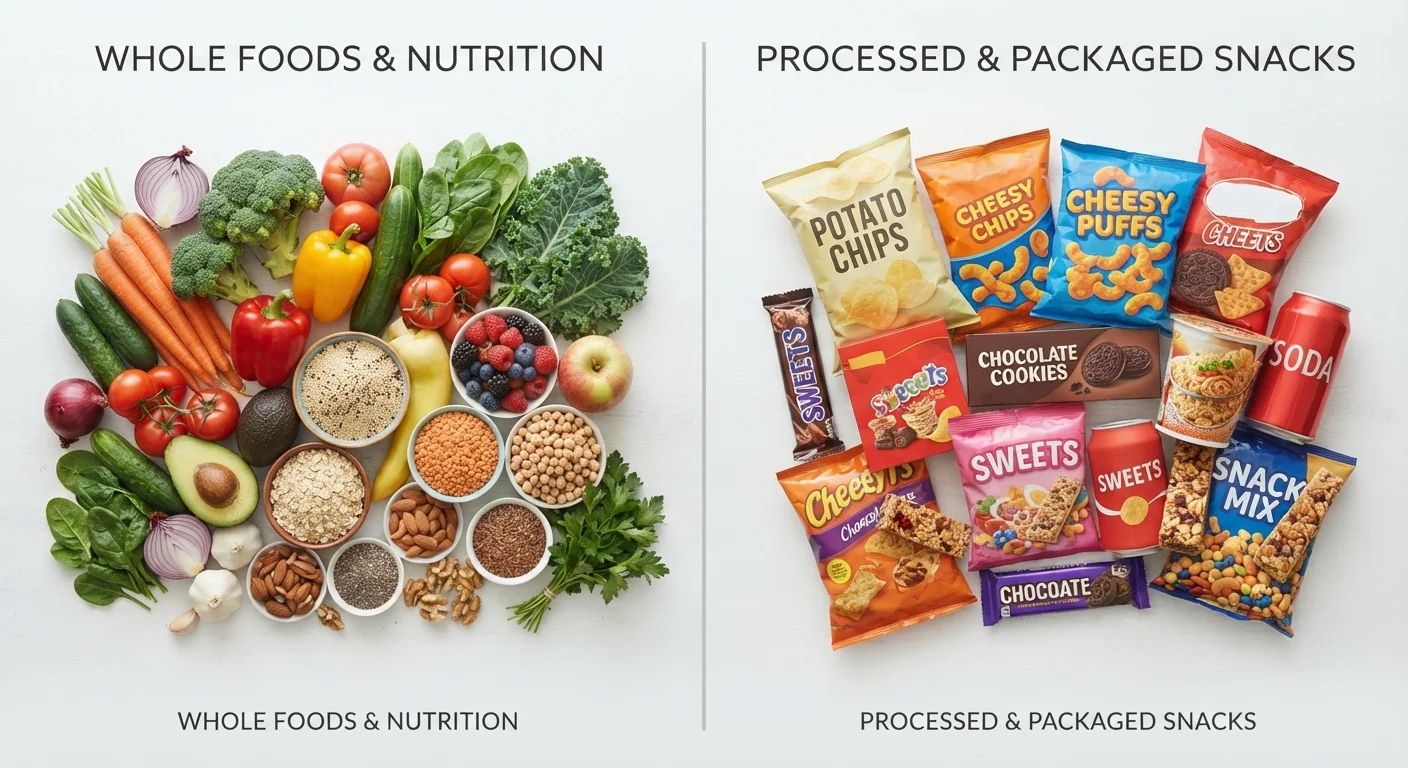
Natural sugars are those found inherently in whole, unprocessed foods - fructose in fruit, lactose in dairy, and various sugars in vegetables. These foods deliver their sweetness bundled with fiber, water, protein, vitamins, and minerals. That matrix slows digestion, moderates how quickly glucose enters the bloodstream, and contributes to feelings of fullness.
Added sugars, by contrast, are any sugars or caloric sweeteners introduced into a food or drink during manufacturing or preparation. This includes obvious candidates like table sugar and high-fructose corn syrup, as well as less recognizable names: agave nectar, cane juice, maltose, dextrose, and more than 60 other terms that can appear on ingredient lists. When these sugars are added, they rarely arrive with the fiber or nutrients that would slow their absorption. The result is a faster blood sugar response and calories without meaningful nutritional return - sometimes called "empty calories."
For a broader perspective on how processing affects what you eat, see our guide to whole foods vs. processed foods.
| Criterion | Natural Sugar | Added Sugar |
|---|---|---|
| Where it comes from | Inherent in whole foods (fruit, dairy, vegetables) | Introduced during manufacturing or cooking |
| Nutritional companions | Fiber, vitamins, minerals, water | Typically none; calories without nutrients |
| Absorption speed | Slowed by fiber and food matrix | Often rapid, especially in liquids |
| Blood sugar impact | Generally more gradual rise | Often sharper spike, particularly in beverages |
| Appears on labels as | Part of "Total Sugars" | "Added Sugars" line on Nutrition Facts |
| Primary health concern | Minimal at typical whole-food intake levels | Linked to metabolic and cardiovascular risk at high intake |
| Common examples | Fructose in apples, lactose in milk | High-fructose corn syrup, cane sugar, agave |
Why Health Guidelines Focus on Added Sugar
Public health recommendations have consistently targeted added sugars rather than those naturally occurring in whole foods. The Dietary Guidelines for Americans advise limiting added sugar to less than 10% of total daily calories. For a 2,000-calorie diet, that works out to roughly 50 grams - or about 12 teaspoons - per day. The American Heart Association sets an even stricter target for many adults.
17 tsp
Average daily added sugar intake for U.S. adults
CDC data indicates many American adults consume well above the recommended limit of roughly 12 teaspoons per day.
39g
Added sugar in a typical 12 oz. cola
A single can of regular soda can account for nearly an entire day's recommended added sugar allotment for many adults.
10%
Daily calorie cap for added sugar (Dietary Guidelines)
The Dietary Guidelines for Americans recommend keeping added sugar below 10% of total daily calories.
The reasoning is straightforward: populations consuming high amounts of added sugar show associations with elevated triglycerides, increased risk of type 2 diabetes, weight gain, and dental decay. These associations are studied in the context of added sugars in processed foods, not the sugars in a bowl of strawberries.
Since 2020, FDA regulations require the Nutrition Facts label on packaged foods to list "Added Sugars" as a distinct line beneath total sugars. This change was significant - previously, a consumer couldn't distinguish between the lactose naturally present in a yogurt and any sweeteners stirred in during production. Now that separation is visible at a glance.
A Note on "Natural" Sweetener Marketing
Products marketed with terms like "no refined sugar" or "sweetened with honey" still contain added sugars - honey and maple syrup count toward your added sugar total on a nutrition label. The source of an added sweetener doesn't change its classification. Read the Nutrition Facts panel rather than relying on front-of-package claims, which are not regulated the same way.
This article is for general informational and educational purposes only and is not a substitute for personalized medical or dietary advice. Always consult a qualified healthcare professional before making significant changes to your diet, especially if you have a health condition.