Hydration Is More Than a Drinking Habit
Most hydration advice focuses on how much water to drink each day. But the fuller picture includes everything that passes your lips - food included. Research consistently shows that the water naturally found in solid foods contributes meaningfully to the body's fluid needs, often accounting for roughly 20-30% of total daily intake for adults eating mixed diets.
This matters practically. If your meals lean heavily on fresh produce, soups, and whole foods, your baseline hydration is higher than someone eating mostly dry, processed foods - even if both people drink the same volume of water. Understanding this relationship helps you see hydration as a whole-diet habit rather than a simple numbers game.
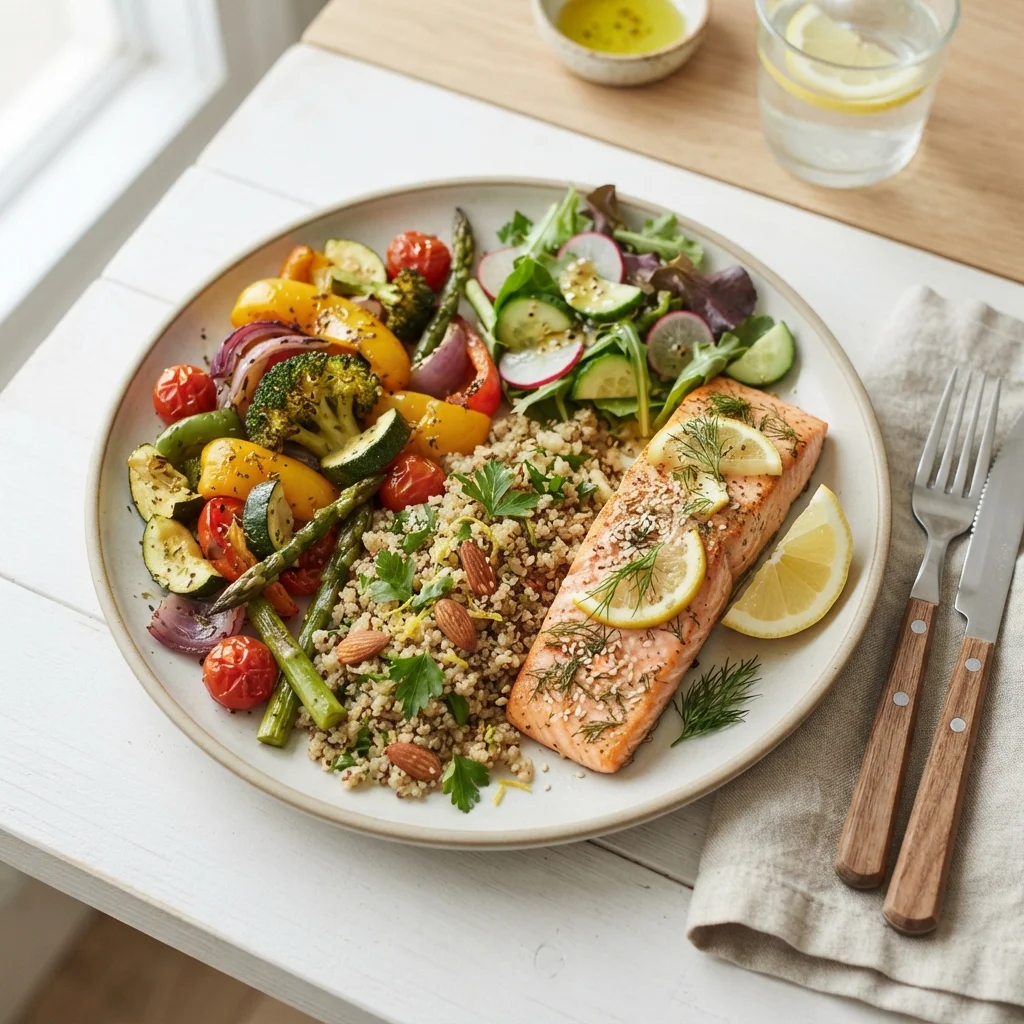
For a broader look at how food choices come together, see building a balanced plate for evidence-based meal assembly principles.
Foods That Work in Your Favor
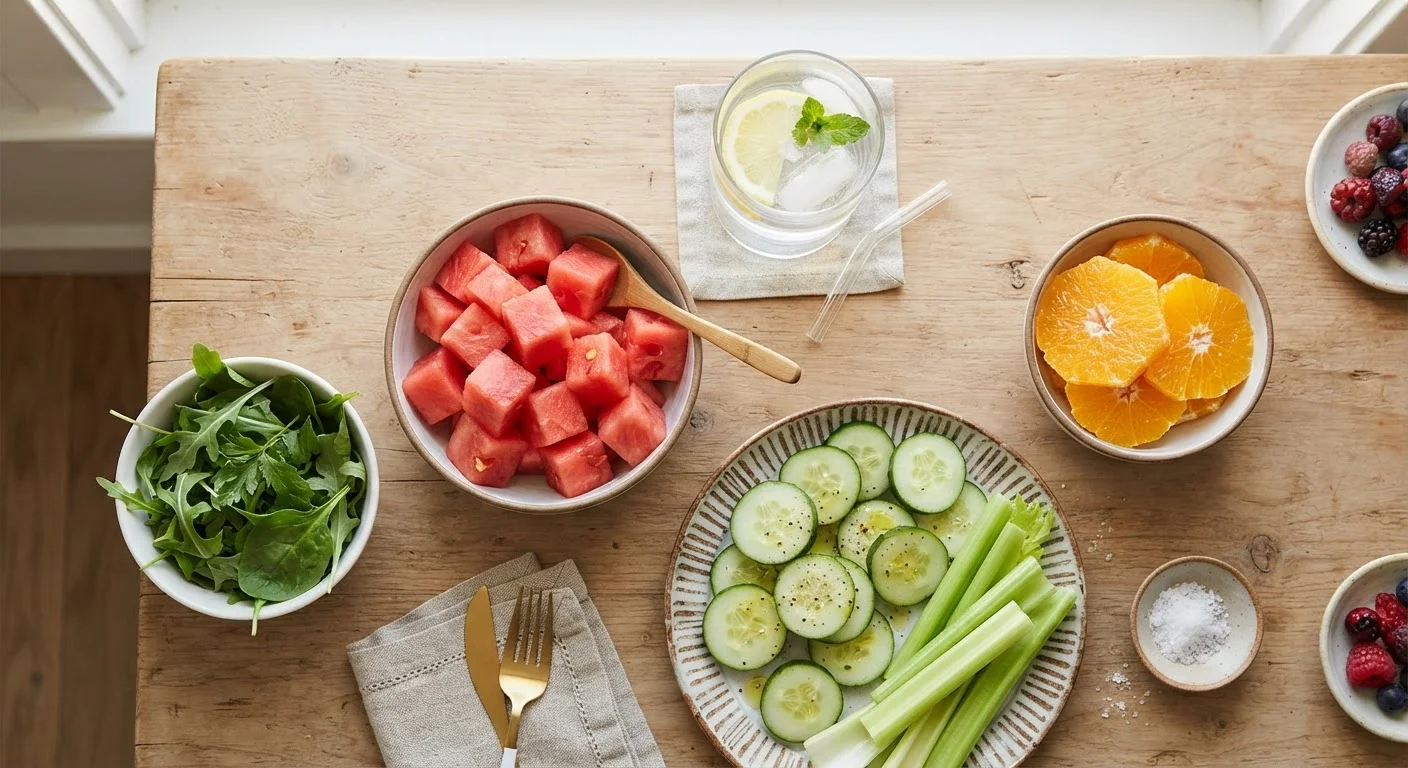
Some foods are surprisingly efficient hydrators. Water-dense fruits and vegetables do double duty - they supply fluid and nutrients simultaneously. Cucumbers and iceberg lettuce are over 95% water by weight. Watermelon, strawberries, celery, tomatoes, and oranges all exceed 90%. Even cooked oatmeal, which absorbs water during preparation, retains substantial moisture by the time it reaches your bowl.
20-30%
Of daily fluid intake from food
Nutrition research generally estimates that food contributes approximately 20-30% of total daily water intake in adults eating varied diets.
90%+
Water content in many fruits and vegetables
Foods like cucumber, watermelon, celery, and strawberries are composed of more than 90% water by weight, according to USDA food composition data.
~3.7L / ~2.7L
Daily total water intake reference values
The National Academies of Sciences set general adequate intake references of about 3.7 liters for men and 2.7 liters for women, covering all sources including food.
Soups and broths are another underappreciated source. A bowl of vegetable or chicken broth-based soup contributes a meaningful amount of fluid while also delivering sodium and electrolytes that support fluid retention in the body.
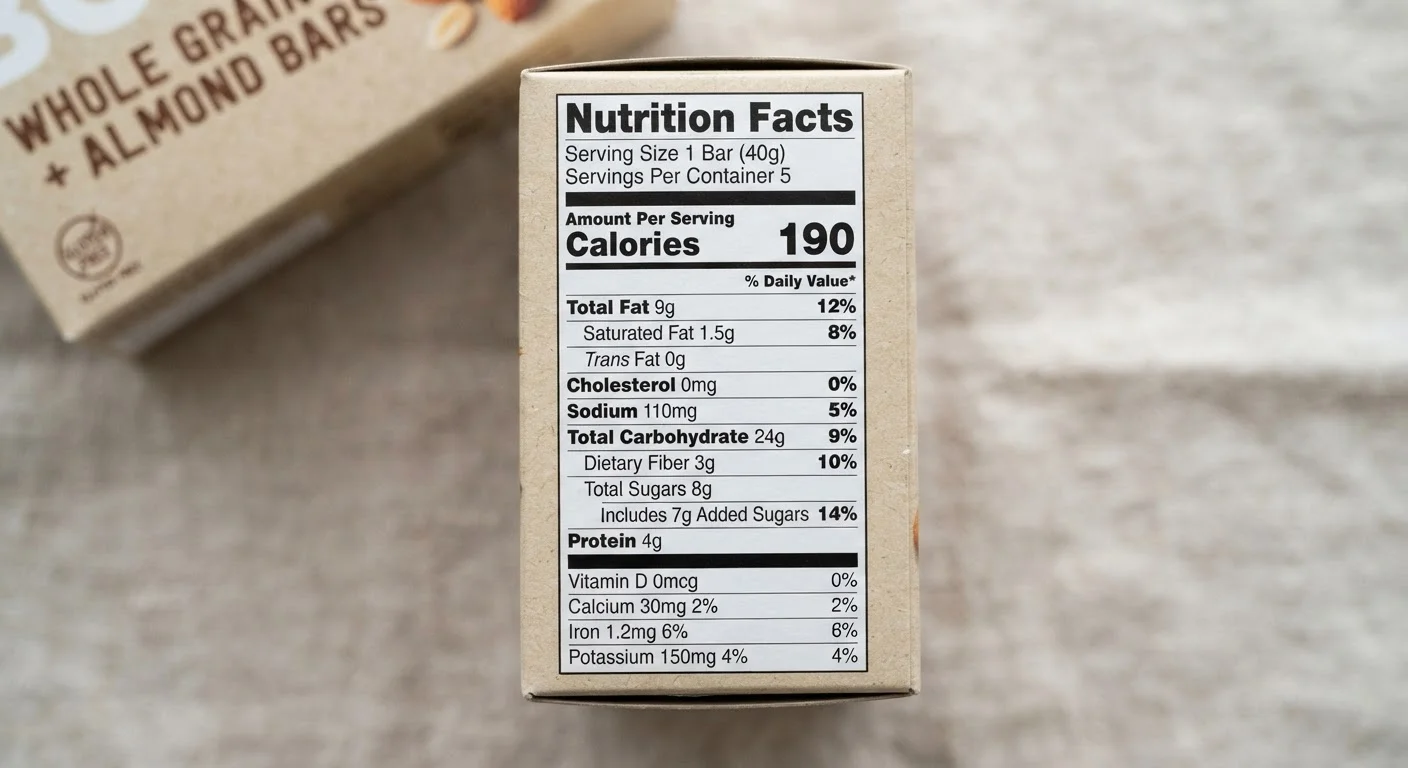
When planning meals, reading nutrition labels carefully can help you identify processed products with lower moisture content compared to whole-food alternatives.
Foods That Increase Your Fluid Needs
Just as some foods add to your hydration, others increase how much fluid your body requires. Sodium is the most significant factor. High-sodium foods - including cured meats, canned soups, fast food, and many packaged snacks - raise the osmotic pressure in your blood. Your kidneys respond by working to dilute and excrete the excess salt, which draws on your body's water reserves and amplifies thirst.
High-sugar foods and beverages create a similar dynamic. Concentrated sugar in the bloodstream pulls water out of cells through a process called osmosis, temporarily shifting fluid balance. This is part of why sugary drinks - despite containing water - can leave you feeling thirstier.
Use Meals as a Hydration Opportunity
Aim to include at least one water-rich food - fresh fruit, raw vegetables, or a broth-based soup - at each main meal. This habit builds a steady hydration baseline throughout the day rather than relying entirely on drinking large amounts of water at once. It also pairs hydration with nutrients your body uses alongside fluid.
Alcohol is another meaningful disruptor. It suppresses the hormone vasopressin, which normally signals the kidneys to conserve water. The result is increased urination and net fluid loss - one reason why alcohol consumption is commonly associated with next-day thirst and fatigue. These effects on mood and energy are explored further in habits that quietly undermine emotional balance.
Practical Strategies for Food-Based Hydration
You don't need to overhaul your diet to make meaningful improvements. A few consistent shifts go a long way:
- Build produce into most meals. A side salad, a piece of fruit, or raw vegetables as a snack all contribute fluid without any deliberate effort toward 'hydration.'
- Watch sodium in packaged foods. Not all sodium needs to be avoided, but being aware of high-sodium patterns helps you anticipate when you'll need to drink more. The dietary fiber guide also highlights how whole foods support multiple body systems at once.
- Choose whole foods over ultra-processed alternatives when possible. Fresh or minimally processed options tend to retain more natural moisture.
- Don't rely on thirst alone. Thirst is a late signal - especially in older adults. Eating water-rich foods throughout the day creates a steadier hydration baseline.
This article is for general informational purposes only and does not constitute medical or dietary advice. Individual hydration needs vary based on health status, activity level, climate, and other factors. Consult a qualified healthcare professional or registered dietitian for guidance specific to your situation.