What Your Auto Policy Actually Contains
Most drivers know they're required to carry auto insurance - but far fewer know exactly what's inside their policy. A standard auto policy is not a single protection; it's a bundle of several separate coverage types, each triggered by different events and each paying different people. Understanding what each piece does (and doesn't) cover is the foundation of making smart coverage decisions.
| Minimum coverage required | Liability only (in most states) (State insurance regulations vary; check your state's DMV or insurance commissioner) |
| What 'full coverage' typically means | Liability + Collision + Comprehensive (Industry convention; not a legally defined term) |
| Share of U.S. drivers uninsured | Approximately 1 in 8 (Insurance Research Council, 2023 estimate) |
| Collision vs. Comprehensive trigger | Collision = impact; Comprehensive = everything else (Standard industry definitions) |
| PIP availability | Required in ~12 no-fault states; optional or unavailable in others (National Conference of State Legislatures) |
| UM/UIM requirement | Mandatory in roughly half of U.S. states (Insurance Information Institute) |
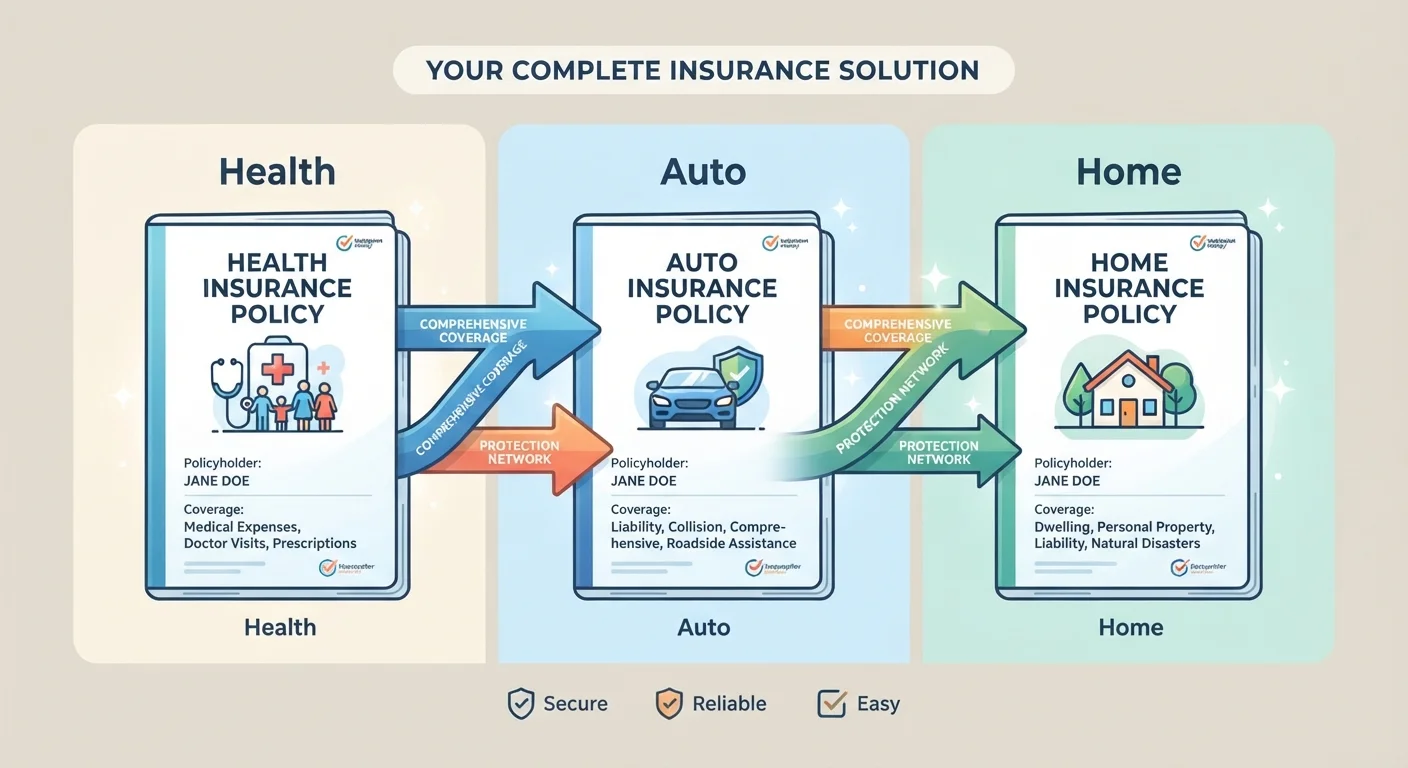
For a broader look at how auto coverage interacts with your health and home policies after an accident, see how these policies work together.
The Core Coverage Types, Explained
Liability
Liability is the baseline coverage required in nearly every state. It splits into two parts: bodily injury liability, which pays for injuries you cause to other people, and property damage liability, which pays for damage you cause to others' vehicles or property. Neither pays for your own injuries or vehicle damage. Policy limits are typically expressed as three numbers - for example, 25/50/25 - representing per-person injury limit, per-accident injury limit, and property damage limit, all in thousands of dollars.
Collision
Collision coverage pays to repair or replace your own vehicle when it's damaged in an impact - whether that's hitting another car, a guardrail, or a telephone pole. It applies regardless of who caused the accident. You'll pay your deductible first; the insurer covers the rest up to the vehicle's actual cash value.
Comprehensive
Despite the name, comprehensive doesn't cover everything - it covers damage to your vehicle from causes other than collision. Think theft, vandalism, fire, hail, flooding, or striking an animal. Like collision, it's subject to a deductible. Lenders typically require both collision and comprehensive when you finance or lease a vehicle.
Uninsured and Underinsured Motorist (UM/UIM)
If you're hit by a driver who has no insurance - or not enough to cover your losses - UM/UIM coverage steps in. It can cover your medical bills, lost wages, and sometimes vehicle repair. Given that roughly 1 in 8 drivers on U.S. roads carries no insurance at all, this coverage fills a real gap. See our article on what happens when policy limits fall short for more context.
Coverage Requirements Vary by State
Every state sets its own minimum auto insurance requirements, and not all coverage types are mandatory everywhere. For example, Personal Injury Protection is required in no-fault states but optional or unavailable in others. Always check your state's specific rules - and read your actual policy documents - before assuming any coverage is included. A licensed insurance agent can clarify what applies in your situation.
Personal Injury Protection (PIP) and Medical Payments (MedPay)
Both of these coverages pay medical costs for you and your passengers after an accident, regardless of fault. PIP is broader - it can also cover lost wages and rehabilitation - and is mandatory in no-fault states. MedPay is a narrower, optional add-on available in most states. Neither replaces your health insurance, but they can cover costs quickly while fault is still being determined.
Liability Coverage
Pays for injuries or property damage you cause to others in an at-fault accident. It does not cover your own vehicle or your own injuries.
Collision Coverage
Pays to repair or replace your vehicle after it collides with another car or object, regardless of who is at fault. Subject to your chosen deductible.
Comprehensive Coverage
Covers damage to your vehicle from events other than collisions - such as theft, fire, hail, flood, or hitting an animal. Also subject to a deductible.
Uninsured/Underinsured Motorist (UM/UIM)
Covers your costs when the at-fault driver either has no insurance or carries limits too low to pay your full damages.
Personal Injury Protection (PIP)
Pays medical expenses - and sometimes lost wages - for you and your passengers after an accident, regardless of fault. Required in no-fault states.
Medical Payments (MedPay)
A narrower, optional coverage that pays medical bills for you and your passengers after an accident regardless of fault, but does not cover lost wages.
Deductible
The dollar amount you agree to pay out of pocket before your insurer pays the rest of a covered claim. Higher deductibles generally lower your premium.
Policy Limit
The maximum dollar amount your insurer will pay for a covered loss. Damages above this limit are your responsibility.
Putting It Together: Liability-Only vs. Full Coverage
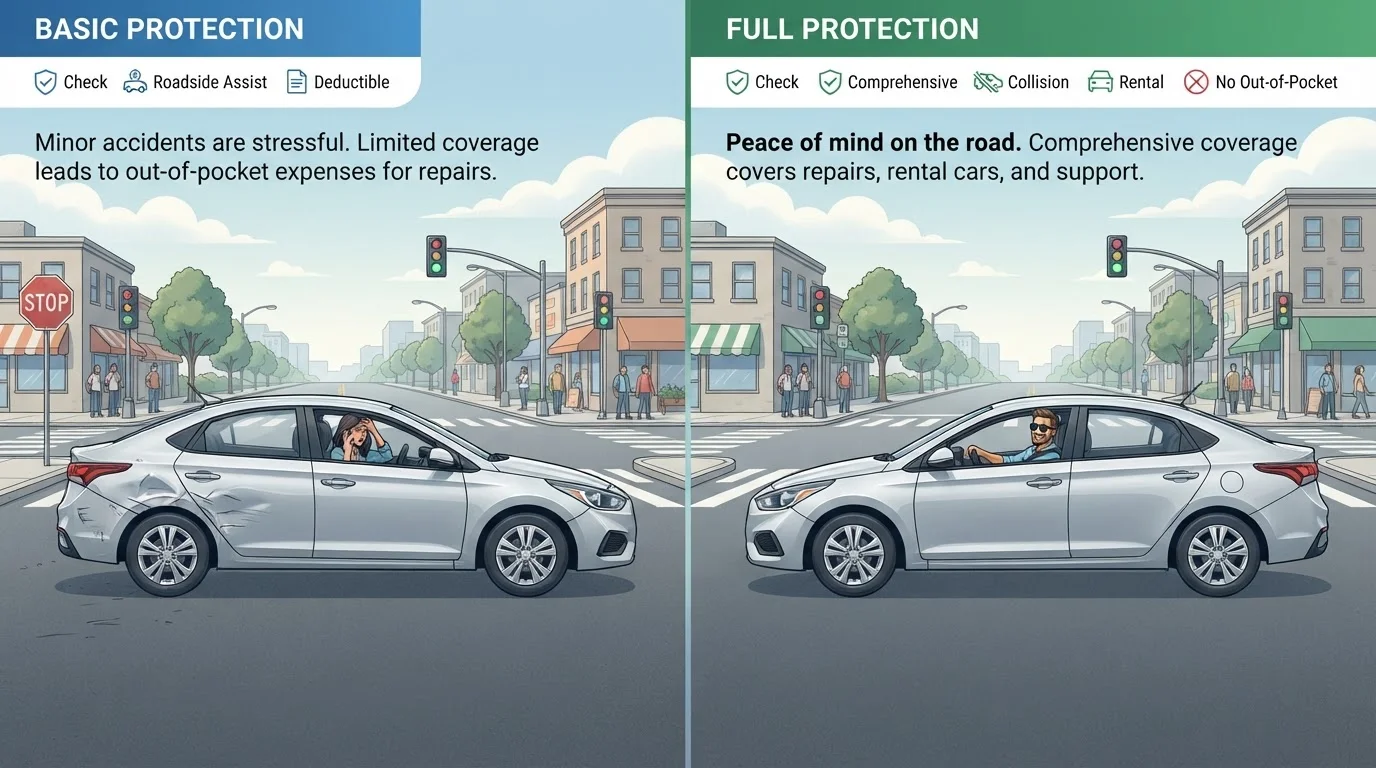
The term "full coverage" gets used loosely, but it generally means carrying liability, collision, and comprehensive together. Liability-only is cheaper, but it leaves your own vehicle unprotected. The right choice depends on your vehicle's value, your financial cushion, and any lender requirements. Our companion piece explains the liability vs. full coverage distinction in plain terms.
For additional coverage options that patch holes standard policies leave behind - like gap insurance or rental reimbursement - see supplemental coverage options. And if you want to understand how every cost term in your policy fits together, the full picture of insurance costs reference covers deductibles, premiums, and more in one place.
Your State Insurance Commissioner
Each state has an insurance commissioner's office that publishes minimum coverage requirements and consumer complaint resources. Search '[your state] department of insurance' to find official guidance.
NAIC Consumer Insurance Search
The National Association of Insurance Commissioners maintains a free tool to look up licensed insurers and review complaint data - useful when researching coverage options.
This article is for general informational and educational purposes only and does not constitute personalized insurance, financial, or legal advice. Coverage types, requirements, and terms vary by state and by insurer. Read your actual policy documents carefully and consult a licensed insurance agent or adviser for guidance specific to your situation.