What Liability Coverage Actually Covers
Every state (except New Hampshire and Virginia, which have alternatives) requires drivers to carry a minimum level of liability insurance. But what does that actually buy you?
Liability coverage pays for harm you cause to other people in an accident - their medical bills, their vehicle repairs, and sometimes their lost wages if you're found at fault. It has two parts:
- Bodily injury liability: Covers medical costs and related expenses for people you injure.
- Property damage liability: Covers repairs or replacement of the other driver's vehicle or any other property you damage.
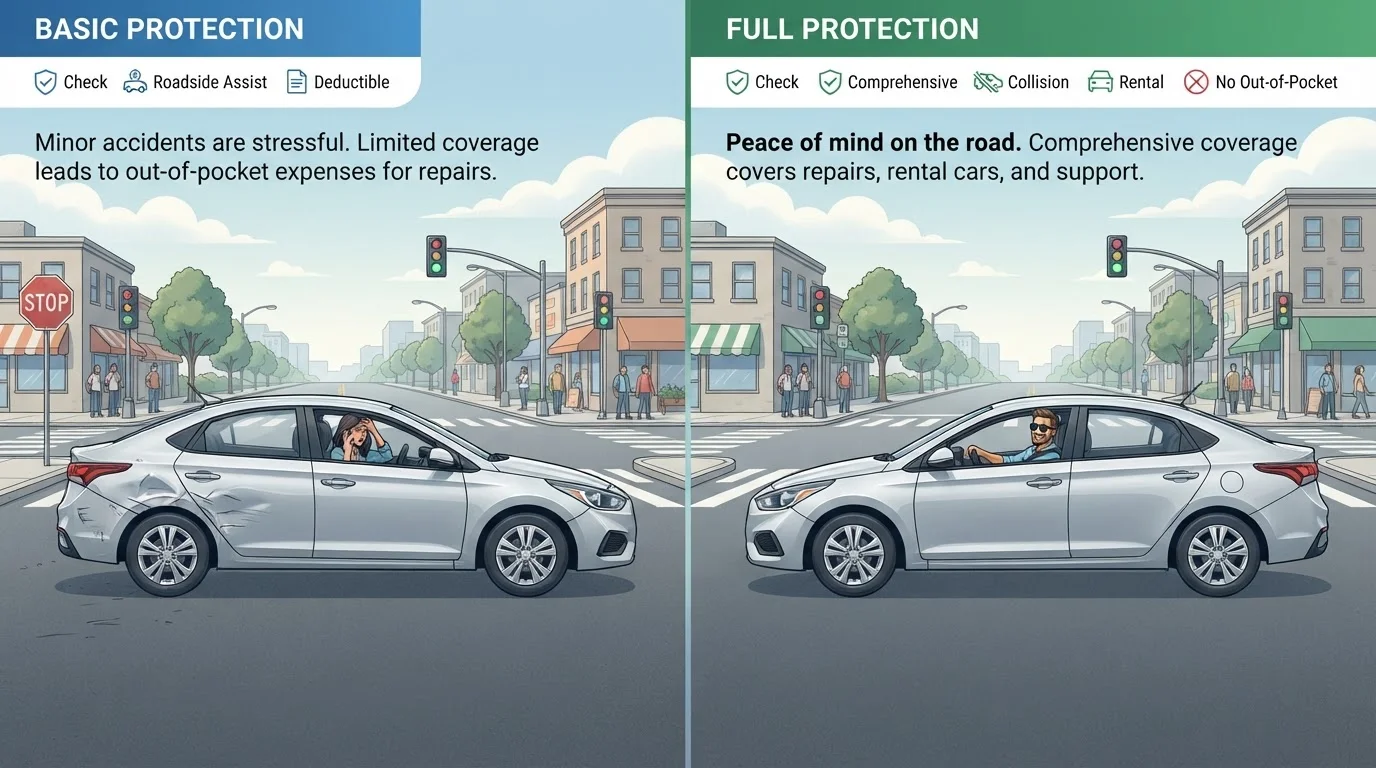
What liability does not cover is your own car. If you cause an accident and your vehicle is damaged, a liability-only policy leaves you paying for those repairs entirely out of pocket.
Policy limits - the maximums your insurer will pay - are expressed as three numbers (for example, 25/50/25). Understanding those numbers matters a lot, because if the damages exceed your limit, you're personally responsible for the difference. See our guide to underinsurance for a closer look at how that gap can catch drivers off guard.
What "Full Coverage" Really Means
"Full coverage" isn't an official insurance term - no insurer sells a policy by that name. In practice, it refers to a policy that bundles liability together with two additional coverages: collision and comprehensive.
- Collision: Pays to repair or replace your own vehicle after a crash, regardless of who's at fault.
- Comprehensive: Covers non-collision damage to your vehicle - think theft, fire, hail, flooding, or a deer strike.
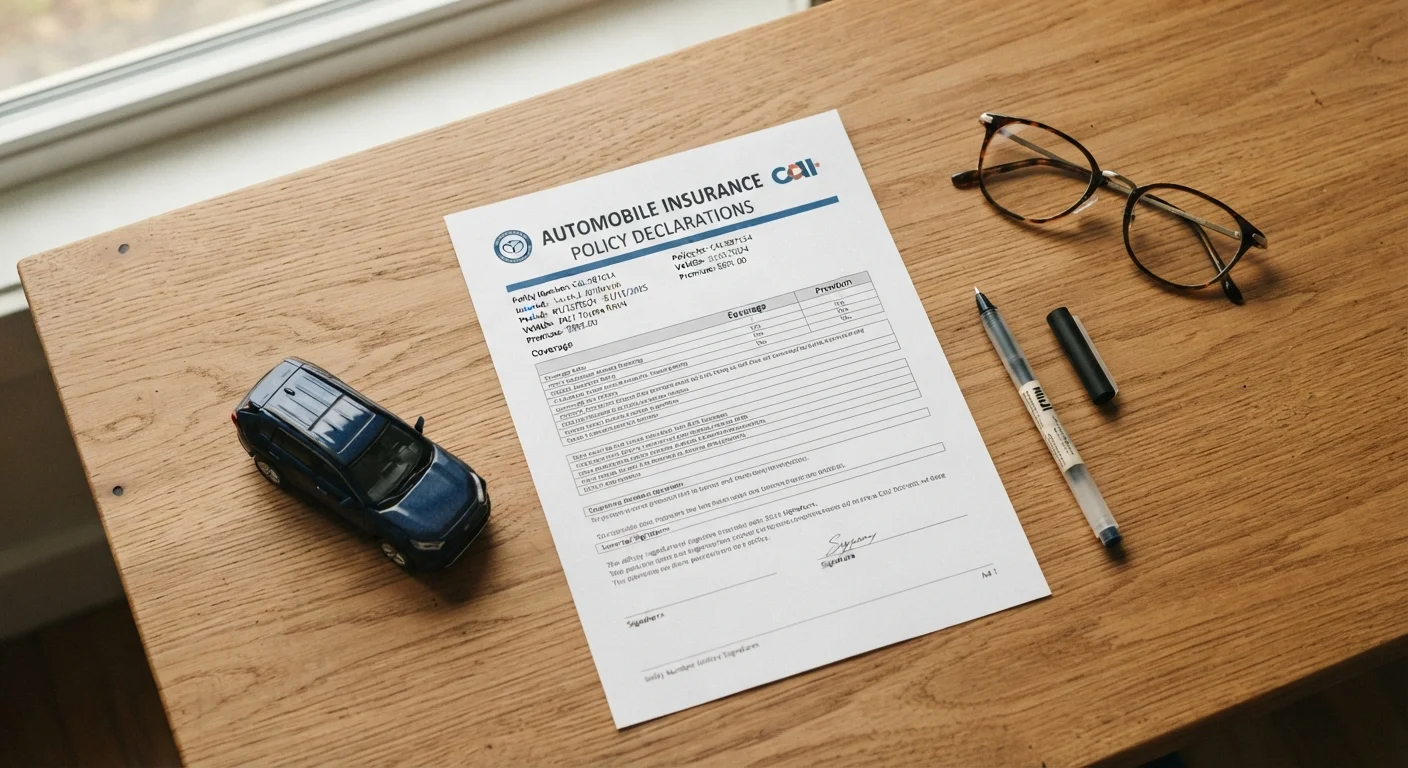
Together, these three coverages protect you from a much broader range of financial losses. But because "full coverage" is informal shorthand, two policies sold under that description can differ meaningfully in their limits, deductibles, and exclusions. Always read the actual declarations page to understand what you're getting.
For a plain-language breakdown of each coverage type - including uninsured motorist protection, which full coverage doesn't automatically include - see Auto Insurance Coverage Decoded.
| Criterion | Liability Coverage | Full Coverage |
|---|---|---|
| Covers damage to others | Yes | Yes |
| Covers your own vehicle in a crash | No | Yes (collision) |
| Covers theft, weather, animals | No | Yes (comprehensive) |
| Required by state law | Yes (most states) | No (but lenders may require it) |
| Required for financed/leased vehicles | Typically insufficient | Yes, typically required |
| Typical premium cost | Lower | Higher |
| Deductible applies to your vehicle | N/A | Yes |
How to Decide Which One Makes Sense for You
The right choice depends on a few practical factors, not a one-size-fits-all rule.
Your vehicle's current market value
A common rule of thumb: if your annual collision and comprehensive premiums plus your deductible exceed 10% of your car's value, full coverage may not pay off financially. An older vehicle worth $3,000 may not justify the added premium cost.
Whether you have a loan or lease
If a lender or lessor has a financial interest in your vehicle, they almost always require you to carry collision and comprehensive coverage. This isn't optional - it's a loan condition.
Your ability to absorb a loss
If your car were totaled tomorrow, could you cover a replacement without insurance proceeds? If not, full coverage provides a meaningful safety net. This is a personal financial question, not an insurance one.
~80%
U.S. drivers carrying collision coverage
According to the Insurance Research Council, the majority of U.S. drivers opt into collision coverage beyond the state-required liability minimum.
1 in 8
Drivers on the road without insurance
The Insurance Research Council estimates roughly one in eight U.S. drivers is uninsured, underscoring why uninsured motorist coverage is worth considering separately.
It's also worth knowing that neither coverage type fills every gap. Standard auto policies commonly exclude things like personal belongings stolen from your car or rideshare use. Our article on coverage blind spots in common policies walks through what often gets missed.
This article is for general informational purposes only and does not constitute personalized insurance, financial, or legal advice. Coverage terms, limits, exclusions, and requirements vary by provider, policy, and state. Always read your actual policy documents and consult a licensed insurance agent or adviser for guidance specific to your situation.