
How Underinsurance Happens Without Anyone Noticing
Most people buy a policy, pay their premiums, and assume they're covered. The problem is that coverage limits are usually set once - at the time of purchase - and then quietly left in place year after year. Meanwhile, the cost of replacing what you own keeps changing.
For homeowners, construction labor and material costs have climbed substantially over time. A dwelling limit that was accurate five years ago may now fall well short of what it would actually cost to rebuild. The same logic applies to personal property: if you've added furniture, electronics, or other valuables since your last policy review, your contents coverage may be lagging behind.
Health plans can carry their own form of underinsurance, particularly policies with low annual benefit limits or high out-of-pocket exposure for certain treatments. Auto policies set with state minimum liability limits are another common example - those limits may not come close to covering a serious accident's real costs.
Underinsurance rarely announces itself. It shows up at the worst possible moment: when you file a claim and discover the payout doesn't cover the bill. See our overview of coverage gaps for a broader look at where blind spots tend to hide.
The Coinsurance Clause: A Hidden Multiplier
Property insurance policies - particularly commercial and some homeowners policies - often include a coinsurance clause. This provision requires you to carry coverage equal to at least a set percentage of your property's full replacement value, commonly 80%. If you don't, the insurer can reduce your claim payout proportionally, even on a partial loss.
Here's a simplified illustration of how the math works:
- Your home's full replacement cost: $400,000
- Required coverage at 80%: $320,000
- Your actual coverage limit: $240,000 (only 60% of value)
- A covered loss costs: $80,000
- Payout after coinsurance penalty: roughly $60,000 - not the full $80,000
The insurer calculates the ratio of what you carried versus what you should have carried, then applies that ratio to the claim. Many policyholders don't know this clause exists in their policy until a claim is processed short of what they expected.
Coinsurance Terms Vary by Policy
Coinsurance clauses vary by policy and insurer. The exact percentage, how replacement value is calculated, and whether the clause applies to partial or total losses all depend on your specific policy language. Always read your declarations page and policy document - and ask your agent to explain any coinsurance provision before a loss occurs.
Coinsurance clauses vary by policy and insurer. The exact percentage, how replacement value is calculated, and whether the clause applies to partial or total losses all depend on your specific policy language. Always read your declarations page and policy document - and ask your agent to explain any coinsurance provision before a loss occurs.
Where Underinsurance Shows Up Most Often
While any type of policy can be underinsured, a few categories are especially prone to coverage shortfalls in practice.
~$1.6T
Estimated global underinsurance gap in natural catastrophes
Swiss Re Institute has estimated that a significant share of global catastrophe losses each year are uninsured or underinsured, reflecting a persistent protection gap across both commercial and personal lines.
~75%
U.S. homes potentially underinsured
Insurance industry analysts, including CoreLogic, have noted that a large majority of U.S. residential properties may carry dwelling coverage below current rebuild costs, particularly after years of rising construction expenses.
Homeowners Insurance
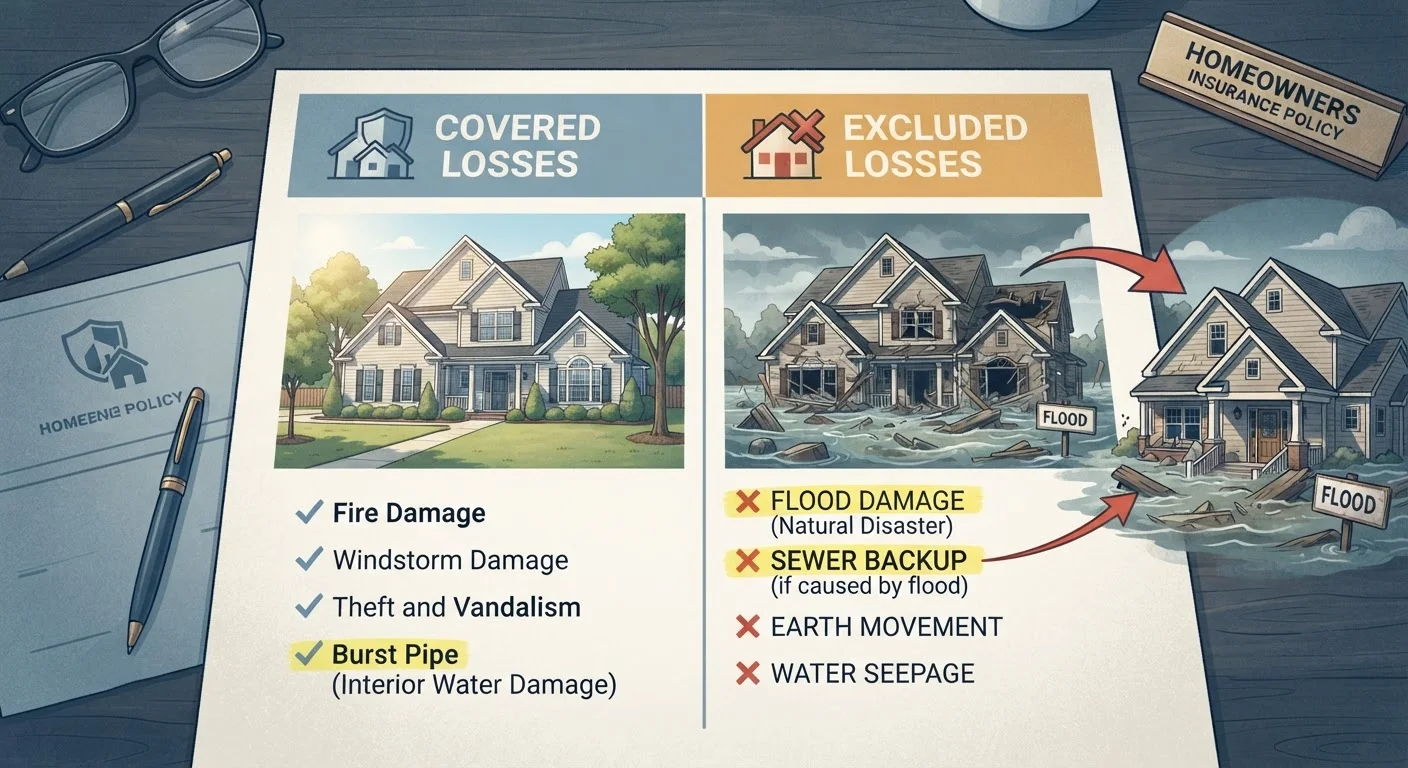
Rebuild costs change with the construction market. A home insured years ago at its then-current replacement cost may be significantly underinsured today. Renovations and additions that weren't reported to the insurer compound the gap. Certain perils are also excluded outright, which is a separate but related risk.
Auto Liability Coverage
State minimum liability limits are designed to satisfy legal requirements, not to fully compensate a seriously injured third party. If you cause an accident with significant injuries or property damage, a minimum-limit policy may be exhausted quickly - leaving your personal assets exposed to the remainder.
Health Insurance
Short-term health plans and some limited-benefit plans cap payouts at relatively low dollar amounts. A hospitalization or specialist course of treatment can exceed those limits faster than most people anticipate. Understanding how out-of-pocket maximums work is one way to gauge your real financial exposure under any health plan.
Checking Your Own Coverage Limits
You don't need to be an insurance expert to do a basic underinsurance check. A few concrete steps can reveal whether your limits are still appropriate.
- Pull your declarations page. This summary lists your coverage limits for each category. It's the starting point for any review.
- Compare dwelling coverage to current rebuild cost. Your insurer, agent, or a licensed contractor can help estimate what it would cost to rebuild your home today - not what it would sell for, but what it would cost to reconstruct.
- Inventory your personal property. Walk through your home and document what you own. Compare the total replacement value to your personal property limit.
- Review liability limits across auto and home. If your limits feel thin, look at whether an umbrella policy could add cost-effective coverage above your existing limits.
- Check after life changes. Renovations, major purchases, new family members, and income changes all affect your coverage needs. Use our household coverage checkup guide to work through the categories systematically.
Review Limits at Every Renewal
Don't treat your renewal as a formality. Use it as a prompt to compare your current limits against today's replacement costs - especially for your home and vehicle. A quick conversation with a licensed agent once a year costs nothing and can prevent a painful shortfall after a loss.
This article provides general information about insurance concepts and is not personalized insurance or financial advice. Coverage terms, limits, exclusions, and regulations vary by provider, policy, and state. Always read your actual policy documents and consult a licensed insurance agent or adviser for guidance specific to your situation.