
The Premium: Your Monthly Membership Cost
A premium is the amount you pay each month to maintain your health insurance coverage. It is due whether you visit a doctor once, a dozen times, or not at all. Think of it like a subscription - you pay to keep the policy in force.
For people covered through an employer, the employer often pays part of the premium and deducts the rest from your paycheck. If you buy a plan on your own through the ACA marketplace, you pay the full premium directly, though you may qualify for a tax credit that lowers that cost depending on your income.
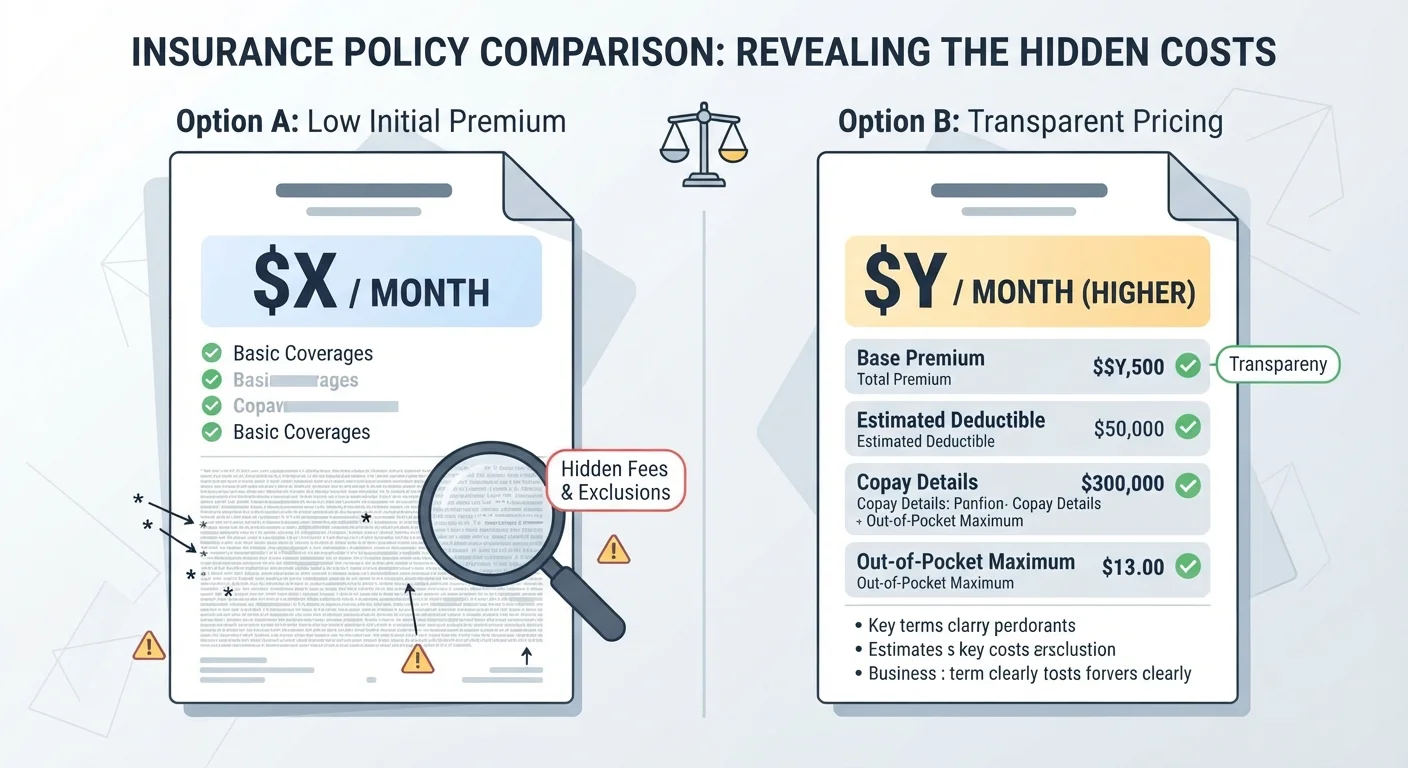
A lower premium sounds like a better deal, but it almost always comes with trade-offs. A low premium doesn't always mean a cheaper policy - high deductibles and coinsurance can cost you significantly more when you actually need care.
Check What Counts Toward Your Deductible
Not all costs count toward your deductible equally. Copays, for instance, may or may not apply depending on your specific plan. Before you assume a service will count, check your Summary of Benefits and Coverage (SBC) - a standardized document every insurer is required to provide. It lists exactly which services are subject to the deductible and which are not.
The Deductible: What You Pay Before Insurance Kicks In
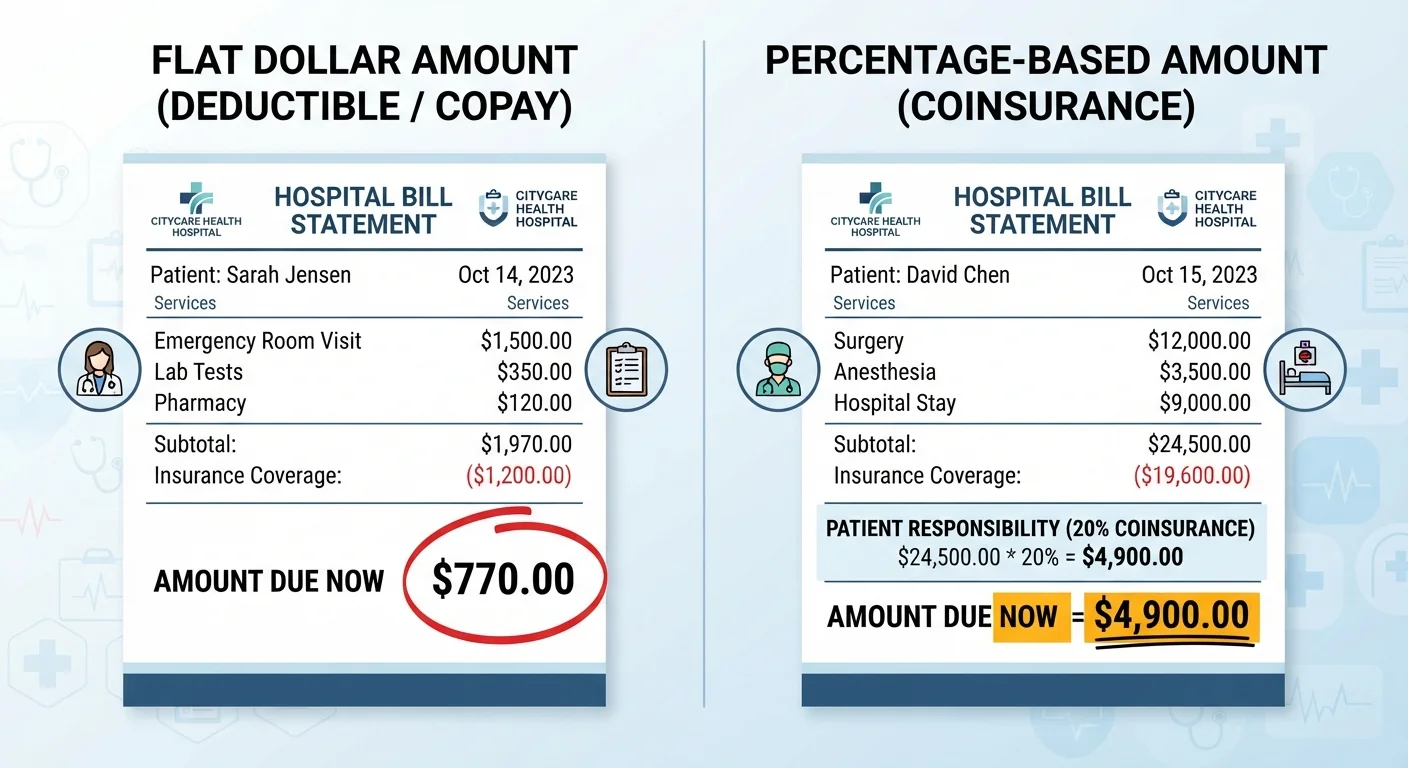
A deductible is a fixed dollar amount you must pay for covered medical services before your insurer starts sharing the cost. If your deductible is $1,500, you are responsible for the first $1,500 in covered medical bills each plan year.
Not every service applies to your deductible in the same way. Many plans cover preventive care - like annual checkups - at no cost, even before you've met your deductible. Other services, like specialist visits, hospital stays, and lab work, typically count toward it. Always check what your specific plan counts.
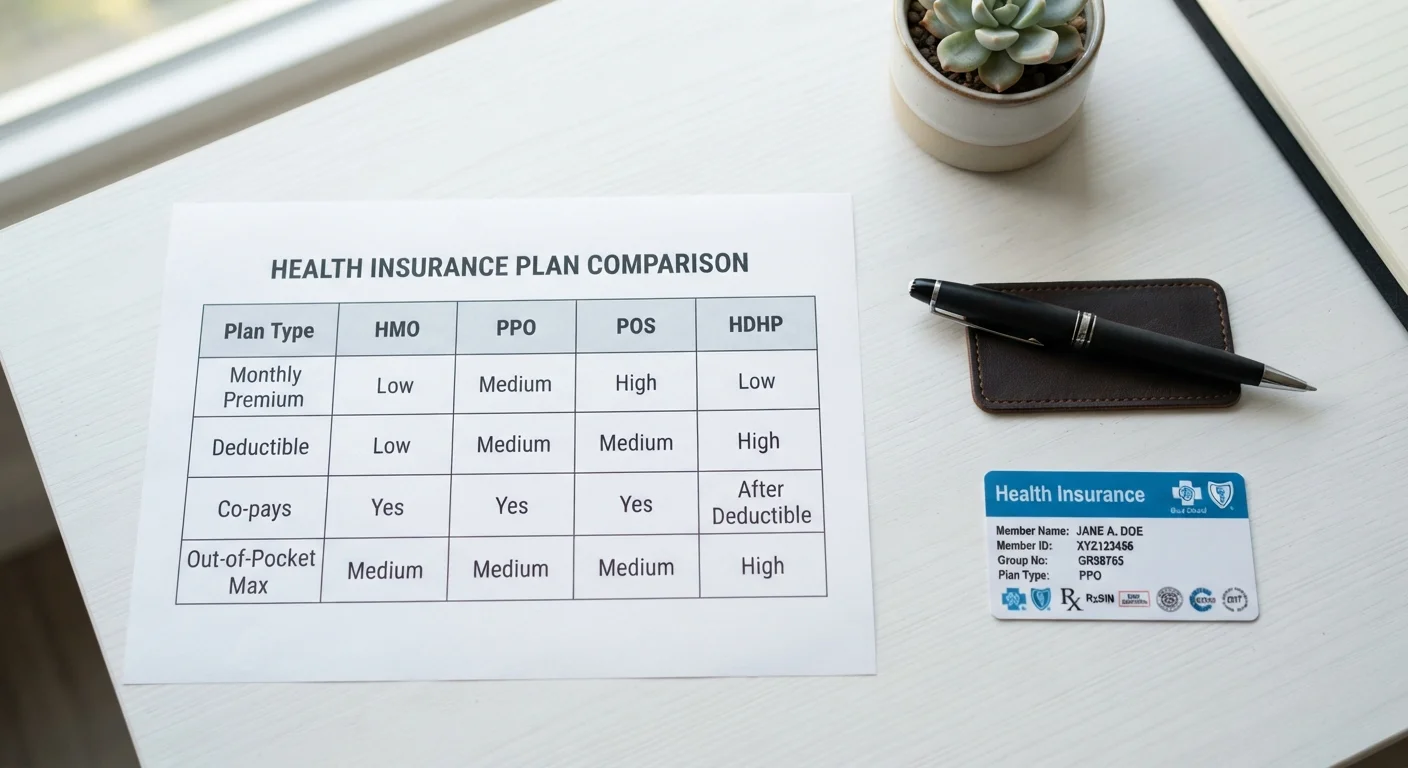
Plans with higher deductibles generally charge lower premiums. A High Deductible Health Plan (HDHP) is a category of plan specifically designed this way - and it qualifies you to open a Health Savings Account (HSA) to set aside pre-tax money for medical expenses. To explore different plan structures, see a plain-English guide to health plan types.
$1,735
Average individual deductible for employer health plans
According to the Kaiser Family Foundation's 2023 Employer Health Benefits Survey, the average annual deductible for single coverage in employer-sponsored plans was approximately $1,735.
$9,450
ACA out-of-pocket maximum for individual plans (2024)
The federal government sets this ceiling annually for ACA-compliant individual plans; once reached, the insurer must cover 100% of covered services for the rest of the plan year.
58%
Workers enrolled in plans with deductibles of $1,000 or more
The Kaiser Family Foundation's 2023 Employer Health Benefits Survey found that 58% of covered workers were enrolled in a plan with a general annual deductible of at least $1,000 for single coverage.
Copays, Coinsurance, and the Out-of-Pocket Maximum
Once your deductible is met, you typically still share costs with your insurer through one of two mechanisms:
- Copay: A flat fee you pay at the time of service - for example, $25 for a primary care visit or $50 for a specialist. It's the same amount regardless of what the full visit costs.
- Coinsurance: A percentage of the bill you owe after the deductible. An 80/20 plan means your insurer covers 80% and you cover 20% of each eligible claim. A $1,000 procedure would leave you with a $200 bill.
Both mechanisms continue until you hit your out-of-pocket maximum - the annual ceiling on what you can be charged for covered care. After that point, your insurer pays 100% of covered costs for the rest of the plan year. Your monthly premium, however, does not count toward this limit.
For a side-by-side comparison of how these two cost-sharing methods work, see how copays and coinsurance split the bill differently. For a comprehensive glossary of every cost term in a standard policy, the full picture of insurance costs is a useful reference.
Family Plans Have Two Deductible Thresholds
If you're on a family plan, your policy typically has both an individual deductible and a family deductible. The individual threshold applies to each person separately, while the family deductible is the combined total across all members. Once either threshold is met, cost-sharing begins for that individual or the whole family respectively. The rules vary by plan, so read your policy documents closely.
This article provides general health insurance information for educational purposes and is not personalized insurance or financial advice. Coverage terms, costs, and rules vary by plan and provider. Always read your plan documents carefully and consult a licensed insurance professional for guidance specific to your situation.