Why More Than One Policy Can Apply to One Event
A single accident rarely fits neatly inside just one insurance policy. A car crash, for example, can produce medical bills, property damage, and even liability claims all at once - and different policies are built to handle different pieces of that puzzle. Understanding how those pieces connect is the first step to knowing what you're actually covered for.
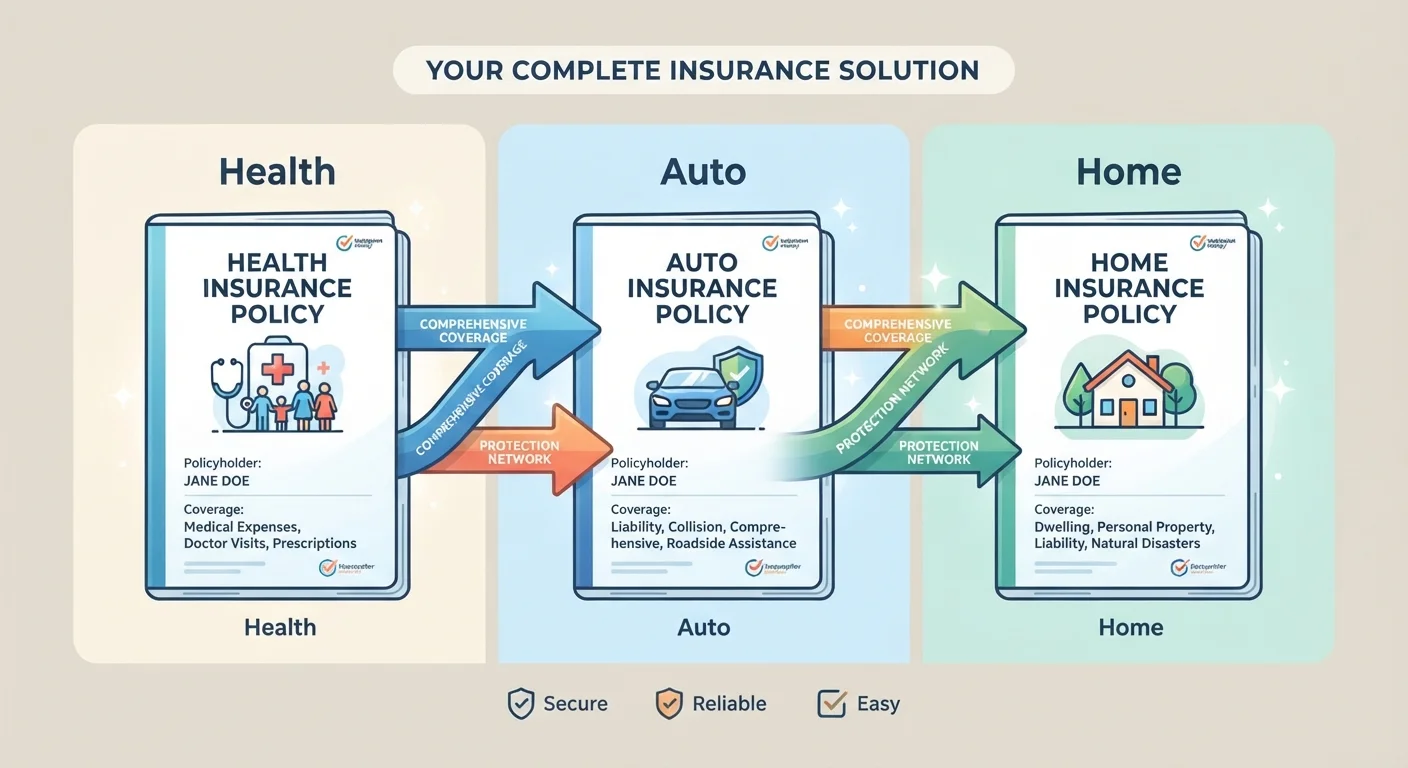
Health, auto, home, and life insurance each serve a distinct purpose, but accidents don't respect those boundaries. When two or more policies could potentially respond to the same loss, coordination of benefits rules determine who pays what - and in what order.
38%
Adults with more than one active insurance policy
According to the Insurance Information Institute, a large share of U.S. households carry overlapping coverage across health, auto, and home policies simultaneously.
12 states
No-fault PIP states requiring auto medical coverage
Approximately a dozen U.S. states mandate Personal Injury Protection (PIP) as part of every auto policy, making auto the default primary payer for crash-related medical bills.
~60%
Auto injury claims with health insurance involvement
Industry research suggests a majority of auto accident injury claims eventually involve coordination with a health insurer when auto medical limits are insufficient.
Auto Insurance Takes the Lead After a Car Crash
When a car accident causes injuries, your auto policy is almost always the primary payer for medical expenses - not your health insurance. Most auto policies include one or both of two medical coverages:
- Medical Payments (MedPay): Pays for reasonable medical costs for you and your passengers, regardless of fault, up to a stated limit.
- Personal Injury Protection (PIP): Required in some states, PIP goes further by also covering lost wages and rehabilitation costs. States that require PIP are often called "no-fault" states.
Vehicle damage is handled separately through collision coverage (for your own car) or the at-fault driver's property damage liability. For a plain breakdown of these auto coverage types, see Auto Insurance Coverage Decoded.
Check Your State's PIP Requirements
Whether your auto policy includes Personal Injury Protection depends partly on where you live. In no-fault states, PIP is mandatory and your own auto policy covers your medical bills regardless of who caused the crash. In fault-based states, MedPay is optional and the at-fault driver's liability coverage plays a larger role. Knowing your state's rules helps you understand which policy responds first.
Health Insurance Steps In as the Secondary Layer
Once your auto policy's medical benefit limit is exhausted, health insurance picks up covered costs that remain - subject to your plan's own deductibles and copays. This secondary role is common, but it is not automatic: your health insurer needs to know the accident occurred so it can coordinate properly with the auto claim.
There is an important catch. Many health plans include subrogation rights - the legal right to recover money they paid on your behalf if you later receive an auto insurance settlement. In plain terms, if your health plan paid $8,000 in medical bills and you later settle with the at-fault driver's insurer, your health plan may demand reimbursement from that settlement. Always read your health plan's subrogation clause, and consider speaking with a licensed professional before settling any claim.
This article provides general insurance information and education, not personalized legal or financial advice. Coverage terms, exclusions, and state regulations vary; consult a licensed insurance agent or attorney for guidance on your specific situation.
Where Home Insurance Fits (and Where It Doesn't)
Home insurance does not cover car accidents - not even ones that happen in your own driveway. Vehicle damage and auto-related injuries stay within the auto insurance system regardless of location.
That said, home insurance can intersect with accident scenarios in a few specific ways:
- Property damage to your home: If a car crashes into your fence or garage, your auto policy's collision or property damage liability coverage is the relevant one - but your home policy may also have a role if the structure damage exceeds certain thresholds. Check both policies.
- Visitor injuries on your property (non-vehicle): If someone slips on your icy walkway or is injured by a falling tree branch, your homeowners liability coverage typically applies - separate from any auto event.
- Personal property inside a vehicle: Some home policies extend limited coverage to personal belongings stolen from a parked car. Auto insurance generally does not cover personal items inside the vehicle.
For a closer look at how gaps between policies can leave you exposed, underinsurance is worth understanding before an event occurs.
Policy Language Is the Final Word
General rules about which insurance pays first are useful starting points, but your actual policy documents control what happens in your specific situation. Coverage terms, exclusions, and coordination clauses vary significantly between insurers and states. Always read your declarations page and full policy, and consult a licensed insurance agent or attorney before making decisions based on general guidance.
What to Do When Multiple Policies Apply
When an accident touches more than one policy, the claims process gets more complicated. Here is a plain-language checklist of what to keep in mind:
- Notify every relevant insurer promptly. Missing a reporting deadline - even for a secondary policy - can put a claim at risk.
- Document everything. Medical bills, repair estimates, police reports, and photos create the paper trail each insurer needs.
- Ask each insurer about coordination rules. Don't assume; the order of payment depends on your state, your policy type, and the specific situation.
- Watch for subrogation demands. Before accepting any settlement, understand whether a health or auto insurer has a right to reimbursement from that payment.
The claims process itself - from first notice to final payout - involves more steps than most people expect. What Actually Happens After You File an Insurance Claim walks through that process in plain terms. If a dispute arises, understanding the difference in adjuster roles can also matter - see Insurance Adjuster vs. Public Adjuster for context.