
Why These Four Types Matter
Insurance is essentially a contract: you pay a regular premium, and the insurer agrees to cover certain financial losses you couldn't easily absorb on your own. Most American households face four categories of risk large enough to be financially devastating without coverage - medical emergencies, vehicle accidents, property damage, and the death of a primary earner.
These four coverage types don't overlap much. Each one is designed for a specific kind of loss. Understanding what each does - and doesn't - cover is the foundation for building a protection plan that actually holds together. For a deeper look at the cost terms you'll encounter across all four, see our full guide to insurance costs.
Premium
The regular payment - usually monthly - you make to keep your insurance policy active. Paying your premium doesn't mean you've filed a claim; it's simply the cost of having coverage available.
Deductible
The amount you pay out of your own pocket for a covered loss before the insurance company starts contributing. For example, a $1,000 deductible means you cover the first $1,000 of a claim.
Coverage limit
The maximum dollar amount your insurer will pay for a covered claim or within a policy period. Losses beyond that limit are your responsibility.
Exclusion
A specific situation, event, or type of damage that a policy will not cover. Reading the exclusions section of any policy is essential for understanding what you're actually protected against.
Beneficiary
The person or entity you name to receive the payout from a life insurance policy when you die. You can name more than one beneficiary and specify how the benefit is split.
Liability coverage
The part of an auto or home policy that pays for injuries or property damage you accidentally cause to other people. It protects your assets from lawsuits and claims made against you.
Health Insurance
Health insurance helps pay for medical care - doctor visits, hospital stays, prescription drugs, preventive screenings, and more. Without it, a single emergency hospitalization can generate bills that run into tens of thousands of dollars.
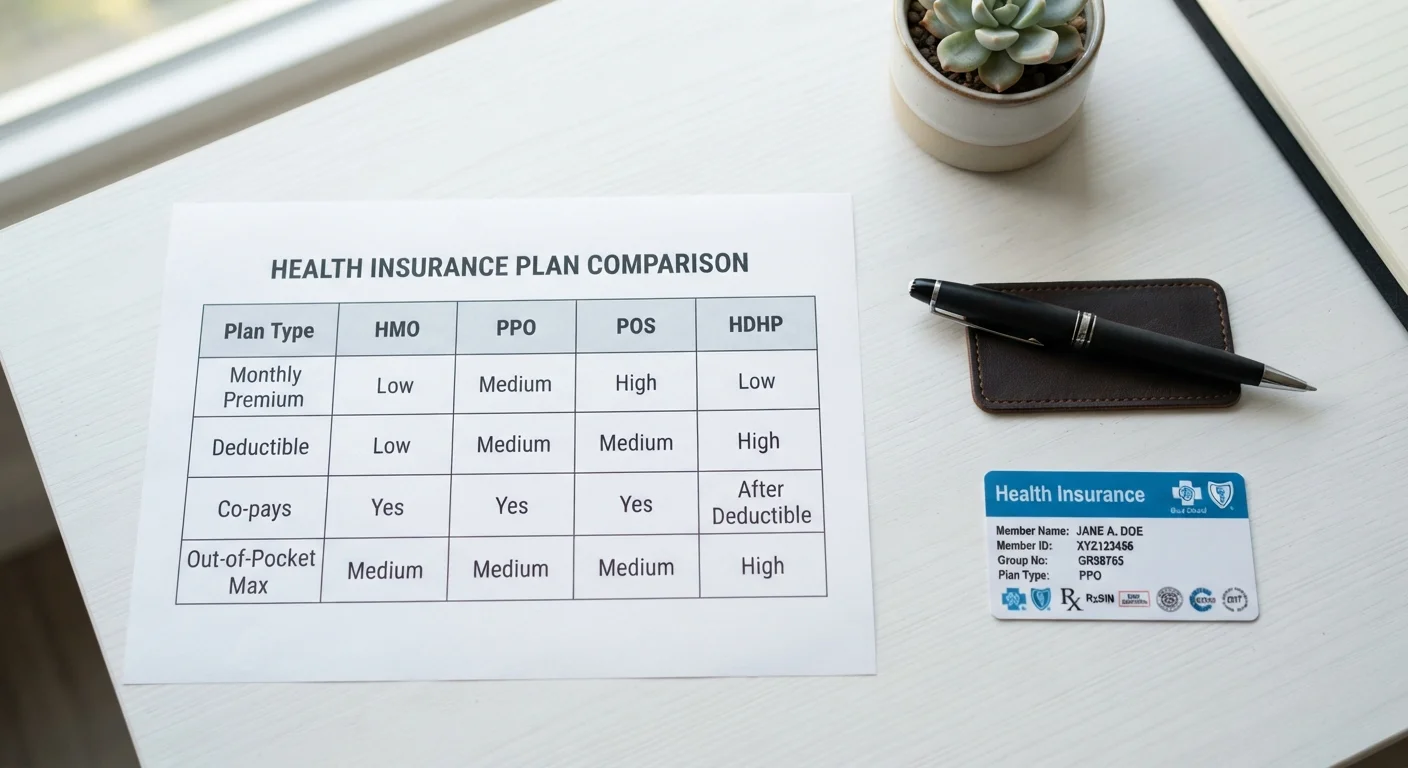
Most plans involve a combination of a monthly premium, an annual deductible, and copays or coinsurance for individual services. Once your out-of-pocket spending hits the plan's annual maximum, the insurer covers 100% of covered costs for the rest of the year.
Plans also differ in how they structure your access to doctors and hospitals - whether through a tight network or a more flexible one. To understand those differences in detail, see our plain-English guide to health plan types.
This article provides general educational information about health insurance and is not medical or financial advice. Consult a licensed professional for guidance on your specific situation.
Check Your Out-of-Pocket Maximum
Every ACA-compliant health plan has an annual out-of-pocket maximum - the most you'll ever pay in a single year for covered services. Once you hit that number, the insurer covers 100% of covered costs. Knowing this figure helps you understand your worst-case annual exposure before you choose a plan.
Auto Insurance
Auto insurance protects you financially when a vehicle you own or drive is involved in an accident, theft, or damage. Most states require at minimum a liability policy, which pays for injuries or property damage you cause to others. It does not cover your own vehicle or medical bills.
Beyond liability, common add-ons include collision (repairs to your car after an accident) and comprehensive (theft, weather damage, and other non-collision events). If the other driver has no insurance, uninsured motorist coverage fills that gap.
For a full breakdown of each coverage layer, see our auto coverage reference guide or our intro to auto coverage types.
Minimum Coverage May Not Be Enough
State-required liability minimums are often set at levels that don't reflect the actual cost of a serious accident. If your liability limits are too low and you're found at fault in a major crash, you could owe the difference out of pocket. Review your limits carefully rather than defaulting to the legal minimum.
Homeowners and Renters Insurance
If you own your home, homeowners insurance typically covers the structure itself, your personal belongings inside, and liability if someone is injured on your property. Mortgage lenders almost universally require it as a condition of the loan.
If you rent, your landlord's policy covers the building - not your furniture, electronics, or clothing. Renters insurance fills that gap and usually includes liability protection as well. Premiums are generally modest, making it one of the more cost-effective ways to protect your possessions.
Both types come with exclusions. Flooding, for example, is typically not covered under a standard homeowners policy and requires a separate flood insurance policy.
Flood Damage Is Usually Not Covered
Standard homeowners and renters insurance policies typically exclude flood damage - even if the flooding stems from a nearby storm. Separate flood insurance is available through private insurers and the federal National Flood Insurance Program (NFIP). If you live in a flood-prone area, this gap is worth examining closely.
Life Insurance
Life insurance pays a death benefit - a lump sum - to your named beneficiaries when you die. Its primary purpose is income replacement: if someone in your household earns income that others depend on, life insurance ensures those dependents aren't left financially stranded.
Term life covers a defined period (10, 20, or 30 years are common). It's straightforward and generally less expensive. Permanent life policies (like whole or universal life) last your entire lifetime and include a cash-value component, but come with higher premiums. The right choice depends on your household's income, debts, and long-term financial goals - a licensed agent can help you assess that.
How the Four Work Together
Think of these four types as a layered safety net. Health insurance keeps a medical crisis from becoming a financial one. Auto insurance keeps a fender-bender or serious accident from wiping out your savings. Home or renters insurance protects the place you live and what's inside it. Life insurance ensures your household can stay afloat if its income source disappears.
A gap in any one of them can unravel the others. For example, if an uninsured driver totals your car and you're hospitalized, inadequate auto and health coverage compound the damage fast. Use the Claims & Coverage Gaps hub to understand how gaps form, and take a household coverage checkup to see where yours stands today.
Policy Costs Explained Hub
A dedicated section covering premiums, deductibles, copays, and every other cost term you'll encounter across insurance policies - useful alongside this overview.
Household Coverage Checkup
A checklist-style guide to help you identify gaps across your health, auto, home, and life policies before an unexpected event reveals them.
This article is for general informational and educational purposes only and does not constitute insurance, financial, or legal advice. Coverage terms, exclusions, and requirements vary by provider, policy, and state. Always read your actual policy documents and consult a licensed insurance agent or adviser for guidance specific to your situation.