The Core Coverage Types at a Glance
Auto insurance isn't a single product - it's a bundle of distinct coverage types, each protecting you in a different scenario. Most drivers carry several at once, often without knowing exactly what each one does. This guide breaks them down clearly.
| Legally Required Coverage | Liability (in nearly all U.S. states) (State minimums vary; check your state's DMV for exact requirements) |
| Covers Your Own Vehicle Damage | Collision and Comprehensive |
| Covers Others' Injuries & Property | Liability Coverage |
| Covers Medical Bills Regardless of Fault | PIP or MedPay (PIP mandatory in no-fault states; MedPay optional elsewhere) |
| Estimated Share of Uninsured U.S. Drivers | ~1 in 8 (Insurance Research Council, periodic industry estimates) |
| "Full Coverage" Includes | Liability + Collision + Comprehensive (Informal industry term; not a legally defined category) |
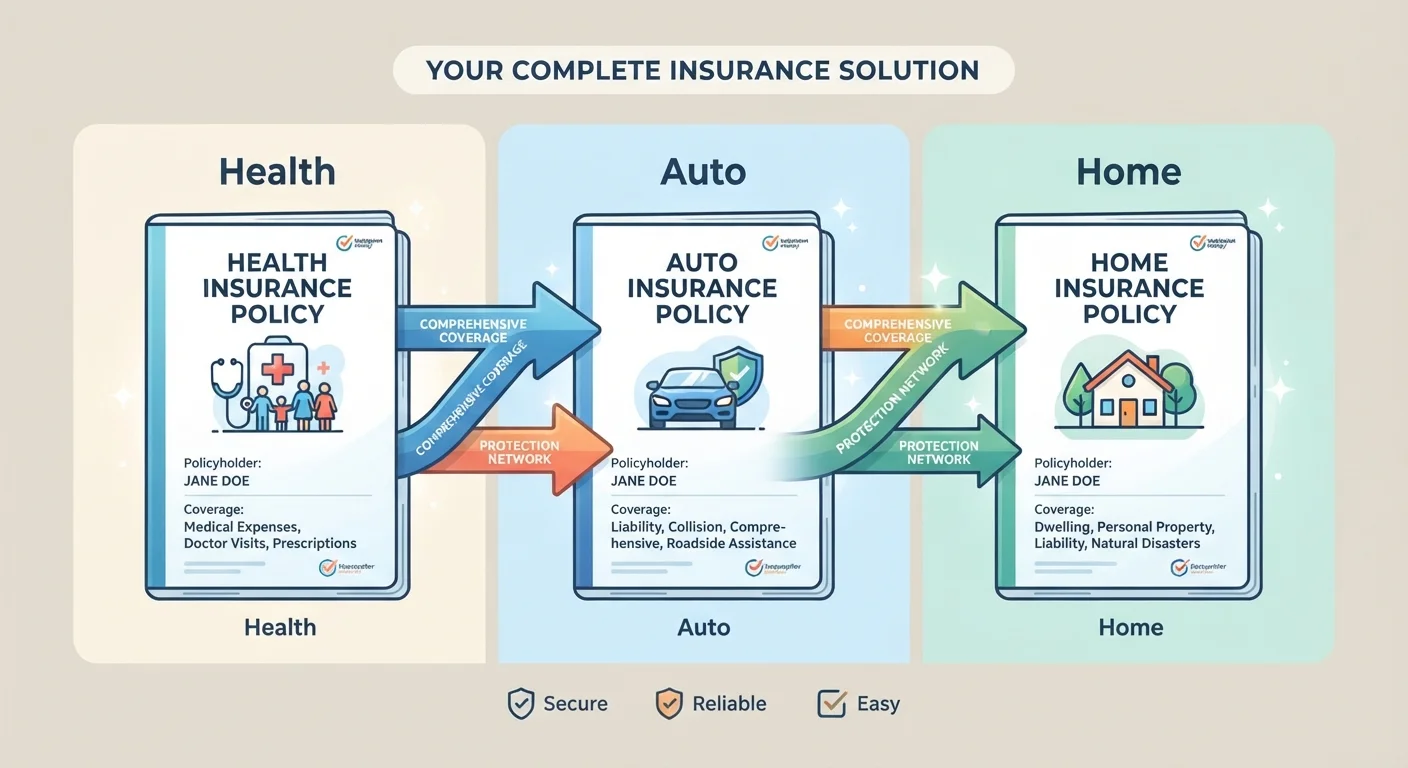
For a broader look at how auto insurance fits alongside health, home, and life coverage, see the four insurance types every American household needs to know.
Coverage Type Definitions
Each coverage type has a specific job. Knowing which one applies to which situation helps you avoid surprises after an incident.
Liability Coverage
Pays for bodily injury and property damage you cause to others in an at-fault accident. It does not cover your own injuries or vehicle repairs. Required by law in most U.S. states.
Collision Coverage
Covers repair or replacement of your own vehicle after a collision with another vehicle or object, regardless of who was at fault. Subject to a deductible you choose when purchasing the policy.
Comprehensive Coverage
Covers damage to your vehicle from non-collision events such as theft, fire, hail, flooding, or animal strikes. Also subject to a deductible and typically paired with collision coverage.
Uninsured/Underinsured Motorist (UM/UIM)
Protects you when an at-fault driver has no insurance or insufficient coverage to pay for your losses. Some states require this coverage; others offer it as an optional add-on.
Personal Injury Protection (PIP)
Covers medical expenses, lost wages, and sometimes rehabilitation costs for you and your passengers after an accident, regardless of fault. Mandatory in no-fault states.
Deductible
The amount you pay out of pocket before your insurer covers the remaining repair or replacement cost. A higher deductible generally lowers your premium but increases your cost at claim time.
Policy Limit
The maximum dollar amount your insurer will pay for a covered claim. Any costs beyond this limit are your personal financial responsibility.
MedPay (Medical Payments Coverage)
An optional add-on in most states that covers medical bills for you and your passengers after an accident, regardless of fault. Narrower than PIP - it typically does not include lost wages.
Liability is the only coverage type required by law in nearly every U.S. state. It pays for damage and injuries you cause to others - not to yourself or your own vehicle. If you rear-end another driver and injure them, your liability coverage pays their medical bills and vehicle repairs up to your policy limit. Anything above that limit becomes your personal financial responsibility.
Collision coverage pays to repair or replace your own vehicle after a crash, regardless of fault. If you hit a guardrail or another driver hits you, collision covers your car's repair costs, minus your deductible.
Comprehensive handles damage to your vehicle from events other than collisions - theft, fire, hail, flooding, falling objects, or hitting an animal. Many drivers think of it as protection against events outside your control.
Uninsured/underinsured motorist (UM/UIM) coverage steps in when the at-fault driver has no insurance or not enough to cover your losses. Roughly one in eight U.S. drivers was uninsured as of recent industry estimates, making this coverage practically important even where it isn't legally required.
Personal injury protection (PIP) and medical payments (MedPay) cover medical expenses for you and your passengers after an accident, regardless of who caused it. PIP is broader - it can also cover lost wages and rehabilitation costs - and is mandatory in no-fault states. MedPay is narrower and available in most other states as an optional add-on.
To understand how these coverages interact with your health insurance after an accident, see how health insurance, auto insurance, and home insurance work together after an accident.
What 'Full Coverage' Actually Means
The term full coverage has no official definition in insurance law - it's industry shorthand for a policy that combines liability, collision, and comprehensive. It does not mean everything is covered. Exclusions, deductibles, and policy limits still apply, and gaps like underinsured motorist exposure can remain.
"Full Coverage" Has Real Gaps
Even a policy described as full coverage can leave you exposed. It won't cover items above your policy limit, your deductible amount, or losses from uninsured drivers unless you've added UM/UIM coverage. Review your declarations page carefully and ask your agent about any exclusions that could affect your situation.
If your policy limits feel uncertain, underinsurance: when your policy limit falls short of the real loss explains how shortfalls happen and what to check. For a direct comparison of liability-only versus combined coverage, see liability vs. full coverage auto insurance.
Higher-value vehicles, financed or leased cars, and drivers in high-traffic areas generally benefit most from carrying collision and comprehensive alongside liability. For older vehicles with low market value, the math sometimes favors dropping collision - a licensed insurance agent can help you assess your specific situation.
This article provides general educational information about auto insurance coverage types and is not personalized insurance, financial, or legal advice. Coverage availability, requirements, and costs vary by state and insurer. Always read your actual policy documents and consult a licensed insurance agent or adviser for guidance tailored to your circumstances.