
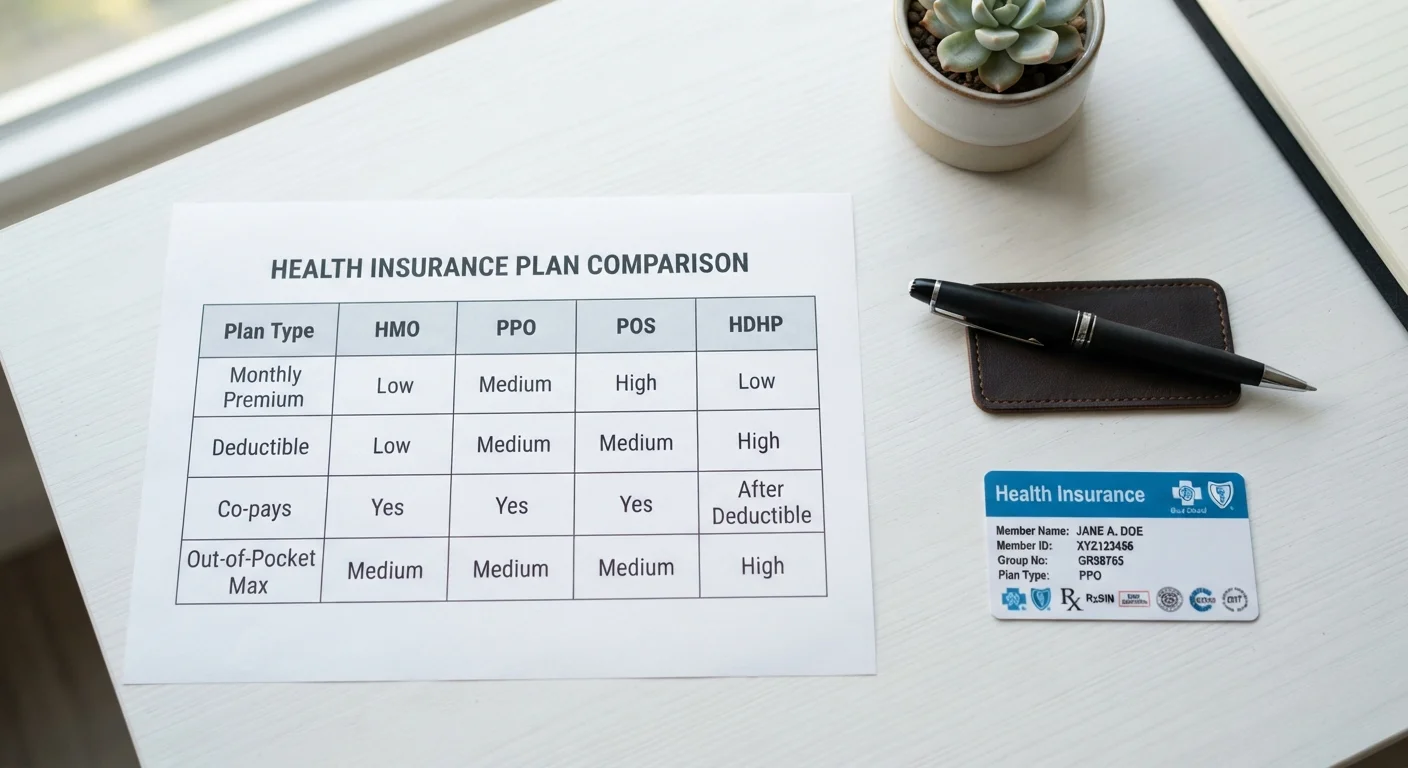
Why the Plan Type Matters as Much as the Premium
When you're shopping for health insurance - whether through an employer, a marketplace, or a government program - you'll run into four abbreviations over and over: HMO, PPO, EPO, and HDHP. These aren't just labels. Each one describes a fundamentally different set of rules for how you access care, which doctors you can see, and how the insurer pays its share of the bill.
Getting the plan type wrong can mean surprise bills, denied claims, or paying for a network you never use. Getting it right means your coverage actually works the way you expect. Before comparing monthly costs, it helps to understand what each model does and doesn't allow. See our breakdown of premiums, deductibles, and copays to pair this guide with a clear picture of how the cost pieces fit together.
| PCP referral required | HMO: Yes | PPO: No | EPO: No | HDHP: Depends on network |
| Out-of-network coverage | HMO: Emergency only | PPO: Yes (higher cost) | EPO: Emergency only | HDHP: Depends on network |
| HSA eligibility | Only HDHPs qualify for a Health Savings Account (IRS Publication 969) |
| Typical premium level | HMO: Low | PPO: High | EPO: Moderate | HDHP: Low |
| Best fit | HMO: Regular care, one network | PPO: Flexibility, specialists | EPO: No referrals, cost savings | HDHP: Healthy, HSA savers |
The Four Main Plan Types, Explained
HMO - Health Maintenance Organization
An HMO requires you to choose a primary care physician (PCP) from within the plan's network. That doctor acts as your gatekeeper: you generally need a referral from your PCP before seeing a specialist. Care received outside the network typically isn't covered at all, except in a genuine emergency.
Trade-off: Lower premiums and predictable copays in exchange for less flexibility. Works well if you have a regular doctor you trust and don't anticipate needing out-of-network specialists.
PPO - Preferred Provider Organization
A PPO gives you the widest flexibility. You can see any doctor - in-network or out-of-network - without a referral. In-network visits cost less; out-of-network visits cost more but are still partially covered.
Trade-off: Higher premiums than HMOs. Worth considering if you travel frequently, have an established specialist relationship, or simply want the freedom to choose providers without administrative steps.
EPO - Exclusive Provider Organization
An EPO is a hybrid of sorts. Like a PPO, you don't need a referral to see a specialist. Like an HMO, you must stay within the plan's network - out-of-network care is generally not covered except in emergencies.
Trade-off: Premiums are typically lower than PPOs, but your provider options are strictly limited to the network. Check that your preferred doctors are in-network before enrolling.
HDHP - High-Deductible Health Plan
An HDHP is defined by its cost structure rather than its network model - it can be paired with HMO, PPO, or EPO networks. The key feature is a higher deductible (the IRS sets minimum thresholds each year) and lower monthly premiums. HDHPs are the only plan type that qualifies you to open a Health Savings Account (HSA), which lets you set aside pre-tax dollars for medical expenses.
Trade-off: You pay more out of pocket before coverage kicks in. This structure can work well for people who are generally healthy and want to build HSA savings, but it carries real financial risk if you face unexpected high-cost care. See our guide to high-deductible vs. low-deductible trade-offs for a deeper look.
Primary Care Physician (PCP)
A doctor who serves as your main point of contact for general health needs. In HMO plans, your PCP must authorize referrals to specialists.
In-Network Provider
A doctor, hospital, or facility that has a contract with your insurer to provide services at negotiated rates. Using in-network providers keeps your out-of-pocket costs lower.
Health Savings Account (HSA)
A tax-advantaged savings account available only to people enrolled in a qualifying HDHP. Funds can be used tax-free for eligible medical expenses and roll over year to year.
Summary of Benefits and Coverage (SBC)
A standardized, plain-language document that every health insurer must provide. It summarizes what the plan covers, cost-sharing amounts, and coverage limits.
Deductible
The amount you pay out of pocket for covered services before your insurance begins sharing costs. HDHPs have higher deductibles than most other plan types.
Prior Authorization
Approval from your insurer required before certain procedures, medications, or specialist visits are covered. Failing to get prior authorization when required can result in denied claims.
How to Choose the Right Model for Your Situation
No plan type is universally better. The right choice depends on how you use healthcare, your financial cushion, and which providers matter most to you.
- You value low premiums and are generally healthy: An HMO or HDHP with HSA may reduce your monthly costs significantly.
- You manage a chronic condition or see multiple specialists: A PPO's referral-free access can save time and reduce friction.
- You want moderate premiums without referral requirements: An EPO splits the difference - but verify your doctors are in-network first.
- You travel or split time between states: PPOs typically offer the broadest geographic coverage.
Always check the plan's Summary of Benefits and Coverage (SBC) - a standardized document every insurer is required to provide - before enrolling. It spells out exactly what is and isn't covered, what your cost-sharing looks like, and which services require prior authorization.
For a broader look at what you're actually paying across any plan type, visit our Health Insurance Explained guide. And if you ever need to use your coverage, the Claims and Coverage Gaps hub walks you through what to expect when filing a claim.
This article is for general informational purposes only and does not constitute personalized insurance, financial, or legal advice. Coverage terms, network rules, and costs vary by insurer and state. Always review your actual policy documents and consult a licensed insurance agent or adviser for guidance specific to your situation.