Why Every Pet Owner Should Have a First-Aid Kit Ready
Accidents don't wait for a convenient moment. A dog can cut a paw on broken glass during an evening walk. A cat can have an allergic reaction on a Sunday night when your regular vet is closed. In these situations, having the right supplies on hand - and knowing how to use them - can reduce your pet's discomfort and prevent a minor injury from becoming a serious one.
Veterinary and emergency animal organizations consistently recommend that pet owners keep a dedicated first-aid kit at home, separate from the family medicine cabinet. The goal isn't to replace professional veterinary care; it's to stabilize your pet safely while you arrange to get them seen. Think of it the same way you think about a smoke detector - you hope you never need it, but you're glad it's there.
If you've recently brought an animal home, assembling a kit early is a smart step. Our guide to the first 30 days with a new pet covers this and other preparedness basics worth reviewing.
Wound Care & Bandaging
Monitoring & Assessment Tools
Removal & Handling Tools
Emergency Stabilization Supplies
Documentation & Contact Information
What These Supplies Are For - and Their Limits
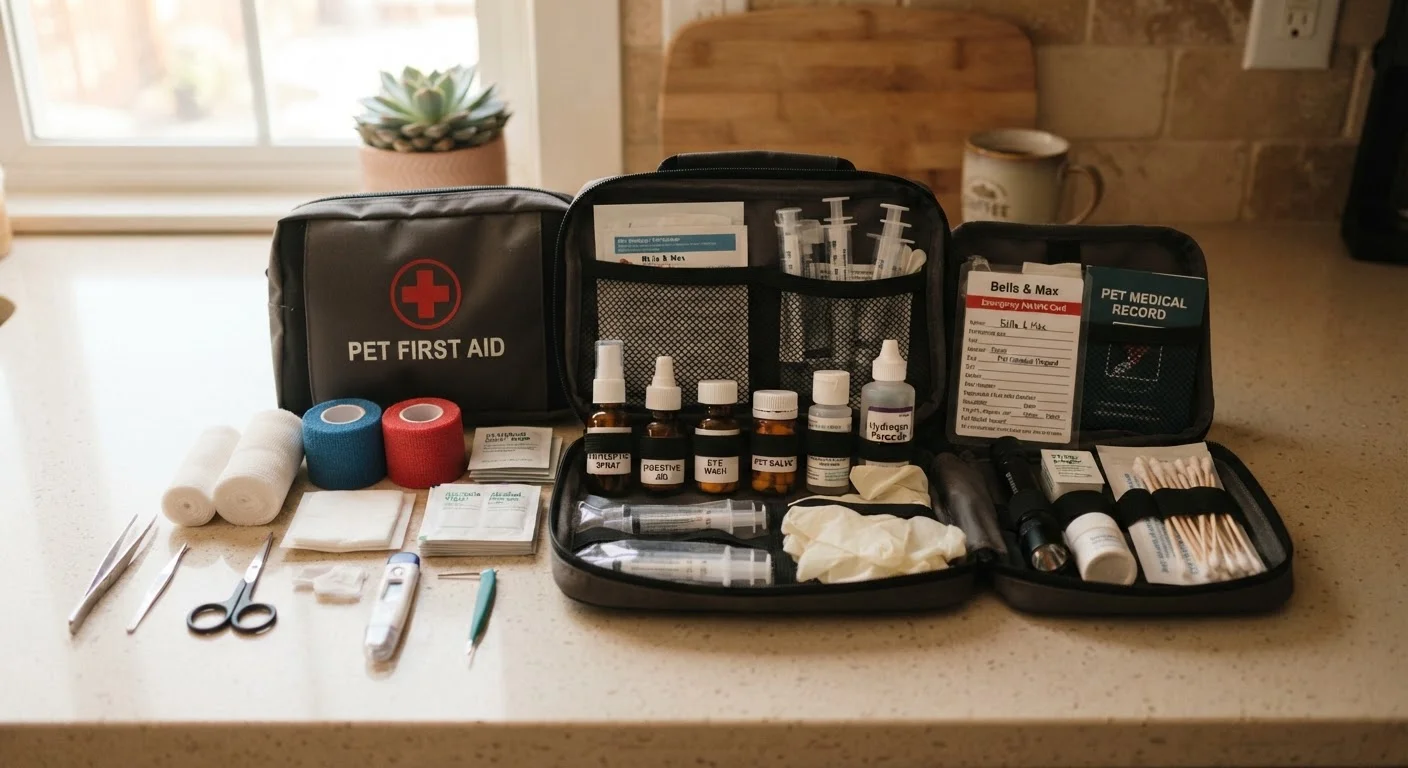
Every item in this kit serves a specific purpose for temporary, stabilizing care. Gauze and self-adhering bandage wrap can control bleeding or protect a wound during transport. A rectal thermometer (lubricated and used carefully) can confirm whether a pet is running a dangerously high or low temperature. Tweezers help remove splinters or visible ticks. Saline solution rinses debris from eyes or wounds.
First Aid Buys Time - Vets Provide the Treatment
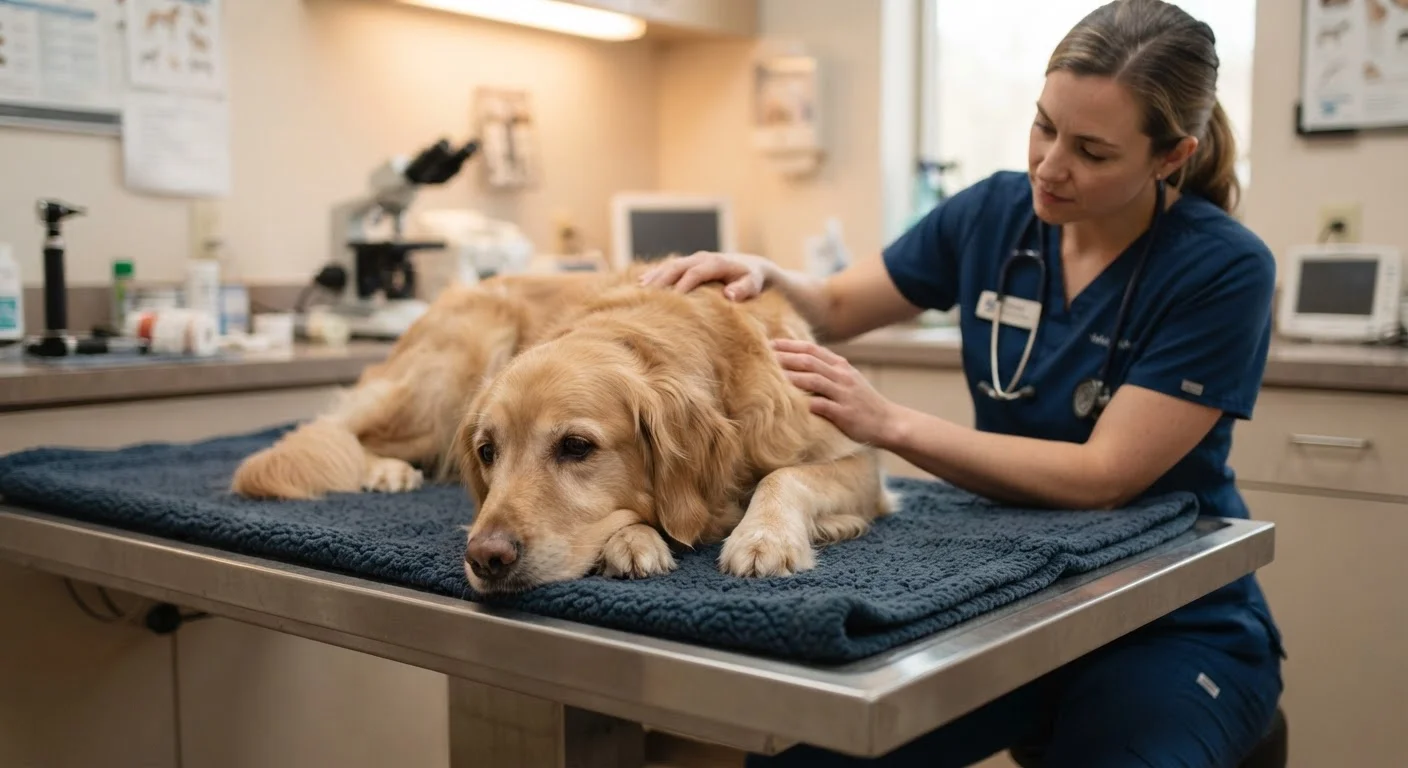
No home kit replaces a veterinarian. First-aid measures are designed to stabilize your pet during transport, not to treat underlying injuries or illness. If your pet has ingested a toxin, is unconscious, is having difficulty breathing, or is bleeding heavily and uncontrollably, get to an emergency animal clinic immediately. Do not delay professional care because first aid appeared to help.
What this kit cannot do is diagnose illness, treat infections, or substitute for veterinary judgment. If your pet ingests something toxic, contact the ASPCA Animal Poison Control Center or your veterinarian immediately - do not attempt home treatment based on assumptions. Similarly, knowing the signs your pet may be in pain helps you judge when first-aid measures are enough and when to move fast to a clinic.
Building this kit is also a good opportunity to think about the broader costs of pet ownership. Unexpected medical events are among the expenses that catch new owners off guard - something our article on hidden costs of pet ownership addresses directly.
Labeled, sealable storage container
Keeps all kit supplies organized, protected from moisture, and easy to locate in a hurry.
Digital rectal thermometer (pet-designated)
Measures your pet's body temperature accurately to help assess fever or hypothermia.
Self-adhering cohesive bandage roll
Wraps wounds without sticking to fur, making it easier to bandage pets than standard adhesive wrap.
Fine-tipped tweezers or tick removal tool
Safely removes ticks, splinters, or embedded debris from skin and paws.
Sterile saline solution (wound wash)
Flushes foreign material from wounds and eyes without introducing irritants.
Appropriately sized pet muzzle
Prevents bites during painful handling - an essential safety measure for both you and your pet.
Emergency Mylar blanket
Retains body heat for a pet in shock or exposed to cold following a traumatic event.
Keeping Your Kit Current and Useful
Assembling the kit is step one; maintaining it matters just as much. Set a calendar reminder every six months to check expiration dates on saline, hydrogen peroxide, and any other consumables. Replace anything that's been used. Confirm that the emergency contact numbers in your kit - your vet, the nearest 24-hour animal hospital, and a poison control line - are still accurate.
Store the kit somewhere accessible but away from children, ideally in a labeled container you can grab quickly. If you travel with your pet, a smaller travel version of the kit in your car is worth considering.
For routine health context, understanding what your pet's annual vet visit covers can help you have a productive conversation with your vet about what first-aid scenarios are most relevant for your specific animal. And if cost is a concern, strategies for keeping vet costs manageable outlines ethical ways to stretch your pet care budget without compromising on care.
This article provides general information for educational purposes only and is not a substitute for professional veterinary advice, diagnosis, or treatment. Always consult a licensed veterinarian for guidance specific to your pet's health.