Why a Pre-Trip Walkthrough Matters
A long highway drive is a fundamentally different stress test for your vehicle than the daily commute. Higher sustained speeds, heavier loads, and hours of continuous operation can turn a slow tire leak or a marginal brake pad into a genuine roadside emergency. The good news: a methodical walkthrough before you leave the driveway costs you 20 to 45 minutes and requires no special tools for most steps.
If you're newer to vehicle ownership, our beginner's maintenance guide explains the foundational upkeep tasks every driver should understand - it's a helpful primer before working through this checklist.
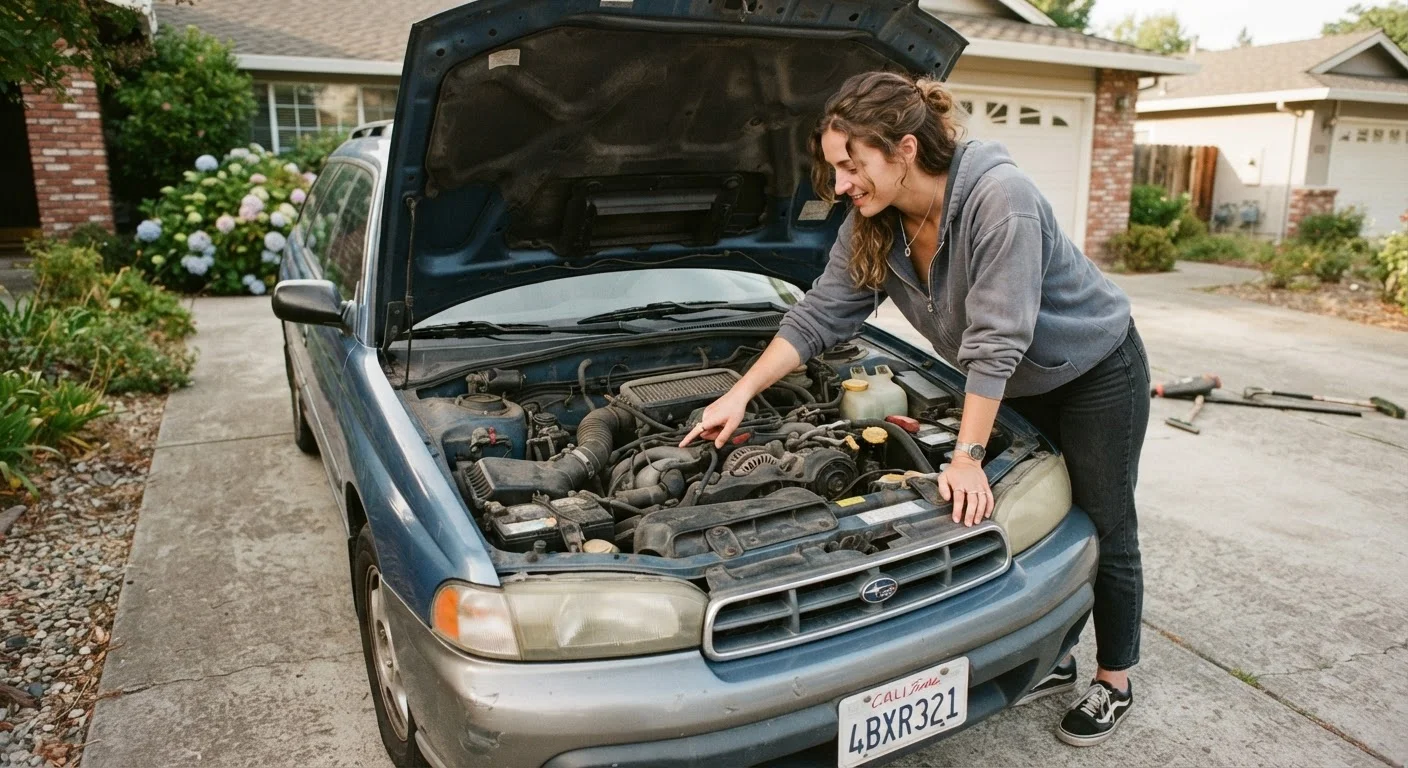
Use the groups below as a physical walkthrough: start at the front of the car, work around the exterior, then pop the hood, then check the interior and cargo.
Brake and Tire Issues: Don't Delay
Soft or spongy brake pedal feel, visible tire sidewall bulges, or tread worn to the wear indicators are not 'drive it and see' situations. These conditions can lead to brake failure or a blowout at highway speed. Have the vehicle inspected by a qualified mechanic before departing - rescheduling a trip is far preferable to a roadside emergency or collision.
What You'll Need
Most of this checklist is visual and tactile - you're looking and feeling, not performing repairs. A few simple items make the inspection faster and more accurate.
Tire pressure gauge
Provides an accurate PSI reading for each tire - far more reliable than eyeballing tire inflation.
Penny (or tread depth gauge)
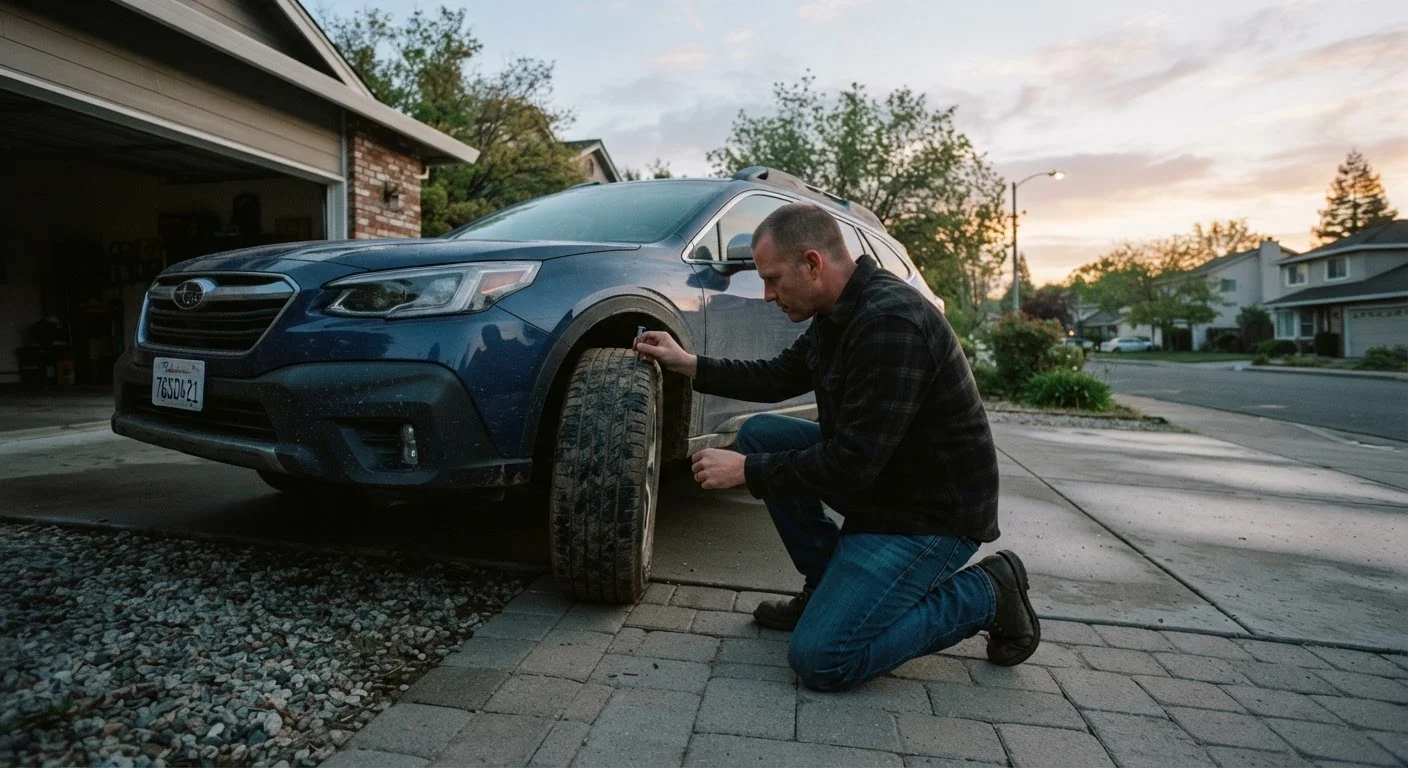
Used to perform the penny tread depth test on each tire without any special equipment.
Flashlight or phone torch
Illuminates the engine bay, tire sidewalls, and undercarriage for a thorough visual inspection.
Clean rag or paper towels
Needed to wipe the oil dipstick cleanly between readings and to clean glass surfaces.
Owner's manual
Contains your vehicle's specific fluid capacities, recommended PSI, and service intervals - keep it in the glovebox.
Jump starter pack (portable)
Provides self-sufficient jump-start capability without needing another vehicle - especially useful on remote routes.
The Full Pre-Trip Checklist
Work through each group in order. Items marked must are non-negotiable safety checks. Items marked should are strongly recommended for any trip over two hours. Nice-to-have items add resilience for longer or more remote routes.
Tires
Fluids
Lights & Visibility
Brakes & Steering
Interior & Emergency Prep
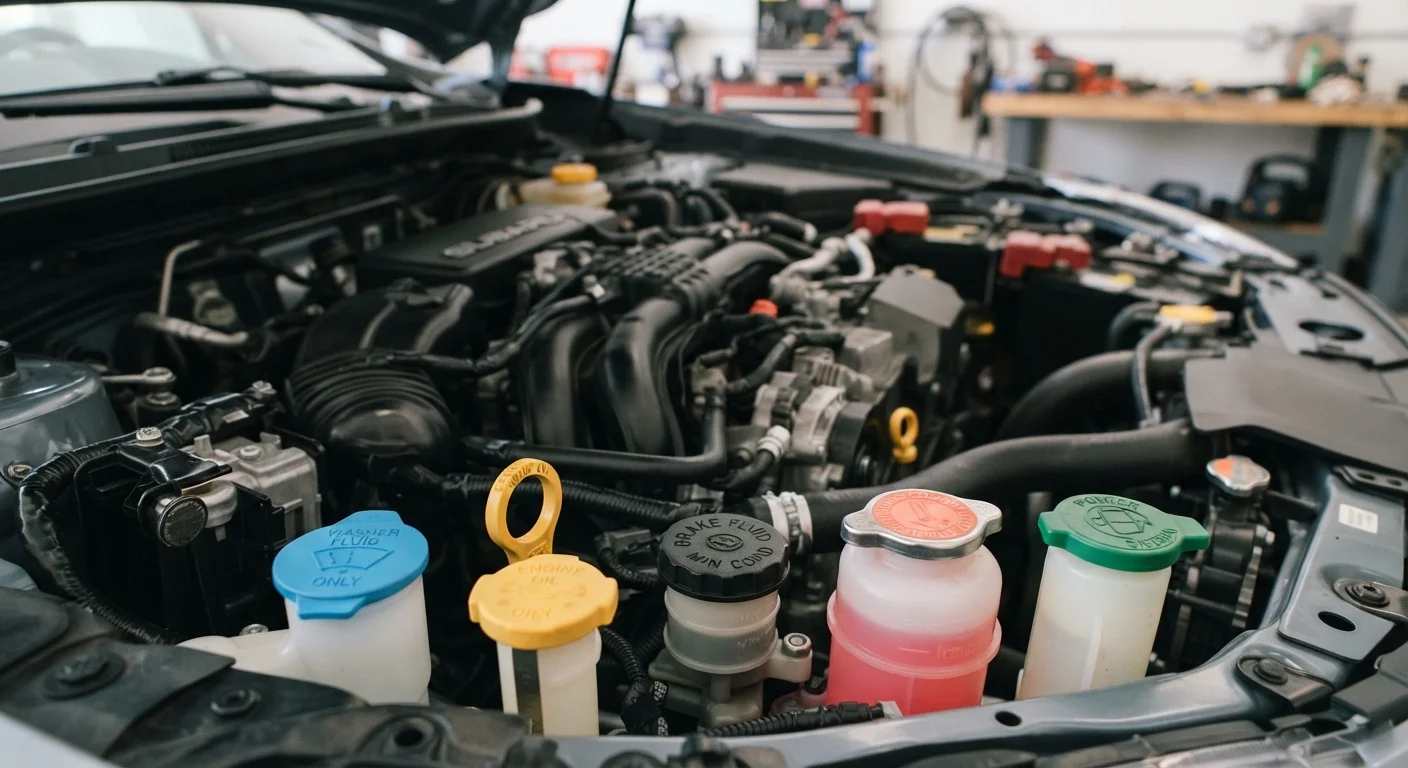
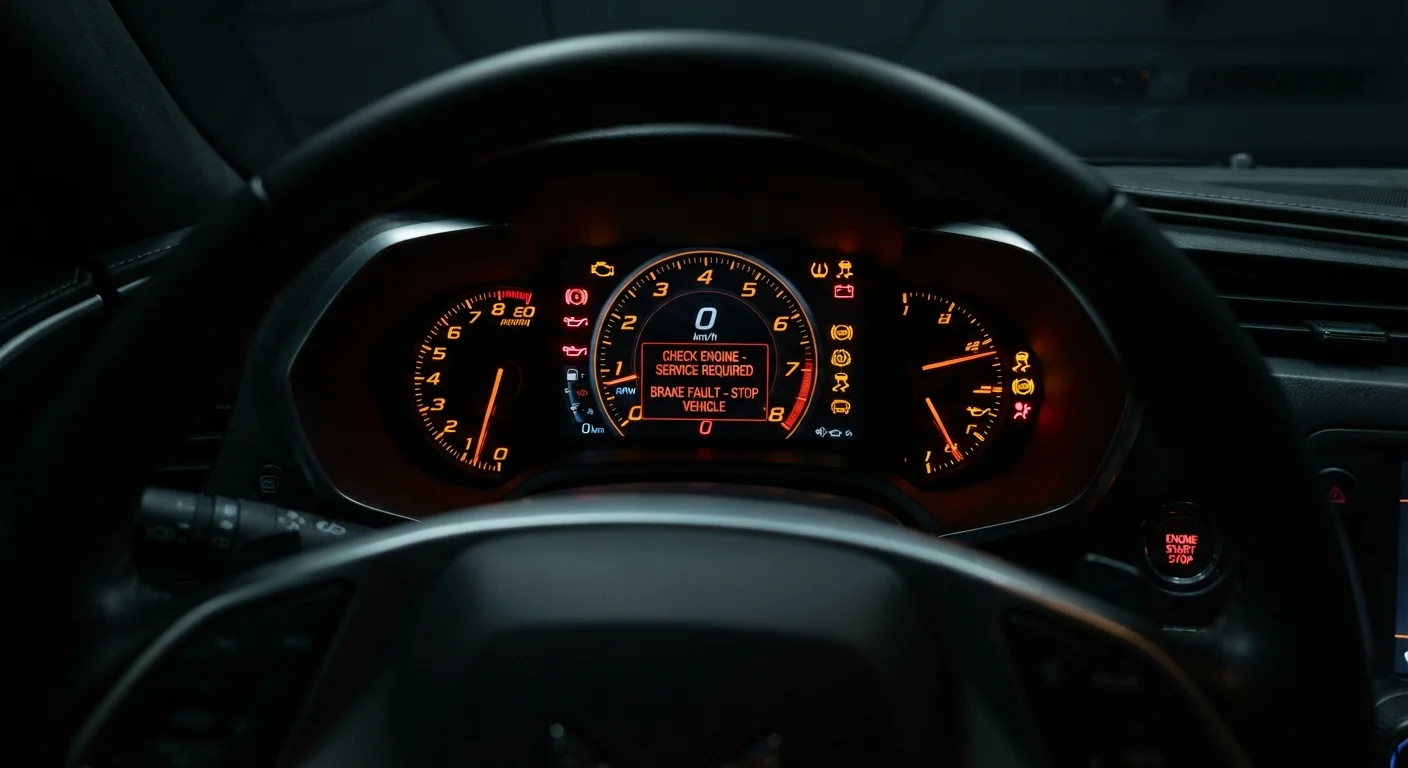
For a deeper dive on what each fluid reservoir does and how to read levels correctly, see our fluids field guide. If a dashboard warning light turns on during your pre-start check, consult our dashboard warning light reference before deciding whether to proceed.
Never Open a Hot Radiator Cap
Coolant in a hot engine is under pressure and can cause severe burns if the radiator cap is removed while the engine is warm. Always allow the engine to cool completely - at least 30 minutes after shutting off - before inspecting the radiator or coolant reservoir directly.
Low Brake Fluid May Signal a Larger Problem
Unlike engine oil, brake fluid doesn't get 'used up' under normal conditions. A noticeably low brake fluid level often means worn brake pads (which consume fluid as they wear) or - more seriously - a leak in the brake system. If the level is low and your pads appear adequate, consult a mechanic before driving.
One More Thing Before You Go
Beyond the mechanical checks, confirm your auto insurance policy is current and that you understand your roadside assistance coverage - knowing what's covered before an incident is far less stressful than discovering gaps on the shoulder of a highway. Our insurance coverage checkup is a useful companion resource for exactly that review.
If your trip spans seasons or extreme weather, the seasonal car care guide covers battery, coolant, and tire considerations that go beyond this standard pre-drive walkthrough.
Safe travels. A few minutes in the driveway is the easiest insurance policy you have.
This article is for general informational purposes only and does not constitute professional mechanical or safety advice. When in doubt about your vehicle's condition, consult a qualified mechanic before driving.