How the Color System Works
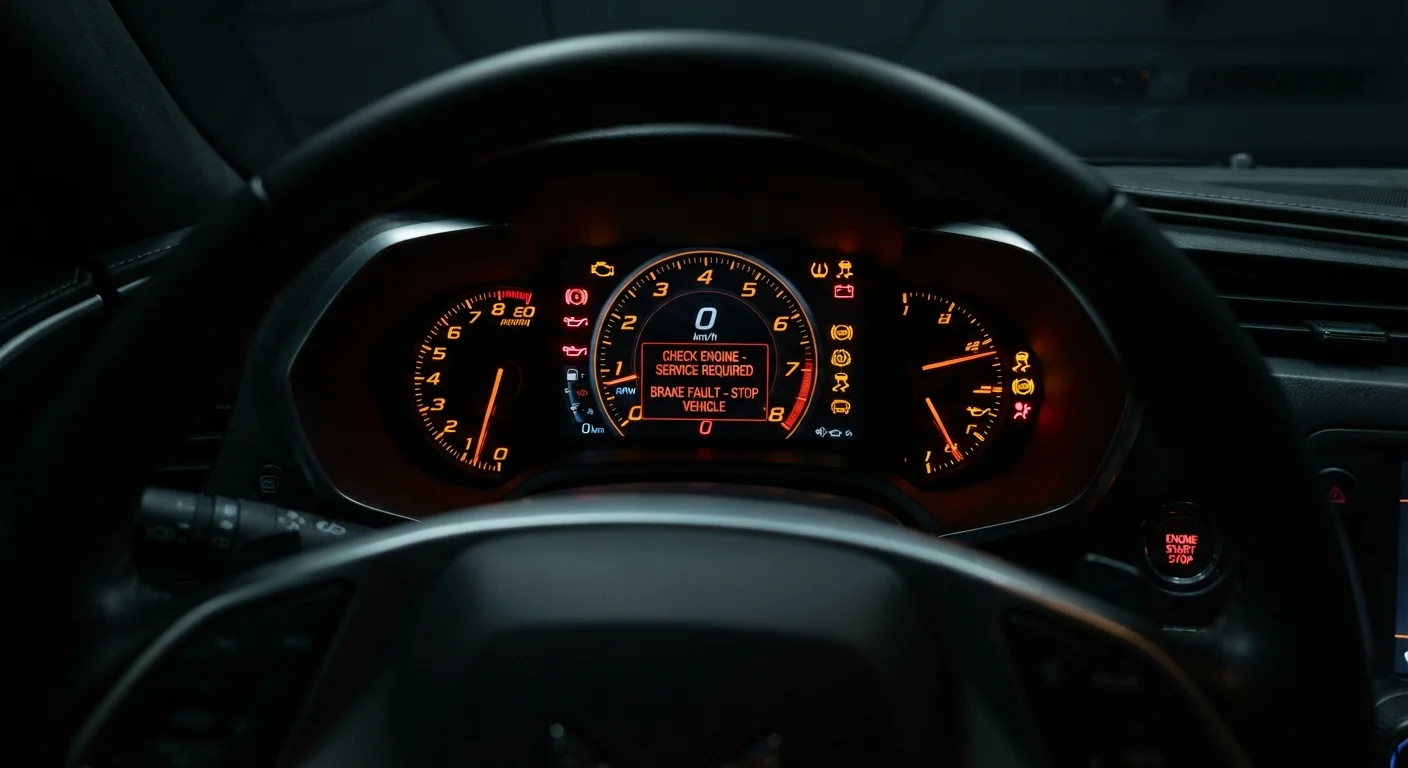
Dashboard warning lights follow an internationally standardized color hierarchy governed by ISO 2575. Understanding this system instantly tells you how urgently to respond - before you've identified the specific symbol.
- Red: Stop or take immediate action. Red lights signal conditions that can cause injury, leave you stranded, or result in severe engine or brake damage if ignored. Examples: oil pressure, engine temperature, brake system.
- Amber or yellow: Service needed, but not necessarily right now. These lights flag developing problems that should be addressed within days or at your next scheduled appointment. Examples: check engine, TPMS, traction control.
- Blue or green: Informational status indicators (high beams on, turn signal active). No action required unless the light is unexpected.
A light that flashes rather than stays solid typically signals a more urgent version of that warning. A flashing check engine light, for example, usually indicates active engine misfiring - something that warrants stopping driving and calling a mechanic, not waiting.
| Colors used for warning lights | Red, amber/yellow, blue, green (SAE International / ISO 2575 standards) |
| Red light meaning | Stop or act immediately - potential safety risk |
| Amber/yellow light meaning | Attention needed soon - schedule service |
| Most common check engine trigger | Loose or faulty gas cap (NHTSA consumer guidance) |
| TPMS activation threshold | ~25% below recommended tire pressure (Federal Motor Vehicle Safety Standard 138) |
| Vehicles with OBD-II ports | All U.S. passenger cars and light trucks, 1996 and newer (EPA OBD-II mandate) |
For a broader look at keeping your vehicle in shape between warning lights, see the Car Ownership Basics hub.
The Warning Lights Drivers Encounter Most
These are the symbols most likely to appear on a U.S. vehicle and what each one is actually communicating:
Check Engine (Malfunction Indicator Lamp)
This amber engine outline is the most misunderstood light on any dashboard. It doesn't mean your engine is about to fail - it means the vehicle's computer has logged a fault code somewhere in the emissions or engine management system. Causes range from a loose gas cap to a failing oxygen sensor or catalytic converter. Have the code read first (many auto parts stores do this at no charge) before assuming the worst. A steady light means investigate soon; a flashing light means stop driving when safely possible.
Oil Pressure Warning
A red oil can symbol means the engine is not receiving adequate oil pressure - not simply that the oil level is low. This is a stop-immediately situation. Running an engine with low oil pressure can cause catastrophic internal damage within minutes. Pull over safely, shut off the engine, and check the oil level. If the level is adequate but the light stays on, do not drive the vehicle.
Engine Temperature Warning
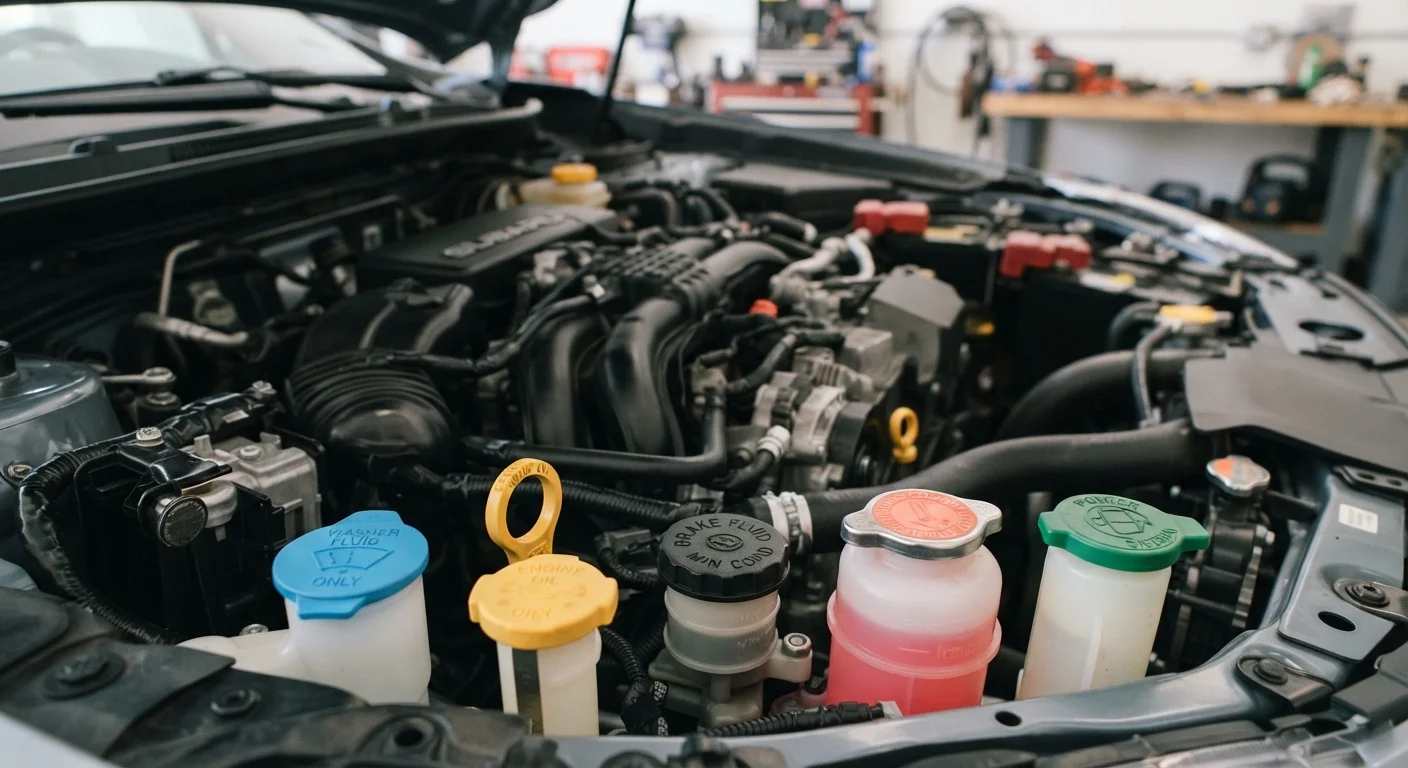
A red thermometer or wavy lines indicate the engine is overheating. Pull over, turn off the engine, and allow it to cool. Never open the radiator cap on a hot engine. Low coolant, a failed water pump, or a stuck thermostat are common causes. See our guide to fluids under the hood for coolant basics.
Tire Pressure (TPMS)
An amber exclamation point inside a tire cross-section means one or more tires has dropped to roughly 25% below its recommended pressure. Check all four tires with a gauge - the TPMS light doesn't identify which tire is affected on most vehicles. For more context on what tire issues can signal, see tire wear patterns and what they mean.
Battery / Charging System
A red battery symbol indicates the electrical system is not charging properly - typically a failing alternator or a bad connection. Electrical systems can fail quickly once the alternator stops charging. Drive directly to a mechanic or auto parts store while minimizing electrical loads (radio, A/C).
Brake System Warning
A red circle with an exclamation point (or the letter P inside a circle) can mean the parking brake is engaged, brake fluid is low, or - more seriously - there's a fault in the hydraulic brake system. If the parking brake is off and the light remains, treat it as urgent. Low brake fluid may indicate worn brake pads or a leak. Do not ignore this light.
ABS Warning
An amber ABS light means the anti-lock braking system has detected a fault. Your regular brakes will still work, but the ABS system - which prevents wheel lockup during emergency stops - may not activate. Schedule service soon rather than deferring indefinitely.
Your Owner's Manual Is the Primary Reference
Warning light symbols and their exact meanings can vary by manufacturer and model year. This article covers the most common standardized symbols, but always cross-reference with your vehicle's owner's manual for precise guidance. If you don't have the manual, most automakers publish them as free PDFs on their official websites.
Before a long drive, cross-referencing these lights with your pre-trip routine can catch issues early. Our pre-drive walkthrough for long road trips walks through the key checks.
What to Do When a Light Comes On
The right response depends on color and context:
- Red light: Pull over safely as soon as conditions allow. Turn off the engine if the warning involves oil pressure or temperature. Call for assistance if needed - do not drive through a red warning.
- Amber light: Note when it appeared and whether any change in vehicle behavior accompanied it. Schedule a diagnostic appointment within a few days. Have the fault code read first to understand the scope before authorizing repairs.
- Unfamiliar symbol: Look it up in your owner's manual before assuming severity. Some symbols (like a car with a key icon) indicate minor issues like a low key fob battery.
For routine maintenance context - understanding what service intervals actually mean - see your car's maintenance schedule explained.
OBD-II Port
A standardized diagnostic socket found in virtually all vehicles made after 1996. A mechanic or scan tool plugs into it to read fault codes stored by the car's computer, including those that trigger the check engine light.
Malfunction Indicator Lamp (MIL)
The technical name for the check engine light. It signals that the vehicle's onboard diagnostics have detected a fault in an emissions-related or engine management system.
TPMS
Tire Pressure Monitoring System. A sensor-based system that alerts the driver when one or more tires falls significantly below the manufacturer's recommended pressure, typically 25% or more.
Limp Mode
A protective state the vehicle's computer may activate when it detects a serious fault. Engine power and sometimes speed are limited to reduce further damage while the car is driven to a safe location or repair facility.
ABS
Anti-lock Braking System. Prevents wheel lockup during hard braking by modulating brake pressure automatically. An ABS warning light means that safety system may not function correctly during emergency stops.
Fault Code (DTC)
Diagnostic Trouble Code - an alphanumeric code (e.g., P0420) stored by the vehicle's computer when a sensor or system reports an out-of-range reading. Codes are read using a scan tool at the OBD-II port.
This article provides general educational information about vehicle warning lights. It is not a substitute for diagnosis by a qualified mechanic. Always consult a licensed automotive professional for repairs, especially when red warning lights are involved.