Why Fluid Levels Matter More Than Most Drivers Realize
Your vehicle runs on a system of fluids, each doing a distinct job. When any one of them drops too low or degrades past its useful life, the consequences range from reduced performance to serious mechanical damage. The good news: checking most fluids takes fewer than five minutes and requires no special tools.
This guide walks through the six fluids found under the hood of most passenger vehicles, what each one does, how to check it correctly, and what low or discolored fluid signals about your car's condition. For a broader pre-trip checklist that puts fluid inspection in context, see our pre-drive walkthrough.
| Engine oil check frequency | Monthly, or before long trips (General industry guidance) |
| Coolant flush interval (typical) | Every 30,000-50,000 miles (Varies by vehicle; check owner's manual) |
| Brake fluid change interval (typical) | Every 2-3 years (Varies by manufacturer recommendation) |
| Transmission fluid interval (automatic) | Every 30,000-60,000 miles (Varies by vehicle and driving conditions) |
| Number of fluids to monitor | 6 (most passenger vehicles) |
| Time to check all fluid levels | Under 10 minutes (With engine cool and car on level ground) |
The Six Essential Fluids and How to Read Them
Engine Oil
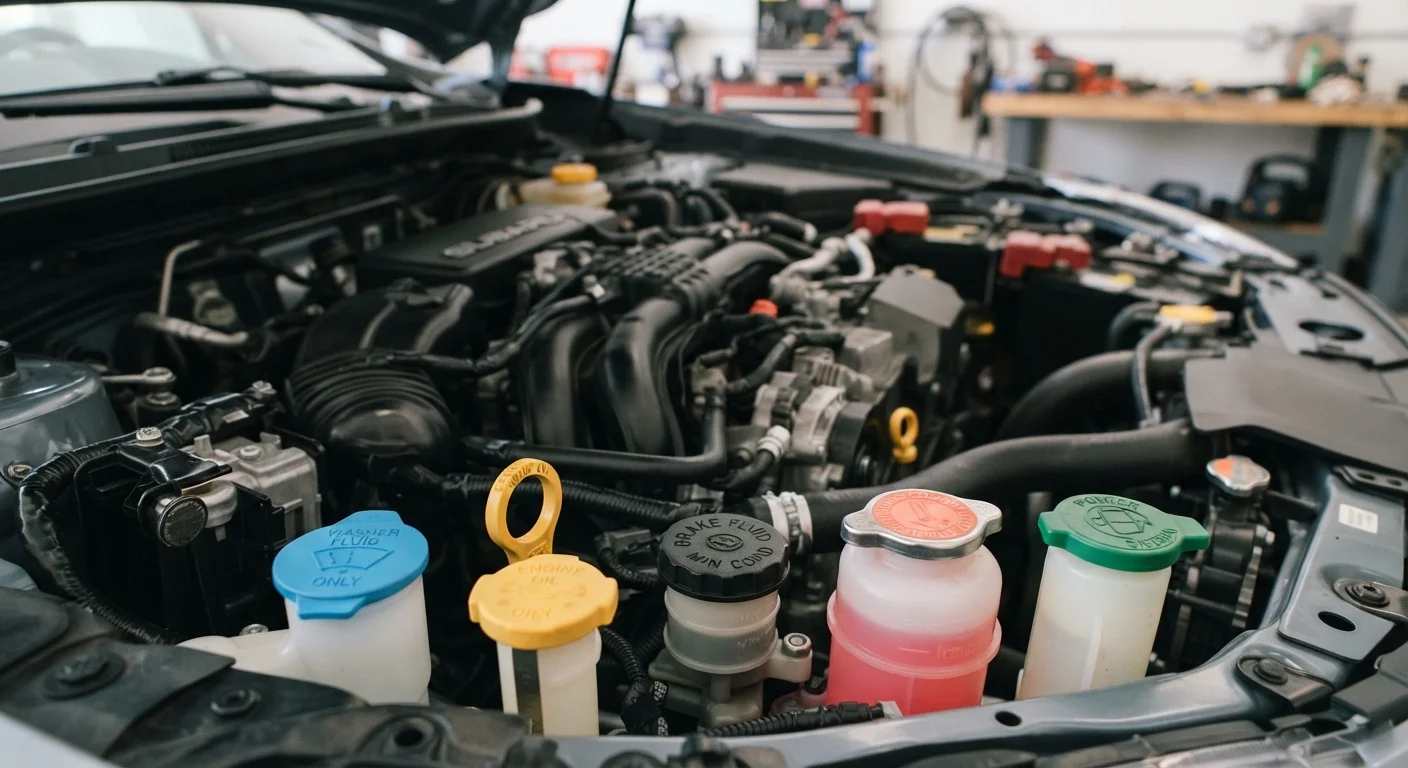
Engine oil lubricates moving metal parts and carries heat away from the engine. Pull the dipstick (usually a brightly colored loop or handle), wipe it clean, reinsert fully, then pull it again. The oil level should fall between the two marks. Color matters too: fresh oil is amber; dark brown or black oil is degraded and overdue for a change. A milky, frothy appearance indicates coolant contamination - a serious problem requiring immediate professional attention.
Coolant (Antifreeze)
Coolant regulates engine temperature by absorbing heat and releasing it through the radiator. Check the translucent overflow reservoir - never open the radiator cap on a hot engine, as pressurized coolant can cause severe burns. The level should be between the MIN and MAX lines. Low coolant can lead to overheating; discolored or rusty coolant has lost its protective additives and should be flushed.
Brake Fluid
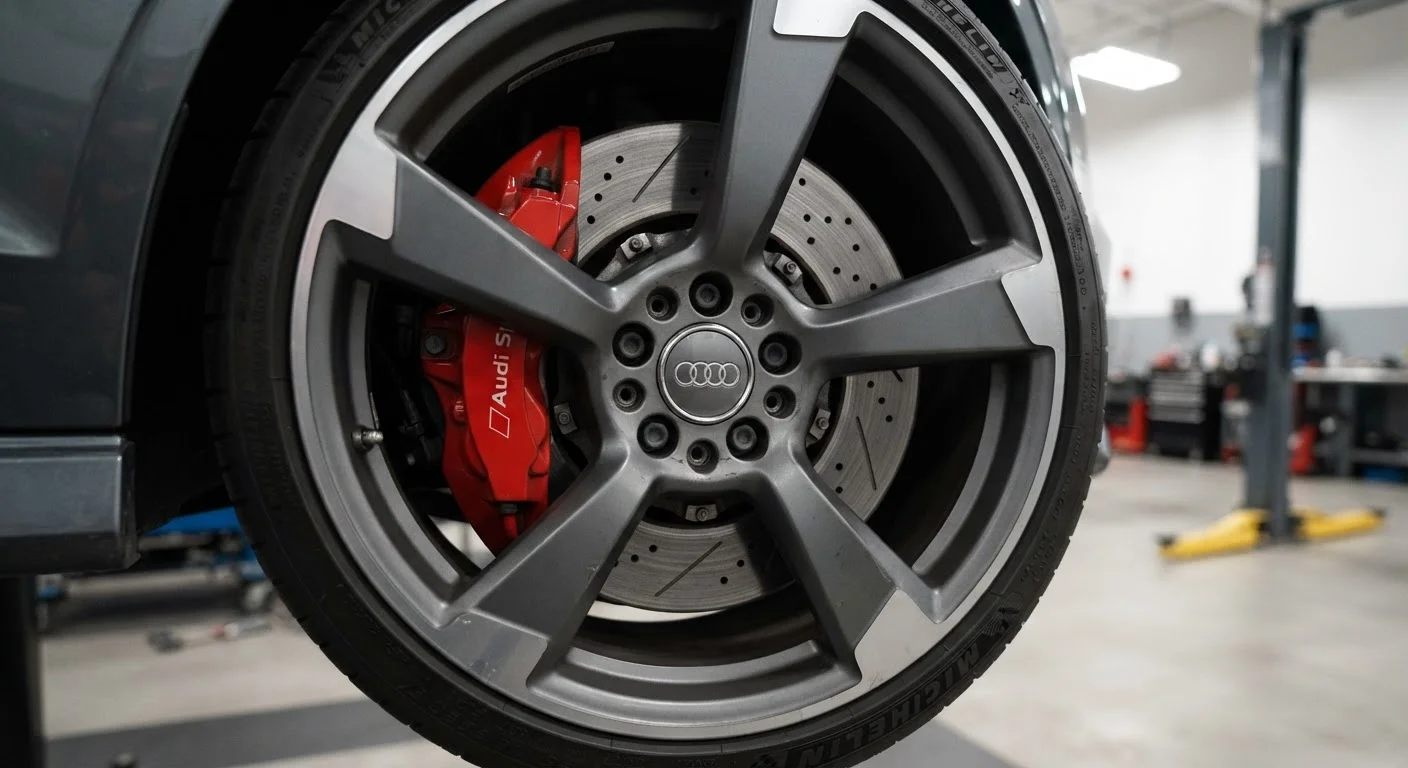
Brake fluid transmits the force from your pedal through hydraulic lines to the brake calipers. The reservoir is typically a small plastic tank near the firewall. Fluid level naturally drops slightly as brake pads wear - a very low level may mean your pads are nearly spent. Dark or murky fluid absorbs moisture over time, lowering its boiling point and reducing stopping effectiveness. For more on how these components interact, see understanding your stopping system. Never drive if brake fluid is critically low.
Transmission Fluid
Transmission fluid lubricates and cools the gearbox. Many automatic transmissions have a dipstick similar to the oil dipstick; check with the engine warm and running (in Park). Healthy fluid is red or pink and slightly translucent. A burnt smell or dark brown color signals degradation. Some modern vehicles have sealed transmissions with no user-accessible dipstick - consult your owner's manual.
Power Steering Fluid
If your vehicle has hydraulic power steering (rather than electric), a small reservoir holds fluid that makes turning effortless. Check between the MIN/MAX lines. Whining or groaning when turning the wheel is a classic sign of low fluid. Note that many newer vehicles use electric power steering and have no fluid reservoir at all.
Windshield Washer Fluid
The only fluid here that won't damage your engine if it runs out - but it will impair visibility. Use a purpose-made washer solution rather than plain water, which can freeze in cold climates and promote bacterial growth in the reservoir.
Dipstick
A long metal rod inserted into a fluid reservoir that allows you to check the level and condition of oil or transmission fluid without opening the system.
Hydraulic system
A system that uses pressurized fluid to transmit force. Your brake and power steering systems are hydraulic, meaning fluid integrity is directly tied to their function.
Coolant flush
A service procedure that drains old coolant from the system, cleans the passages, and refills with fresh fluid. Recommended periodically to restore corrosion protection.
Fluid contamination
When one fluid mixes with another - such as coolant entering engine oil - usually indicating a gasket failure or cracked component requiring immediate professional repair.
Boiling point (brake fluid)
The temperature at which brake fluid vaporizes. As fluid absorbs moisture over time, this threshold drops, increasing the risk of brake fade under heavy use.
Reading the Warning Signs and Knowing When to Act
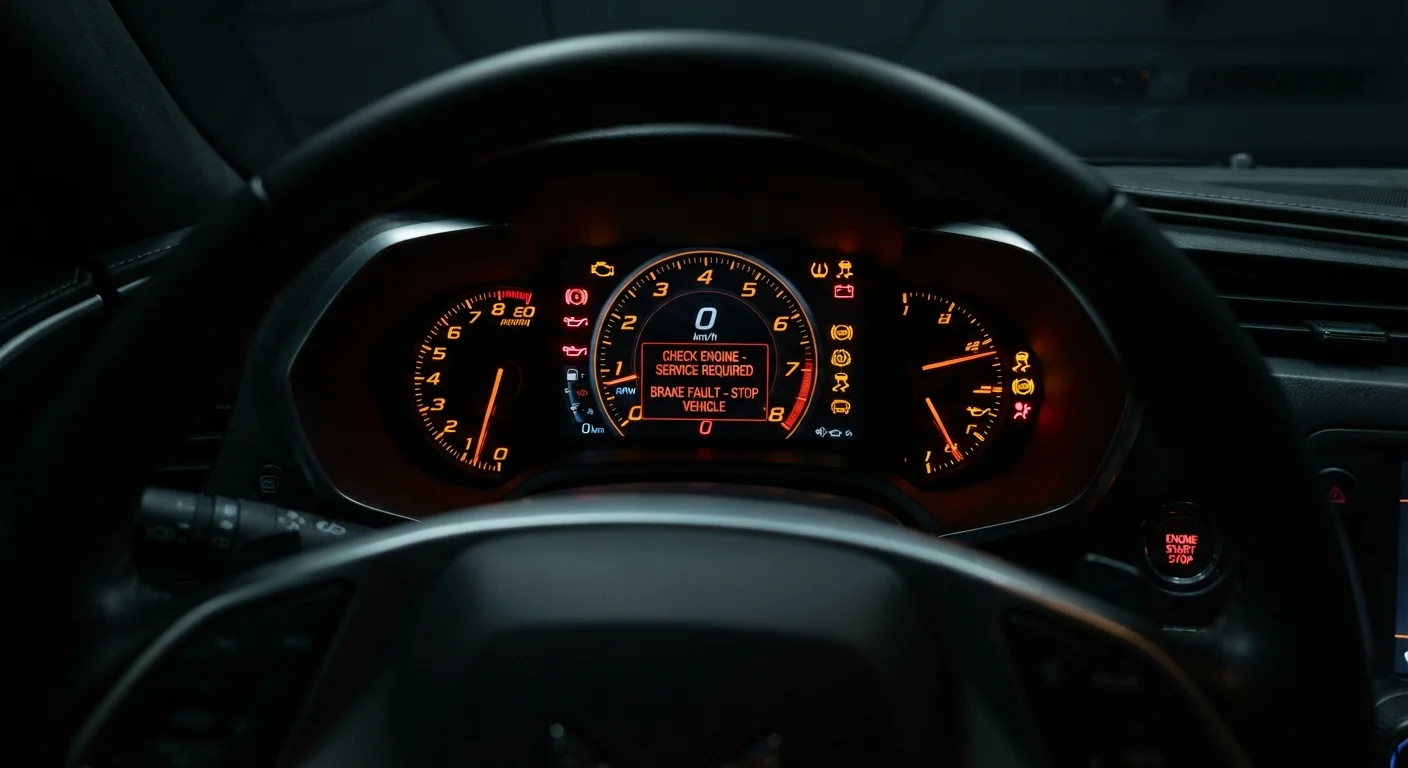
Fluid issues often announce themselves before a dashboard light appears. Puddles under your parked car, burning smells, sluggish steering, or a spongy brake pedal are all worth investigating promptly. If a warning light does illuminate, our dashboard warning light reference explains what each symbol means and how urgently to respond.
~40%
Engine failures linked to lubrication issues
Industry maintenance data consistently identifies low or degraded oil as among the leading causes of premature engine failure.
5 min
Time needed to check all underhood fluids
A complete visual check of oil, coolant, brake, transmission, and washer fluid can be completed in roughly five minutes on a cool engine.
2-3 years
Typical brake fluid service interval
Most manufacturer guidelines and automotive industry sources recommend replacing brake fluid every two to three years regardless of mileage.
Routine fluid checks are a foundational habit, not a substitute for professional service. Knowing what you're looking at empowers you to have more informed conversations with mechanics, spot a problem early, and avoid paying for repairs that better monitoring could have prevented. For a full picture of service intervals by mileage, see your car's maintenance schedule, explained.
This article provides general vehicle information for educational purposes. Always consult your vehicle's owner's manual and a qualified mechanic before performing or deferring any maintenance task.