How the Three Components Work Together
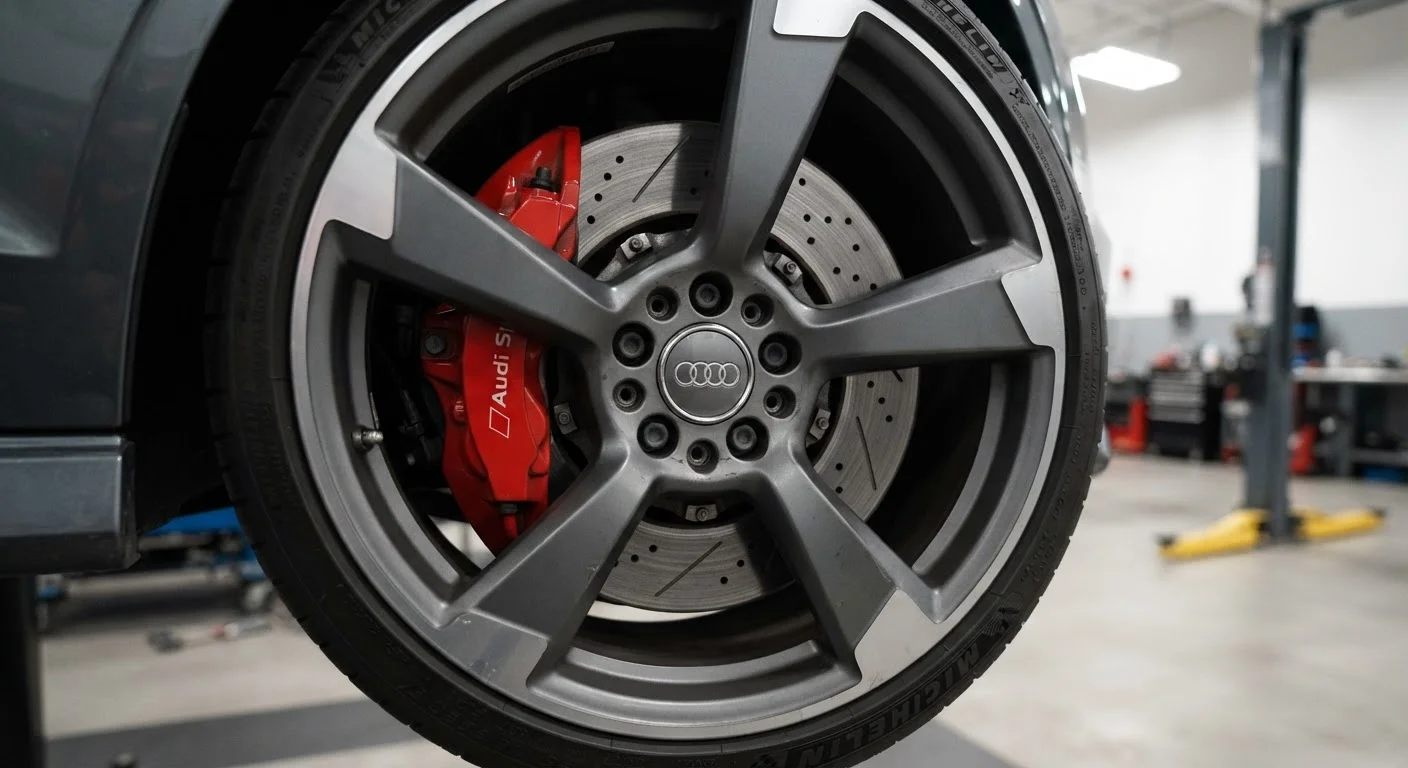
Your braking system converts kinetic energy - your car's forward motion - into heat through friction. Three components make this happen every time you press the pedal: the brake pad, the rotor, and the caliper. None of them works in isolation.
Brake pad
A replaceable friction block that clamps against the rotor to slow the wheel. It consists of a metal backing plate bonded to a friction material layer.
Rotor
The large metal disc attached to the wheel hub. Brake pads press against both faces of the rotor to create stopping friction.
Caliper
The hydraulic clamp that holds the brake pads and squeezes them against the rotor when you press the brake pedal.
Wear indicator
A small metal tab built into the brake pad that contacts the rotor and produces a squealing noise when the pad material has worn thin enough to need replacement.
Brake fade
A temporary reduction in braking effectiveness that occurs when brakes overheat, often during sustained heavy use such as descending a long hill.
Rotor resurfacing
A machining process that removes a thin layer from the rotor's surface to restore smoothness and even contact, extending its usable life if enough material remains.
When you press the brake pedal, hydraulic pressure from the brake fluid pushes the caliper's pistons inward, squeezing the brake pads against each side of the spinning rotor. That clamping friction is what slows and stops the wheel. Understanding this sequence matters because a problem anywhere in the chain - worn pads, a warped rotor, a sticking caliper - degrades the whole system's performance.
For a broader look at how braking fits into your vehicle's overall upkeep rhythm, see our car maintenance intervals guide.
Brake Pads: What Wears First
Brake pads are the most frequently replaced brake component. They consist of a metal backing plate bonded to a friction material - typically organic compounds, semi-metallic blends, or ceramic composites. Each material trades off noise level, dust output, heat tolerance, and longevity differently, though the core job is the same.
Most pads include a small metal tab called a wear indicator. As the friction material wears down, this tab contacts the rotor and produces a high-pitched squeal - an intentional audible alert designed to get your attention before damage occurs. Ignoring that squeal and continuing to drive will eventually lead to metal-on-metal grinding, which can score the rotor surface and dramatically increase repair costs.
Check Pads When You Rotate Tires
Tire rotations are the natural checkpoint for brake pad inspection since the wheels are already off the vehicle. Most shops include a quick visual brake check at no extra charge during a rotation service. Pairing these tasks means you will rarely be caught off guard by worn pads. See our tire rotation and alignment guide for rotation intervals.
Pad lifespan varies considerably. City drivers who brake frequently may need replacement closer to the 25,000-mile end of the spectrum. Highway commuters with smooth, gradual braking habits may reach 60,000-70,000 miles. Towing or carrying heavy loads accelerates wear on all brake components.
Rotors and Calipers: The Supporting Cast
The rotor (also called a brake disc) is the large metal disc bolted behind your wheel. When pads clamp against it, the resulting friction generates substantial heat. Rotors are engineered with vanes or slots to dissipate that heat, but repeated hard stops or sustained heavy braking can cause a rotor to warp - producing a pulsation or vibration felt through the brake pedal.
Rotors have a minimum thickness specification stamped directly on them. A machinist can resurface a rotor by cutting away a thin layer to restore a smooth, even surface, but only if enough material remains. Rotors that are below minimum thickness, cracked, or deeply grooved must be replaced entirely.
The caliper is the hydraulically-actuated clamp that holds the pads and presses them against the rotor. Calipers can develop two common problems: a leak in the hydraulic seals (reducing clamping force) or a seized piston that fails to retract after braking (causing the pad to drag constantly against the rotor). A dragging caliper accelerates pad and rotor wear and can generate a burning smell after even moderate driving.
For related fluid system context, our fluids under the hood guide covers brake fluid alongside other critical vehicle fluids.
Never Ignore a Grinding Brake Noise
Grinding indicates that the pad's friction material is fully depleted and metal components are contacting the rotor directly. Continuing to drive in this condition damages the rotor surface rapidly and can compromise caliper integrity. What begins as a pad-only replacement can quickly become a full rotor and caliper job - at significantly higher cost.
Warning Signs You Should Not Ignore
Your vehicle communicates brake wear through several channels. Learning to read them helps you act before a minor service becomes an urgent - and expensive - repair.
- Squealing or squeaking: Often the wear indicator making contact. Have pads inspected soon.
- Grinding or growling: Metal-on-metal contact. Do not delay - rotor damage may already be occurring.
- Pulling to one side: A stuck caliper or uneven pad wear. Can also indicate a tire or alignment issue, but brakes should be ruled out first.
- Vibration or pulsation through the pedal: Commonly caused by a warped rotor, though wheel balance problems can mimic this symptom.
- Longer stopping distances: Could indicate worn pads, air in the brake lines, or degraded brake fluid. Any noticeable change in stopping performance warrants prompt inspection.
- Spongy or soft pedal: Air in the hydraulic system or low brake fluid - both require immediate attention.
Many of these signs overlap with other vehicle issues, so a thorough inspection by a qualified mechanic is always the clearest path to an accurate diagnosis. See also: vehicle maintenance from scratch for a broader new-driver foundation.
When to Visit a Shop
Brake inspection is not a complex diagnostic - most shops include it during tire rotations or oil changes. You can also do a basic visual check yourself by looking through the wheel spokes: the pad material pressed against the rotor should be clearly visible. If the friction layer looks thinner than a quarter-inch, a professional measurement is warranted.
Some brake jobs are straightforward enough that mechanically confident drivers handle them at home. However, brake work directly affects your safety and the safety of others on the road. Tasks involving caliper replacement, brake line bleeding, or any work on rear drum brake assemblies are generally best left to a qualified mechanic, especially if you lack the tools or experience to verify the result.
Axle Pairs: Replace Both Sides Together
Most mechanics recommend replacing brake pads on both wheels of the same axle at the same time, even if only one side is visibly worn. Pads on the same axle wear at similar rates, and mismatched friction can cause uneven braking and vehicle pull. Rotors are typically replaced in pairs for the same reason.
Brake service pricing varies widely by vehicle, region, and shop. Getting a written estimate before authorizing work - and asking whether rotors need replacement or can be resurfaced - gives you meaningful information to evaluate the recommendation. For a broader picture of how brake service fits into scheduled maintenance, see our maintenance schedule guide.
This article is intended for general informational purposes. Brake system conditions vary by vehicle make, model, and individual driving history. Always consult a qualified mechanic for diagnosis and repair of your specific vehicle.