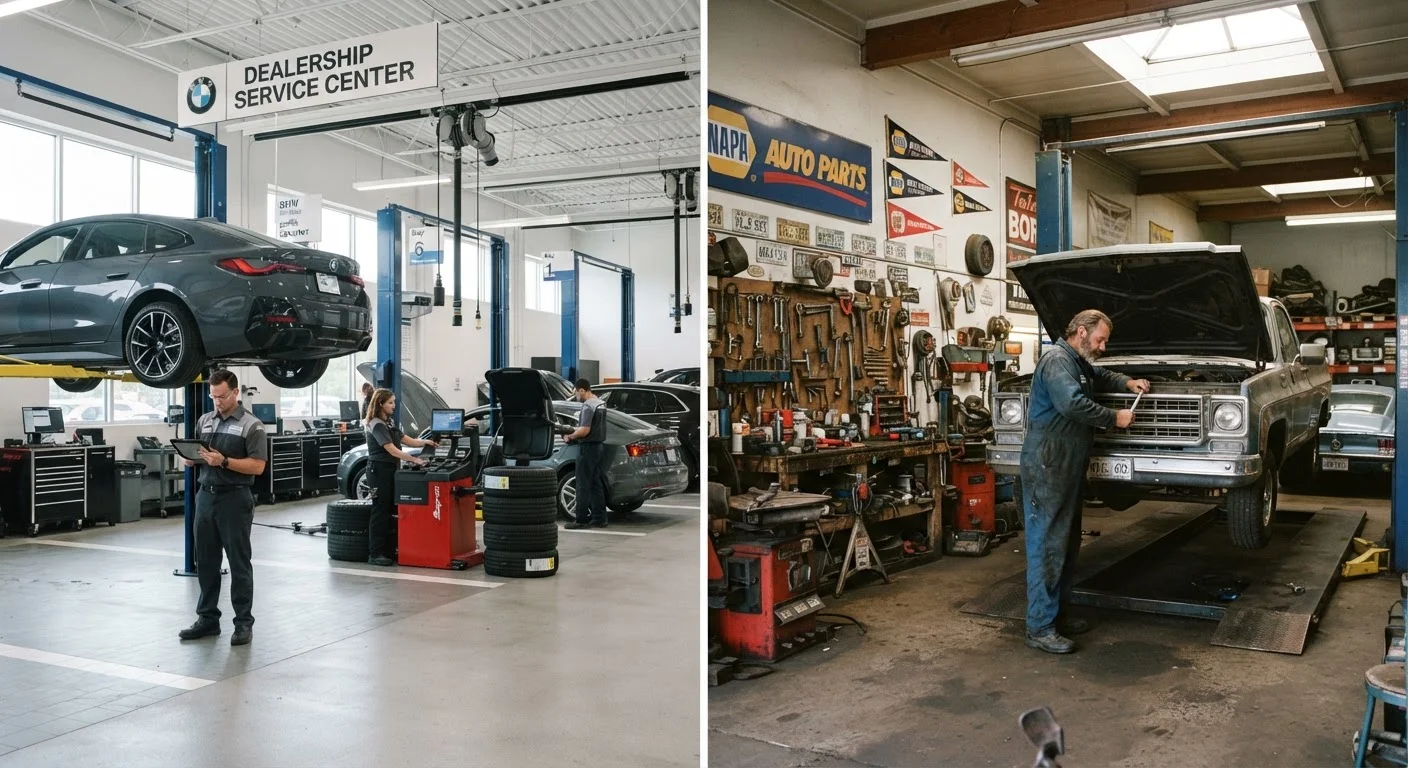
The Core Structural Difference
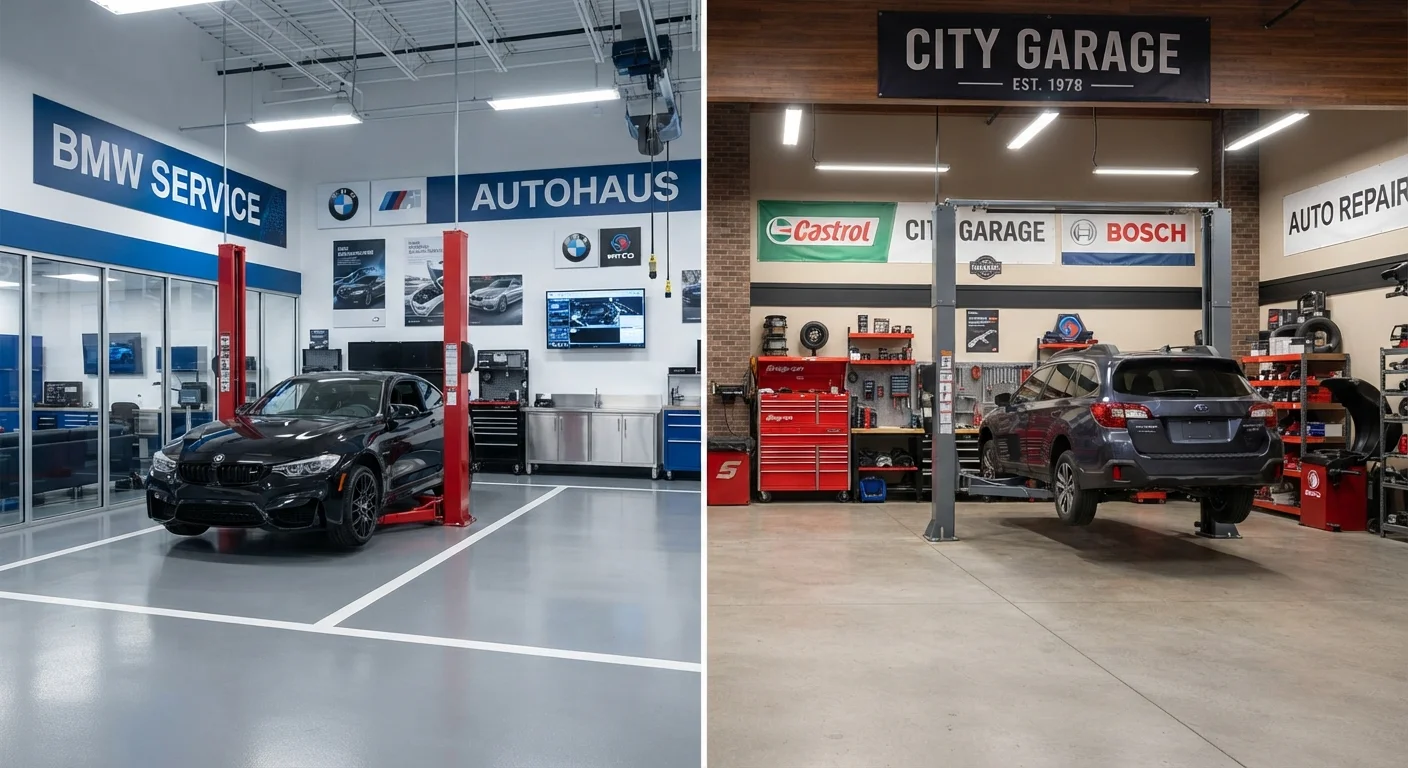
Dealer service centers are operated by franchised dealerships and staffed by technicians who receive factory training specific to one manufacturer. They use Original Equipment Manufacturer (OEM) parts - components built to the same specifications as what came on your vehicle. Independent mechanics, by contrast, work across multiple makes and models and typically source aftermarket or OEM-equivalent parts from third-party suppliers.
This structural difference shapes nearly every trade-off you'll encounter: cost, parts quality, diagnostic capability, and the depth of model-specific knowledge available. Neither structure is inherently superior - each fits different circumstances. Understanding those circumstances is what puts you in control. For a broader look at how these two service environments compare at a structural level, see our in-depth structural comparison.
Cost: What You're Actually Paying For
Dealer service centers consistently carry higher labor rates than most independent shops. This reflects overhead costs - branded facilities, proprietary diagnostic equipment, and manufacturer certification programs. Hourly labor rates at dealerships can run noticeably higher than independent shops in the same market, though exact figures vary widely by region and vehicle brand.
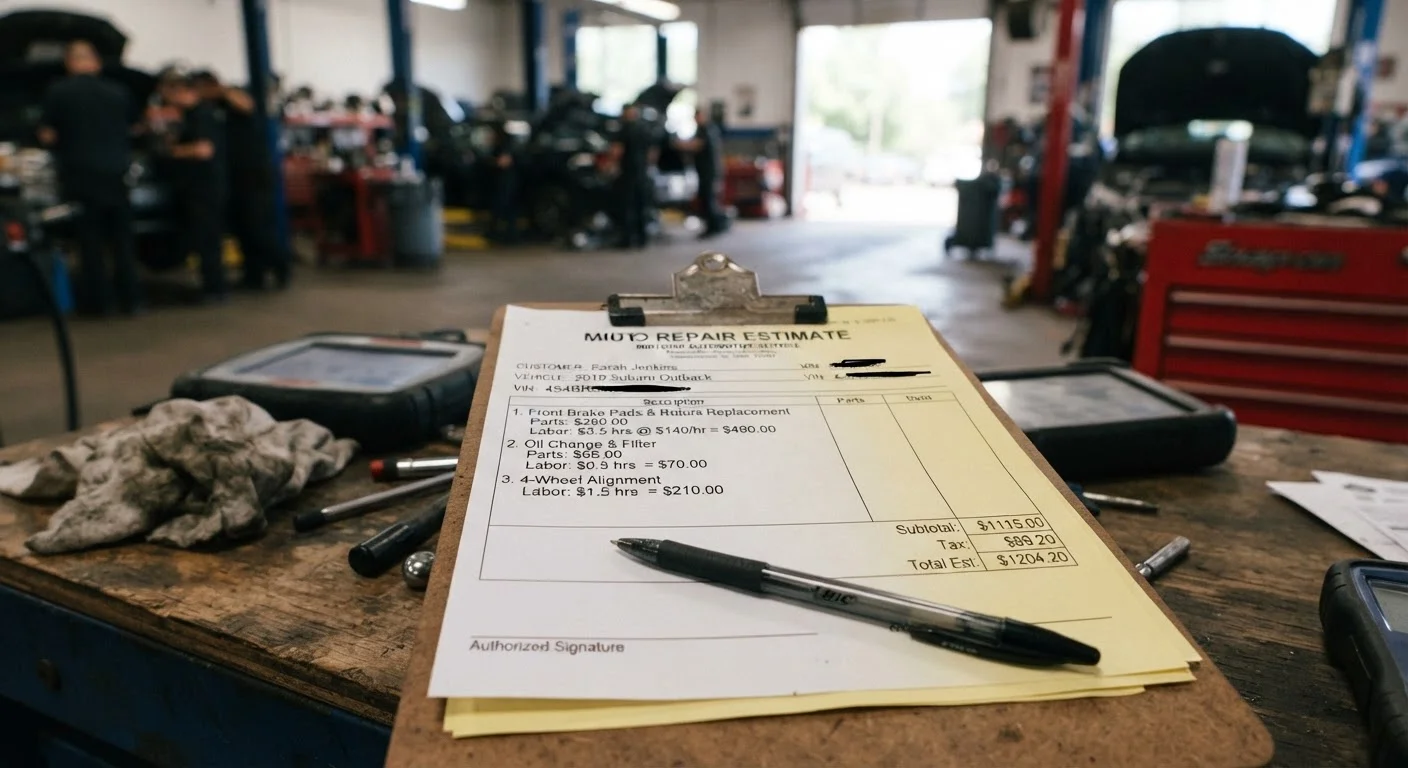
Independent mechanics typically operate with lower overhead and pass some of that savings along. Aftermarket parts - which vary in quality - are often less expensive than OEM alternatives, though reputable shops can source quality equivalents. Before assuming the independent route is always cheaper, request an itemized estimate from both. Decoding a repair estimate's line items helps you compare them meaningfully rather than just comparing headline totals.
| Dealer Service Center | Independent Mechanic | |
|---|---|---|
| Labor Cost | Generally higher | Generally lower |
| Parts Used | OEM (factory spec) | Aftermarket or OEM-equivalent |
| Brand-Specific Expertise | Factory-trained, model-specific | Broad multi-make experience |
| Diagnostic Tools | Proprietary manufacturer software | Professional aftermarket scan tools |
| Recall & TSB Access | Full, real-time access | Limited or indirect access |
| Warranty Work | Required for some warranty claims | Permitted for most routine service |
| Convenience | Loaner cars often available | Varies widely by shop |
Warranty: What the Law Actually Says
A common misconception is that taking your new vehicle to an independent mechanic automatically voids the manufacturer's warranty. Under the Magnuson-Moss Warranty Act - a federal consumer protection law - manufacturers generally cannot void a warranty simply because you chose a non-dealer shop for routine service, provided the work was performed correctly and with appropriate parts.
However, nuances matter. If an independent shop performs a repair incorrectly and that error causes a subsequent failure, the warranty claim for that failure could be denied. Keeping thorough service records from any shop you use is important. For powertrain or extended warranty coverage specifically, review the policy terms carefully, as some aftermarket warranty contracts do require dealer service. When in doubt, consult the warranty documentation directly.
Keep Service Records Regardless of Where You Go
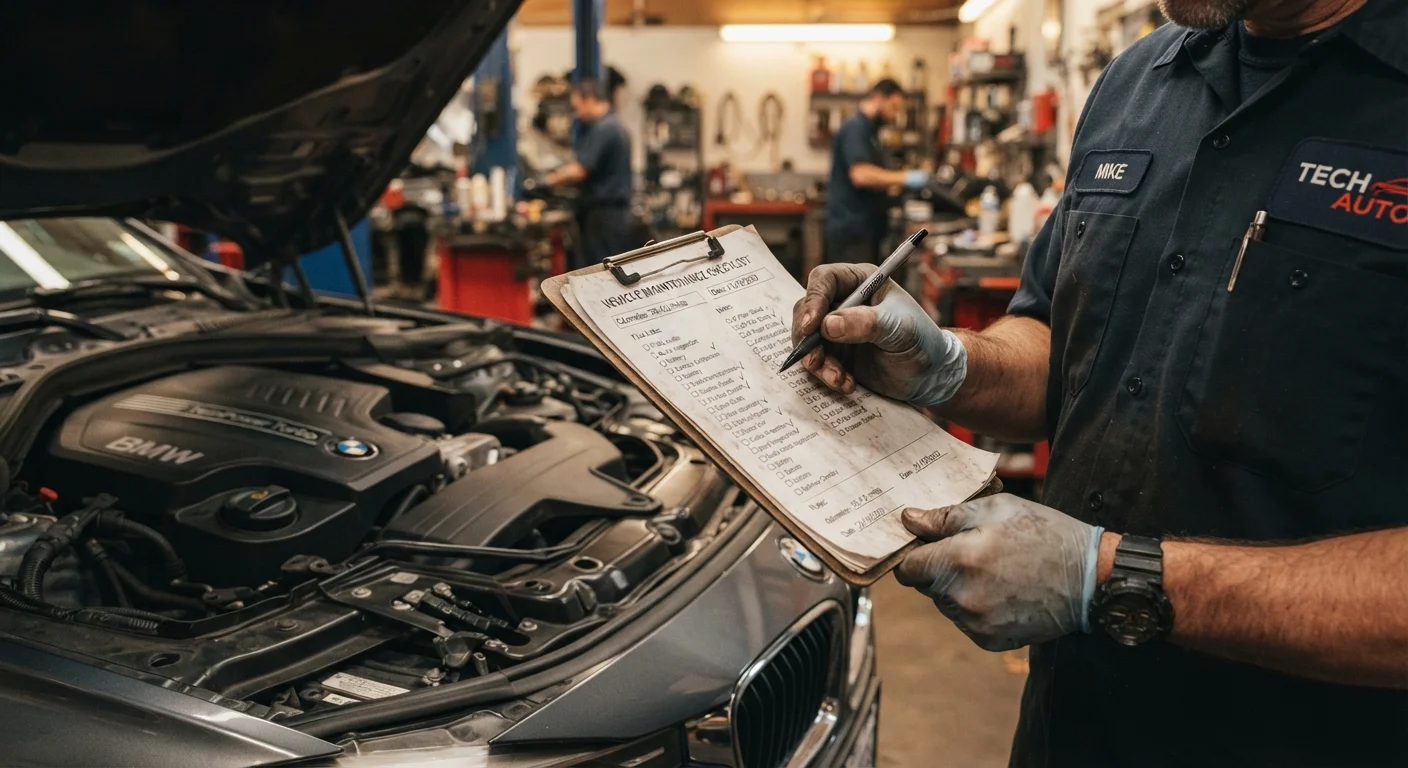
Whether you use a dealer or an independent shop, maintaining a complete paper or digital trail of all service performed - dates, mileage, parts installed, and work completed - protects your warranty rights and your resale value. A manufacturer or warranty provider disputing a claim is far less likely to succeed when you have documented proof of proper maintenance. Never leave a shop without a detailed, itemized receipt.
Expertise and Diagnostic Capability
Dealer technicians have access to manufacturer-specific diagnostic software, technical service bulletins (TSBs), and recall databases that independent shops may not always have in full. For complex, model-specific issues - unusual electrical faults, transmission calibrations, advanced driver-assistance system (ADAS) resets - that specialized tooling can make a material difference in diagnosis time and accuracy.
Independent mechanics compensate with breadth of experience across many makes and often invest in professional-grade aftermarket scan tools (such as those meeting J2534 standards). For the vast majority of common repairs - brakes, suspension, cooling systems, oil changes - a skilled independent technician is fully equipped. Matching the complexity of the job to the shop's strengths is the practical principle here. Check our guide on maintenance intervals that actually matter to understand which services are genuinely routine versus more involved.
Look for ASE Certification at Independent Shops
ASE (Automotive Service Excellence) certification is a nationally recognized credential that signals a technician has passed standardized competency tests. When evaluating an independent mechanic, ask whether their technicians hold current ASE certifications relevant to your needed repair. It's one of the clearest quality indicators available and doesn't cost you anything to verify.
When to Choose Each - and When It's a Close Call
Choose a dealer service center when: your vehicle is under the original manufacturer's warranty; the work involves a recall or TSB; you need a software update or ADAS calibration; or the repair is so model-specific that proprietary tools are likely required.
Choose an independent mechanic when: your vehicle is out of warranty; the service is routine (oil changes, tire rotation, brake pads, filters); you've built a trusted relationship with a shop that knows your car's history; or cost is a significant constraint. Older, higher-mileage vehicles often reach a point where repair economics shift entirely - understanding when repairs stop making financial sense is a useful companion decision to this one.
The close-call scenario: a moderately complex repair on an out-of-warranty vehicle. Here, getting estimates from both, checking shop certifications (ASE-certified technicians are a reliable credential at independent shops), and asking about parts sourcing will give you enough information to decide with confidence.
This article provides general informational guidance about vehicle service options and is not a substitute for advice from a qualified mechanic regarding your specific vehicle's needs.