The Repair-or-Replace Question Is Mostly a Math Problem
When a mechanic hands you an estimate that makes your stomach drop, the instinct is often to start shopping for something new. But replacing a vehicle introduces its own significant costs - a down payment, monthly loan payments, higher insurance premiums, and taxes and fees. Understanding the actual numbers on both sides of the ledger is the only reliable way to make this decision.
A useful starting point is comparing the repair cost to the vehicle's current market value. Resources such as government vehicle valuation guides and independent pricing tools can give you a ballpark. If the repair is a small fraction of that value - say, under 20% - the math almost always favors fixing it. The challenge is when the estimate climbs toward or past the car's worth.
See our full breakdown of annual vehicle ownership costs to understand what you'd actually be signing up for with a replacement.
The 50% Rule: A Starting Framework
A widely referenced guideline suggests that if a single repair estimate exceeds 50% of the vehicle's current market value, it's worth seriously evaluating replacement. This isn't a hard rule - a car worth $4,000 with a $2,200 repair might still be worth fixing if it has low mileage and solid history. Use the threshold as a prompt to do deeper analysis, not as an automatic verdict.
When Keeping the Car Makes Financial Sense
There are clear situations where repair is the rational choice, even when the estimate is painful.
No monthly loan payment on a paid-off car
Eliminating a car payment worth several hundred dollars a month is a tangible, immediate financial benefit that a repair bill - even a large one - often cannot match.
Lower insurance costs than a newer vehicle
Older vehicles with no outstanding loan typically qualify for liability-only coverage, which costs substantially less than the comprehensive and collision coverage required on most financed vehicles.
Known maintenance history reduces uncertainty
A car you've owned and serviced consistently holds fewer hidden surprises than a used vehicle with an unknown past or a new model with unproven long-term reliability data.
Avoids depreciation hit on a new purchase
New vehicles lose a significant portion of their value in the first few years of ownership; keeping a paid-off car sidesteps this cost entirely.
A car that is paid off represents significant ongoing savings - the average new-vehicle monthly payment in the U.S. has exceeded $700 in recent years. Putting $1,500 or even $2,500 into a reliable vehicle you own outright can easily beat two or three months of new-car payments. Add the probability that your current insurance premiums are lower than they would be on a newer model, and the gap widens further.
Maintenance history matters too. A vehicle that has been serviced consistently according to schedule - oil changes, fluid flushes, timing belt replacements - is a fundamentally different financial asset than one that has been neglected. For guidance on how deferred maintenance compounds into expensive repairs, the pattern is worth understanding before you rule out keeping the car.
When Replacing Becomes the Smarter Call
There are genuine scenarios where pouring more money into a vehicle stops making sense, regardless of sentimental attachment.
Recurring repairs signal systemic vehicle decline
Multiple unrelated failures within a short period often indicate that a vehicle's components are aging simultaneously, making future repair costs difficult to predict or contain.
Safety-critical failures may not justify repair
When structural integrity, restraint systems, or critical safety electronics are compromised, the financial argument for repair becomes secondary to personal safety.
Repair cost may exceed current market value
When the estimate surpasses what you could sell or trade the vehicle for today, you are effectively investing more than the asset is worth - a position most financial frameworks caution against.
Parts scarcity drives up costs over time
For discontinued models or vehicles with low production numbers, sourcing replacement parts becomes progressively harder and more expensive, compounding future repair bills.
The clearest trigger is a pattern of escalating, unrelated repairs. One large bill may be an anomaly; a third significant repair in 18 months on different systems signals that the vehicle is entering a phase of compound deterioration. Tracking every repair in a simple log makes this pattern visible rather than anecdotal.
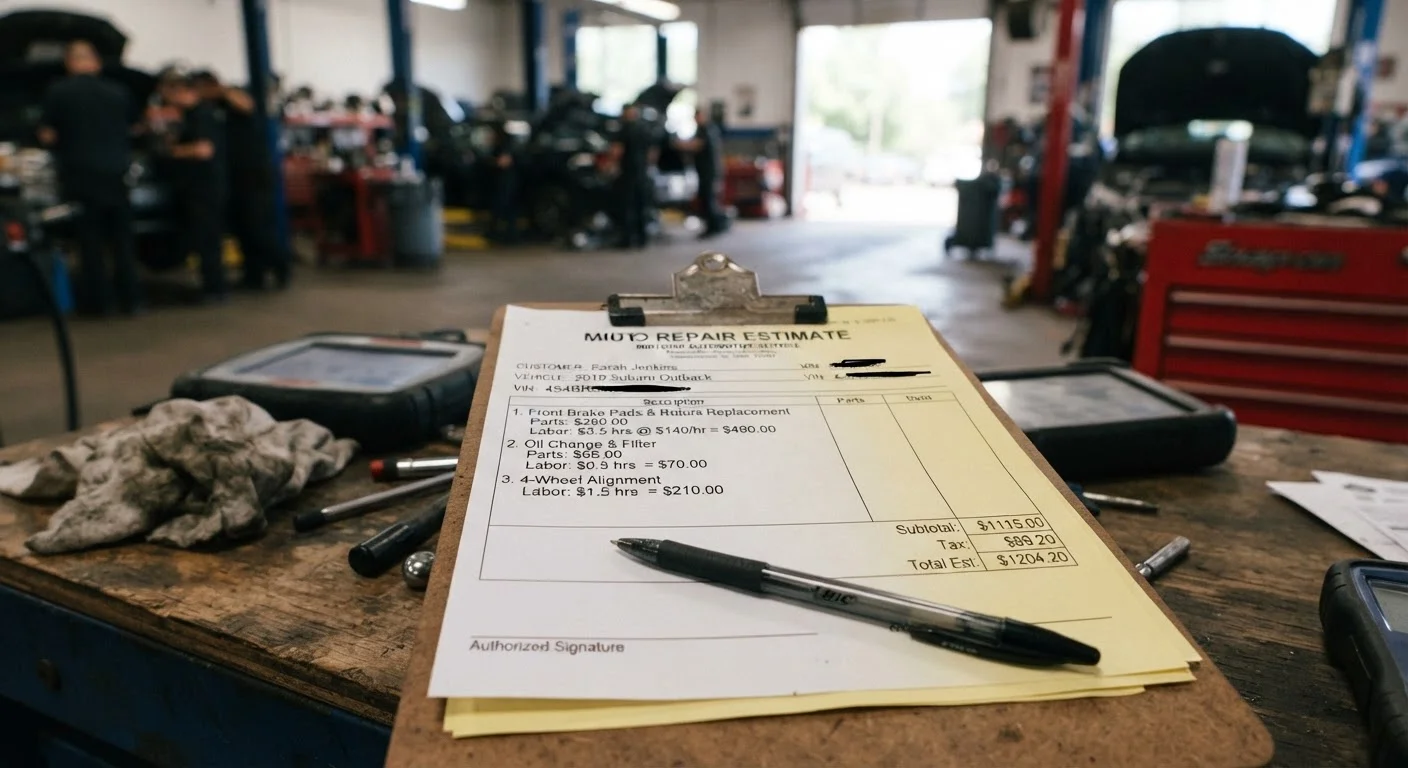
Safety-critical failures - compromised structural integrity after a serious collision, failing antilock brake systems on a high-mileage vehicle, or an airbag recall with no available remedy - change the calculus entirely. No financial argument justifies operating an unsafe vehicle. If you're unsure how to evaluate a repair estimate for what it actually covers, decoding the line items on a mechanic's estimate is a practical first step.
50%
Common repair-to-value threshold
Many automotive financial advisers cite a rule of thumb: if repair costs exceed 50% of the vehicle's current market value, replacement warrants serious evaluation.
$700+
Average new-car monthly payment (U.S.)
Industry tracking data has shown average new-vehicle loan payments in the United States surpassing $700 per month in recent years, a key baseline for repair-versus-replace comparisons.
Factors That Belong in Every Repair-or-Replace Decision
Beyond the headline repair cost, several factors deserve weight before you commit either way:
- Remaining useful life: A well-maintained vehicle at 90,000 miles often has considerable life left. A neglected one at the same mileage may not.
- Parts availability: Some older or discontinued models have limited parts supply, which drives up future repair costs and wait times.
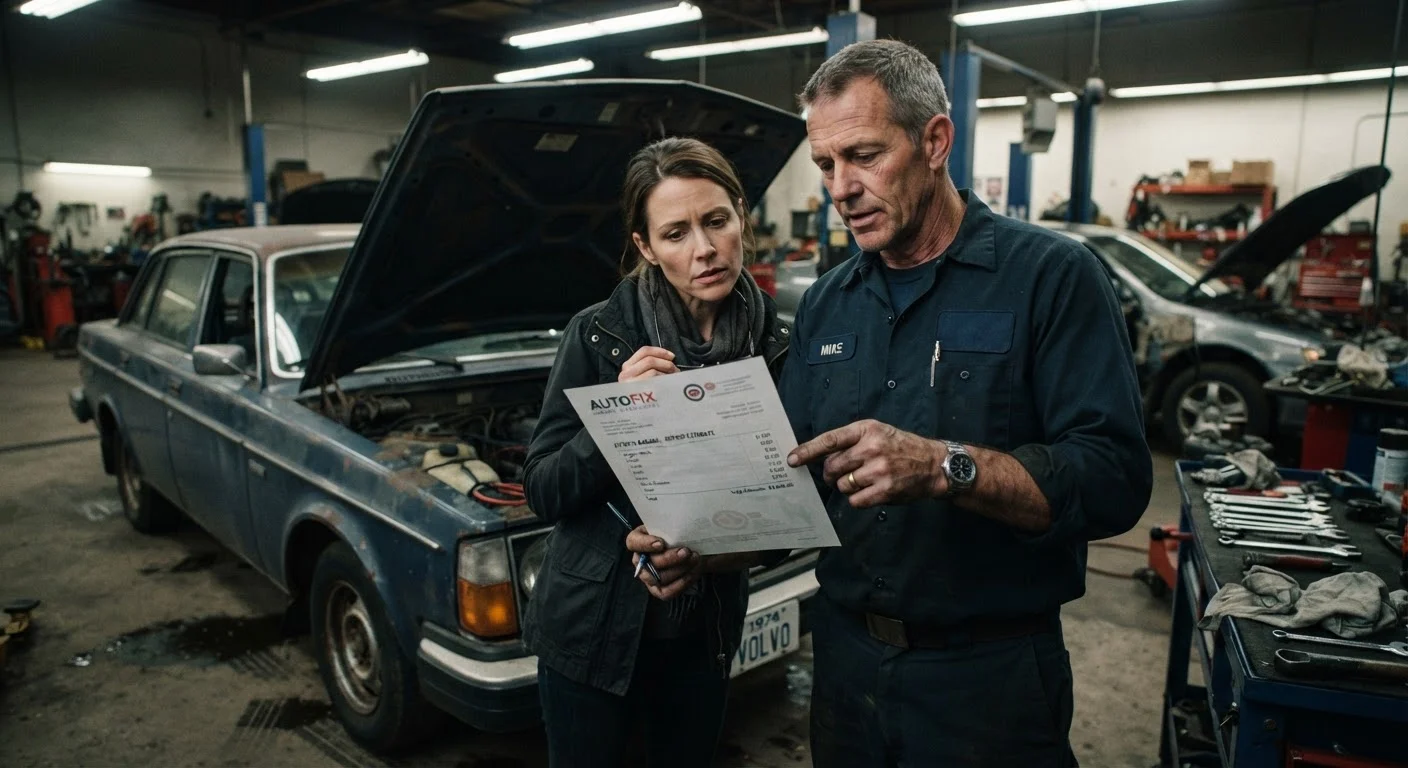
- Second opinion value: A single estimate is not a verdict. Comparing service options - dealer versus independent shop - can reveal meaningful price differences for the same work.
- Your financial flexibility: If a large repair would require high-interest financing, the actual cost is higher than the estimate. That changes the comparison.
Exploring transportation alternatives is also worth factoring in if your usage patterns have changed - some drivers find they need a vehicle less than they assumed.
This article is for general informational purposes only and does not constitute financial or mechanical advice. Consult a qualified mechanic and, for financial decisions, a licensed financial adviser.