
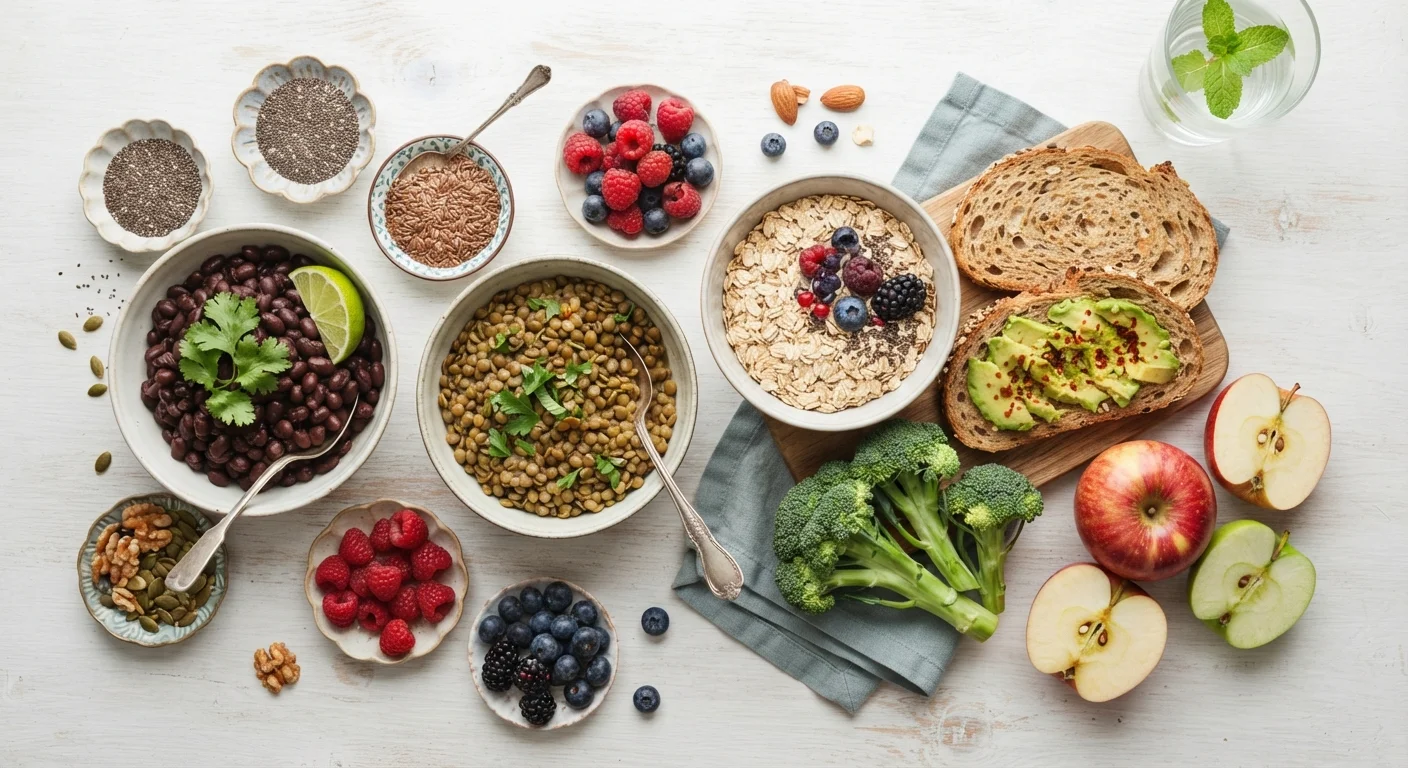
Why Fiber Deserves More Attention
Protein gets the marketing spotlight. Vitamins fill supplement aisles. But dietary fiber - one of the most consistently supported nutrients in nutrition research - quietly goes unacknowledged on most American plates. The average U.S. adult takes in roughly 15 grams of fiber per day, well below the general target of 25-38 grams recommended by federal dietary guidelines.
That gap matters. Fiber is involved in several body systems simultaneously: it slows glucose absorption to support steadier blood sugar, binds to cholesterol in the digestive tract to support heart health, feeds beneficial gut bacteria, and contributes to the sense of fullness after meals. Understanding what fiber actually does - and where to find it - is a practical first step toward eating more of it.
~15g
Average daily fiber intake for U.S. adults
The Dietary Guidelines for Americans estimate average adult fiber consumption at roughly 15 grams per day - about half the general recommended amount.
25-38g
Daily fiber target for most adults
The Dietary Guidelines for Americans recommend approximately 25 grams per day for women and 38 grams per day for men, varying by age and caloric intake.
95%
Americans who fall short of fiber goals
Research published in nutrition epidemiology literature estimates that the vast majority of Americans do not meet recommended daily fiber intake levels.
Soluble vs. Insoluble: What the Difference Means for You
Fiber is not one uniform substance. It exists in two main forms, and knowing the difference helps explain why variety in food choices matters.
- Soluble fiber dissolves in water and forms a viscous gel in the digestive tract. This slows the absorption of sugar and can help lower LDL ("bad") cholesterol. Oats, barley, apples, citrus fruits, beans, and flaxseeds are good sources.
- Insoluble fiber does not dissolve in water. It adds bulk to stool and helps food move through the intestines more efficiently, supporting regularity. Whole wheat products, nuts, seeds, and most vegetables are rich in this type.
Most whole plant foods contain both types in varying ratios. Eating a wide range of plant foods naturally provides a mix without the need to track each form separately. For a practical look at how to build meals around these principles, see building a balanced plate.
A Simple Way to Boost Fiber Daily
You don't need to track grams obsessively. A useful rule of thumb: aim to include at least one plant food at every meal - a piece of fruit, a serving of vegetables, a scoop of beans, or a whole grain. These small additions compound meaningfully over the course of a day.
Where Fiber Actually Lives in Your Diet
Fiber is found exclusively in plant foods. It is absent from meat, dairy, and eggs. Here are reliable, accessible sources:
- Legumes: Lentils, black beans, chickpeas, and kidney beans are among the most fiber-dense foods available - and among the most affordable. See eating well on a budget for ways to incorporate them cost-effectively.
- Whole grains: Oats, brown rice, quinoa, barley, and whole wheat bread or pasta offer meaningfully more fiber than their refined counterparts.
- Vegetables: Broccoli, Brussels sprouts, carrots, and leafy greens all contribute, especially when eaten with skins intact where applicable.
- Fruits: Pears, apples, raspberries, and bananas are solid sources. Eating whole fruit preserves fiber that juicing removes.
- Nuts and seeds: Almonds, chia seeds, and flaxseeds offer fiber alongside healthy fats.
Learning to read food labels can help you identify fiber content in packaged products. Reading labels with confidence is a skill worth building for the whole household.
How to Increase Fiber Without the Discomfort
Jumping from a low-fiber diet to a high-fiber one overnight often leads to bloating, cramps, and gas. The digestive system needs time to adapt, and the gut microbiome - the community of bacteria that ferments fiber - adjusts gradually.
Digestive Adjustment Is Normal
Some gas and bloating when increasing fiber is a normal sign that gut bacteria are responding to more fermentable material. This typically subsides within a few weeks as the microbiome adapts. If discomfort is severe or persistent, it's worth discussing with a healthcare provider, as certain digestive conditions can affect fiber tolerance.
A practical approach is to add one higher-fiber food per day over a few weeks rather than overhauling the entire diet at once. Swapping white bread for whole grain, adding a serving of beans to a weekly meal, or including a piece of whole fruit instead of juice are small, sustainable shifts.
Hydration also plays a key role. Fiber absorbs water as it moves through the digestive tract, and insufficient fluid intake can contribute to constipation rather than relieving it. How food affects fluid balance is worth understanding alongside any increase in fiber intake.
This article is for general informational purposes only and is not medical or dietary advice. For personalized guidance, consult a qualified healthcare professional or registered dietitian.