
Why Food Labels Are Harder to Read Than They Should Be
Food packaging exists for two purposes: to inform and to sell. Those goals are often in tension. Manufacturers are required by law to include a Nutrition Facts panel with accurate data, but they're also free to plaster the front of the box with claims designed to make the product look as appealing as possible. The result is a product where the back tells you the truth and the front tells you what they want you to hear.
For families navigating a grocery store with kids in tow and a budget to manage, sorting through all of that takes real skill. The good news is that nutrition literacy isn't complicated once you know where to look - and which parts of the label to mostly ignore. This article walks through the key sections of a standard U.S. Nutrition Facts label so you can shop with more confidence and less guesswork.
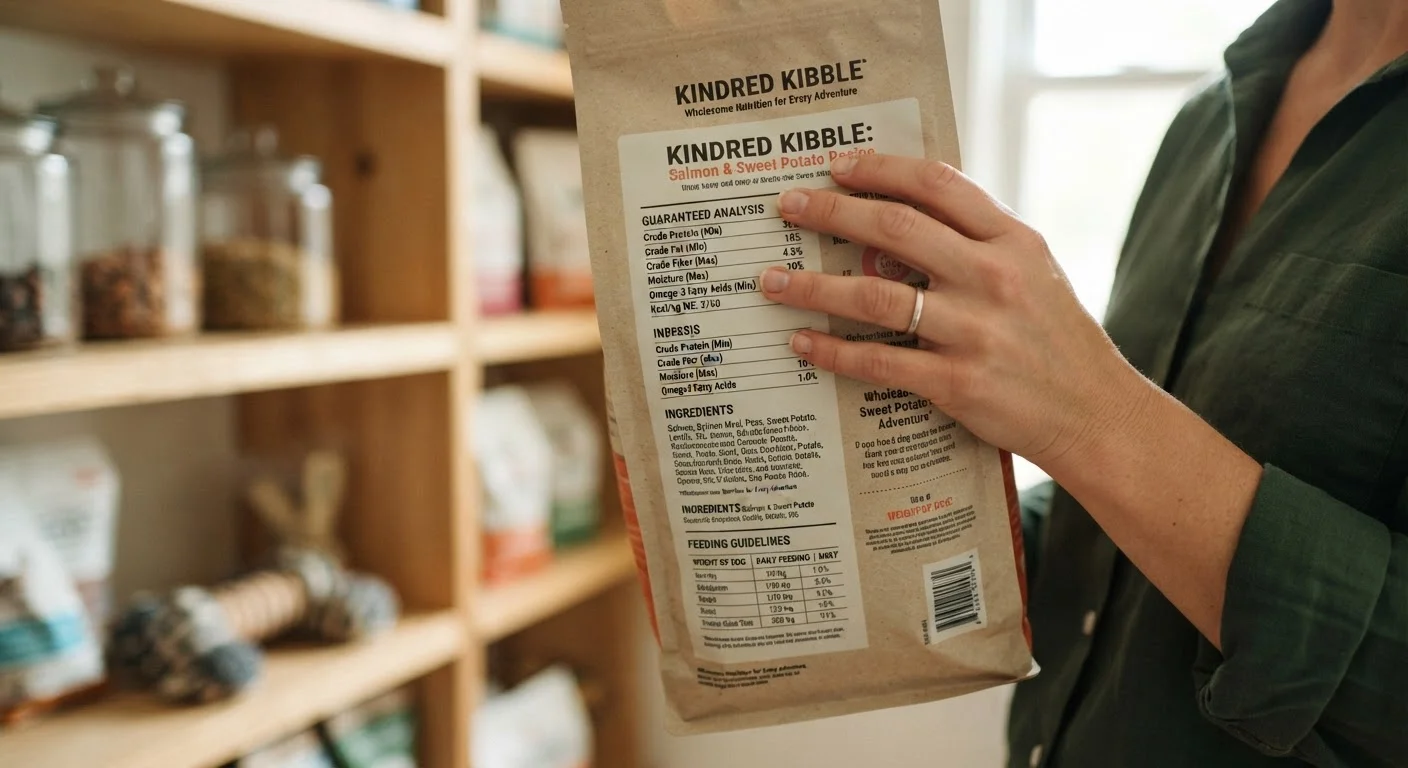
For a deeper look at every line of the panel, see the full breakdown of what each number and percentage means. And if you've ever wondered how pet food labels compare, the same critical-reading skills apply - check out how to read a pet food label for a parallel guide.
The Nutrition Facts Panel: Where to Start
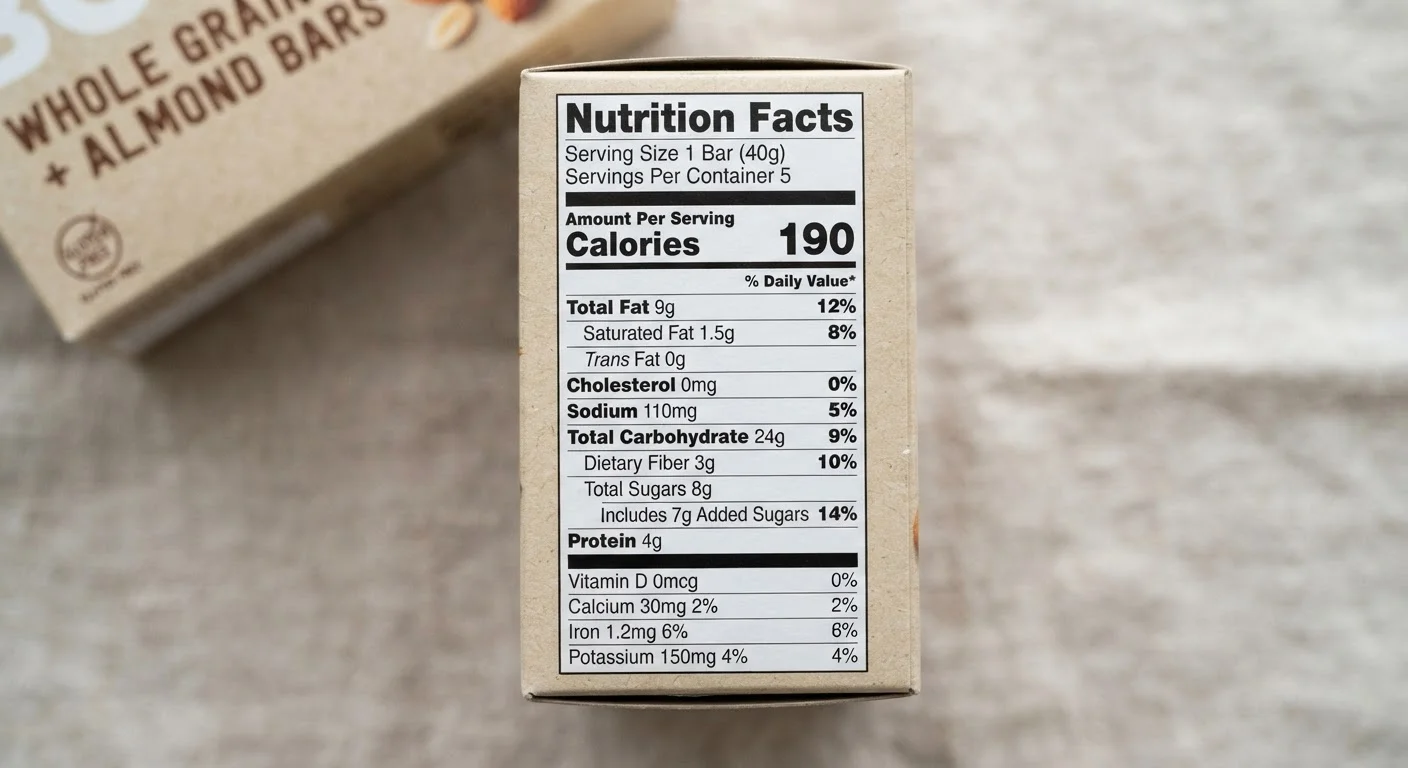
The Nutrition Facts panel is the standardized box - usually on the back or side of the package - that the FDA requires on most packaged foods. Here's how to read it efficiently:
- Serving size first, always. Every number on the label - calories, grams of fat, %DV - is calculated per serving. If the serving size is ¾ cup but you pour 1½ cups, you've doubled everything. This single step prevents the most common label-reading mistake.
- Calories. Listed per serving. Neither good nor bad on their own - context (what else is in the food, how it fits into your overall diet) matters more than the number alone.
- Nutrients to limit. The label calls out saturated fat, trans fat, sodium, and added sugars. Most Americans consume these in excess relative to what dietary research generally recommends. A %DV of 20% or higher on any of these in a single serving is worth noting.
- Nutrients to get enough of. Dietary fiber, vitamin D, calcium, iron, and potassium are highlighted because many Americans fall short. A %DV of 10-20% or more per serving is a meaningful contribution.
77%
Americans who check nutrition labels
According to the International Food Information Council, a majority of U.S. consumers report checking nutrition labels when purchasing food, though comprehension of the information varies considerably.
3,400 mg
Average daily sodium intake for Americans
The CDC reports that average sodium consumption for U.S. adults substantially exceeds the 2,300 mg limit recommended in the Dietary Guidelines for Americans.
17 tsp
Average daily added sugar consumed
Research published in public health literature estimates the average American consumes roughly 17 teaspoons of added sugar daily, well above the general guidance of no more than 6-9 teaspoons.
The %DV column is your practical shortcut. You don't need to memorize recommended daily amounts - the column does that math for you. Think of it as a rough scorecard for each serving. For a focused look at one of the most commonly under-consumed nutrients, see our guide to dietary fiber and why most Americans don't get enough.
The Ingredient List: What's Actually in the Package
Ingredients are listed in descending order by weight - meaning the first ingredient is the most abundant, and the last is present in the smallest amount. This ordering is one of the most useful and underused tools on any label.
A few practical rules for reading ingredient lists:
- If a whole food (like oats, chicken, or tomatoes) is the first ingredient, that's a meaningful signal about the product's composition.
- If sugar - under any name - appears in the first three or four ingredients, it's a primary component. Watch for its many aliases: corn syrup, evaporated cane juice, dextrose, maltose, and others.
- Ingredients you can't pronounce aren't automatically harmful - many are standard preservatives or vitamins - but an ingredient list that reads like a chemistry textbook is worth comparing against a simpler alternative.
Understanding what's actually in packaged food connects directly to broader questions about the real difference between whole foods and processed foods.
Front-of-Package Claims: Marketing vs. Meaning
Terms like multigrain, natural, made with real vegetables, and lightly sweetened are largely unregulated by the FDA. They're legal, but they don't guarantee any particular nutritional standard. By contrast, certain label claims do carry regulatory teeth:
- "Low sodium" means 140 mg or less per serving.
- "Good source of " means the product provides 10-19% of the daily value per serving.
- "Excellent source of" or "high in" means 20% DV or more per serving.
- "Calorie-free" means fewer than 5 calories per serving.
Flip the Package Before You Decide
Make it a habit to turn any product over before it goes in your cart. Front-of-package claims are marketing; the Nutrition Facts panel is regulated information. Thirty seconds of label reading gives you a far clearer picture of what you're actually buying. Over time, this habit becomes second nature and significantly faster.
When you see a health claim on the front, flip the package and verify it against the Nutrition Facts panel. The panel is the regulated, standardized version of the truth. The front is an advertisement.
Keeping label literacy in mind at the store also supports smarter spending. See how reading a price tag like a savvy consumer pairs with nutrition awareness for better overall purchasing decisions. And if budget is a concern, our guide to eating well without overspending offers practical strategies that work alongside smarter label reading.
This article is for general informational purposes only and is not a substitute for personalized nutrition or medical advice. Individual nutrient needs vary based on age, health status, and other factors. Consult a registered dietitian or qualified healthcare professional for guidance tailored to your family's specific needs.