Why Pet Food Labels Are Worth Decoding
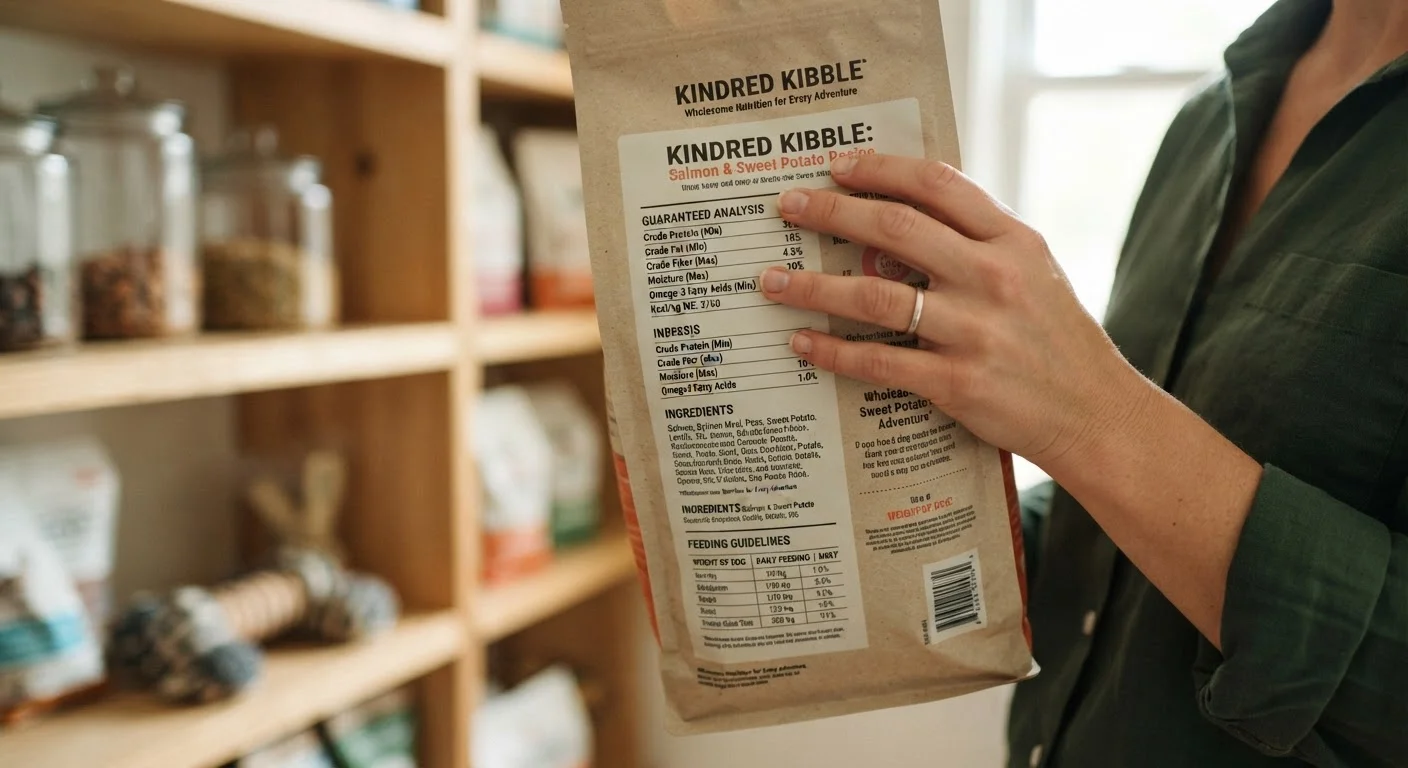
A bag of pet food can carry a dozen claims on the front and a wall of fine print on the back. Most of those front-panel words - "premium," "holistic," "gourmet" - have no legal definition in U.S. pet food regulations. The meaningful information is almost always on the back or side panel, buried in ingredient lists and percentage tables that can feel impenetrable if you don't know the structure.
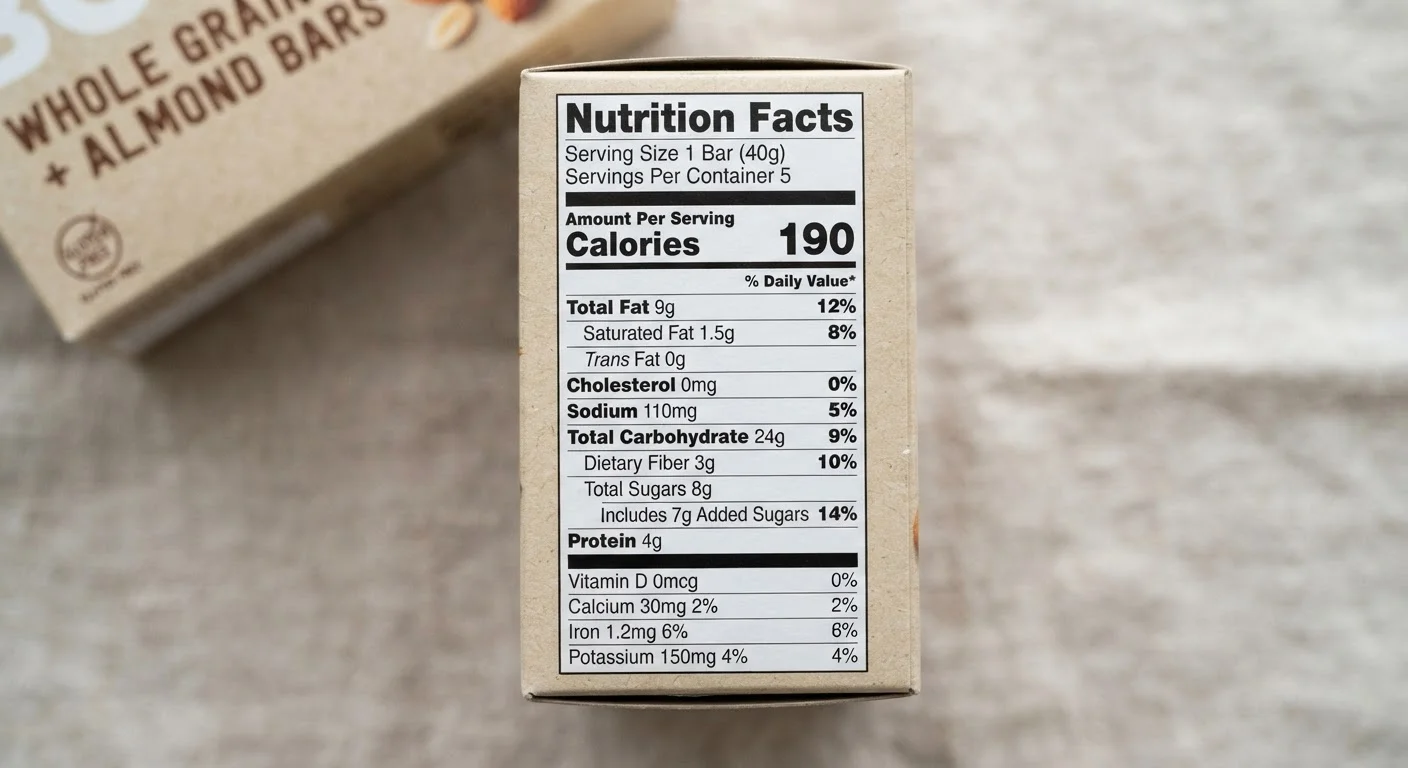
The good news: once you know which sections to focus on and what each one actually means, evaluating a label takes about two minutes. This guide walks through each section in order so you can apply the same approach to any bag, can, or pouch you pick up. For a useful parallel with human food labels, see how human nutrition labels are structured.
What you will need
How to Read the Label Step by Step
Work through a pet food label in the order below, and you'll move from marketing noise to actual nutritional information quickly and consistently.
Check the product name formula rules
The product name itself signals ingredient content. AAFCO naming rules set thresholds: a product called "Salmon Cat Food" must contain at least 95% salmon by weight. A name like "Salmon Entrée" or "Salmon Dinner" drops the requirement to 25%. "With Salmon" means just 3%. Read the full product name carefully before opening the bag.
Find and read the AAFCO nutritional adequacy statement
This is the most important line on the label. Look for a sentence that begins with something like: "[Product name] is formulated to meet the nutritional levels established by the AAFCO Dog (or Cat) Food Nutrient Profiles." This statement tells you two things: whether the food is nutritionally complete, and which life stage it's intended for (growth, adult maintenance, or all life stages). A food labeled "all life stages" must meet the higher nutrient levels required for growth and reproduction - useful context if you have an adult-only household.
Scan the guaranteed analysis panel
This table lists minimum percentages of crude protein and crude fat, and maximum percentages of crude fiber and moisture. These are guaranteed thresholds, not exact values - actual protein content could be higher than the minimum stated. To compare a dry food against a wet food, you'll need to convert both to a dry-matter basis by removing moisture from the equation. Divide each nutrient percentage by the dry matter percentage (100 minus moisture %) to get a comparable figure.
Read the ingredient list strategically
Ingredients are listed in descending order by pre-cooking weight. This means a meat ingredient listed first may weigh less than a grain ingredient listed third, once moisture is removed during processing - a phenomenon sometimes called "ingredient splitting" when similar components (e.g., ground corn, corn gluten meal, corn flour) are listed separately to push them lower. Look for named protein sources near the top, and note whether whole foods or by-products appear. By-products are not inherently low quality - they include organ meats, which are nutrient-dense - but knowing what they are helps you evaluate the overall formulation.
Note the feeding guidelines and manufacturer contact
Feeding guidelines are starting estimates based on average animals. Your pet's actual needs vary by activity level, health status, and metabolism. Use the guidelines as a baseline, then adjust based on your pet's body condition over time. Every label must also include the manufacturer's name and address. If you have questions about sourcing, production, or a specific ingredient, that contact information is your direct line - reputable manufacturers are generally responsive.
Cross-Referencing Labels Saves Money
When comparing two foods, focus on cost per day (daily serving size × price per ounce) rather than sticker price. A denser, more nutrient-rich food may require smaller servings. Unit pricing principles apply just as usefully to pet food as to groceries.
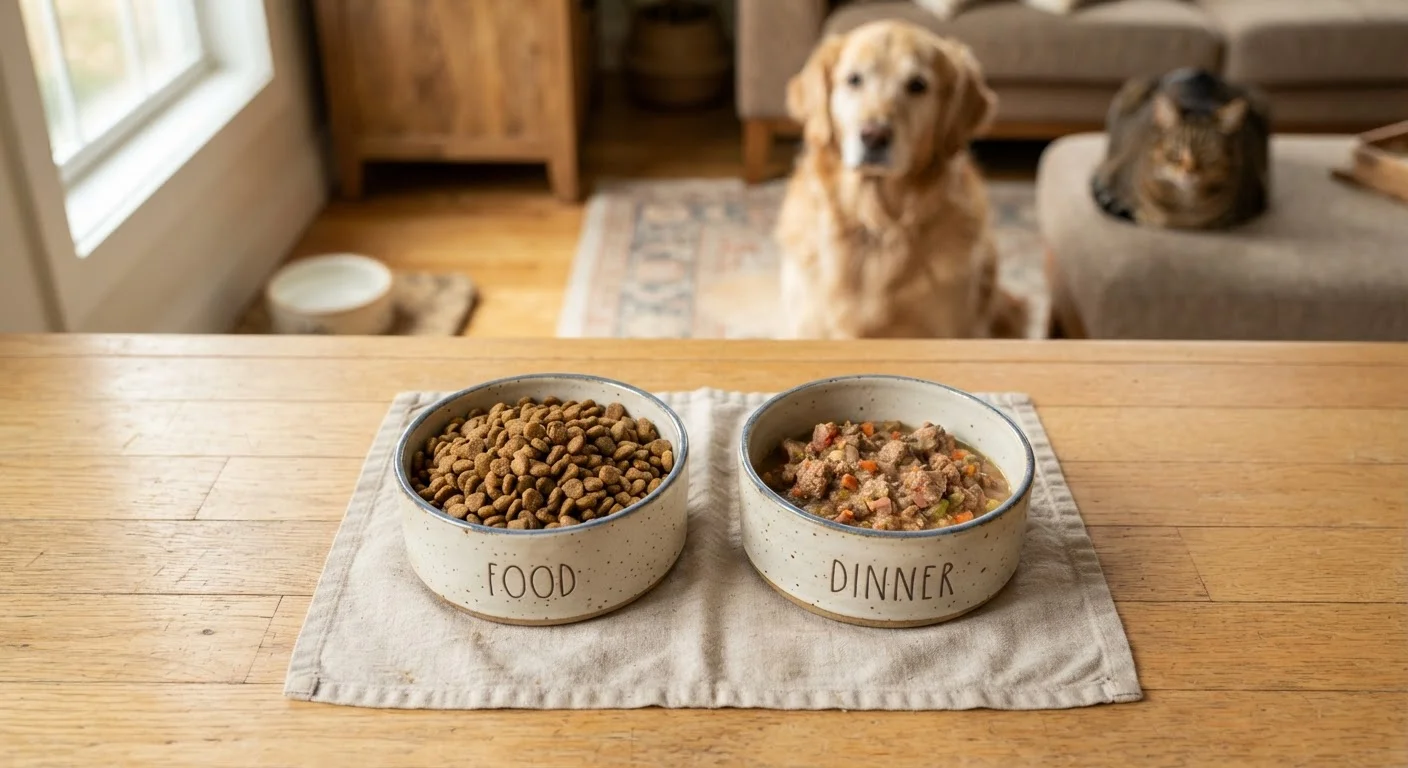
Once you know how to read a label, the next decision is format: dry food, wet food, or a mix each comes with nutritional trade-offs worth understanding.
Common Label Claims and What They Actually Mean
U.S. pet food labels are regulated at the federal level by the FDA and at the state level through guidelines developed by the AAFCO. A few claims do have defined meanings; many do not.
- "Chicken dog food" - By AAFCO rule, a named ingredient in the product title must make up at least 95% of the total product weight (excluding water). That's a high bar.
- "With chicken" - This phrase requires only 3% of that ingredient. The difference between "Chicken Formula" and "With Chicken" is dramatic.
- "Natural" - AAFCO defines this as ingredients derived from plant, animal, or mined sources without chemical alteration. It says nothing about quality or nutrient density.
- "Organic" - Must meet USDA organic standards for the ingredients certified as such. The overall product may not be fully organic.
- "Complete and balanced" - This phrase only appears when backed by an AAFCO nutritional adequacy statement. It is the one front-panel claim with real teeth.
Front-Panel Claims Are Largely Unregulated
Words like "premium," "holistic," "human-grade," and "superfood" have no standardized legal definition in U.S. pet food labeling. They're marketing language, not nutritional guarantees. Always move past the front panel to the AAFCO statement and guaranteed analysis before drawing any conclusions about a food's quality.
For comparison, reading fine print on other consumer documents follows similar principles - see how to parse dense policy language for a transferable approach.