Start at the Top: Serving Size and Servings Per Container
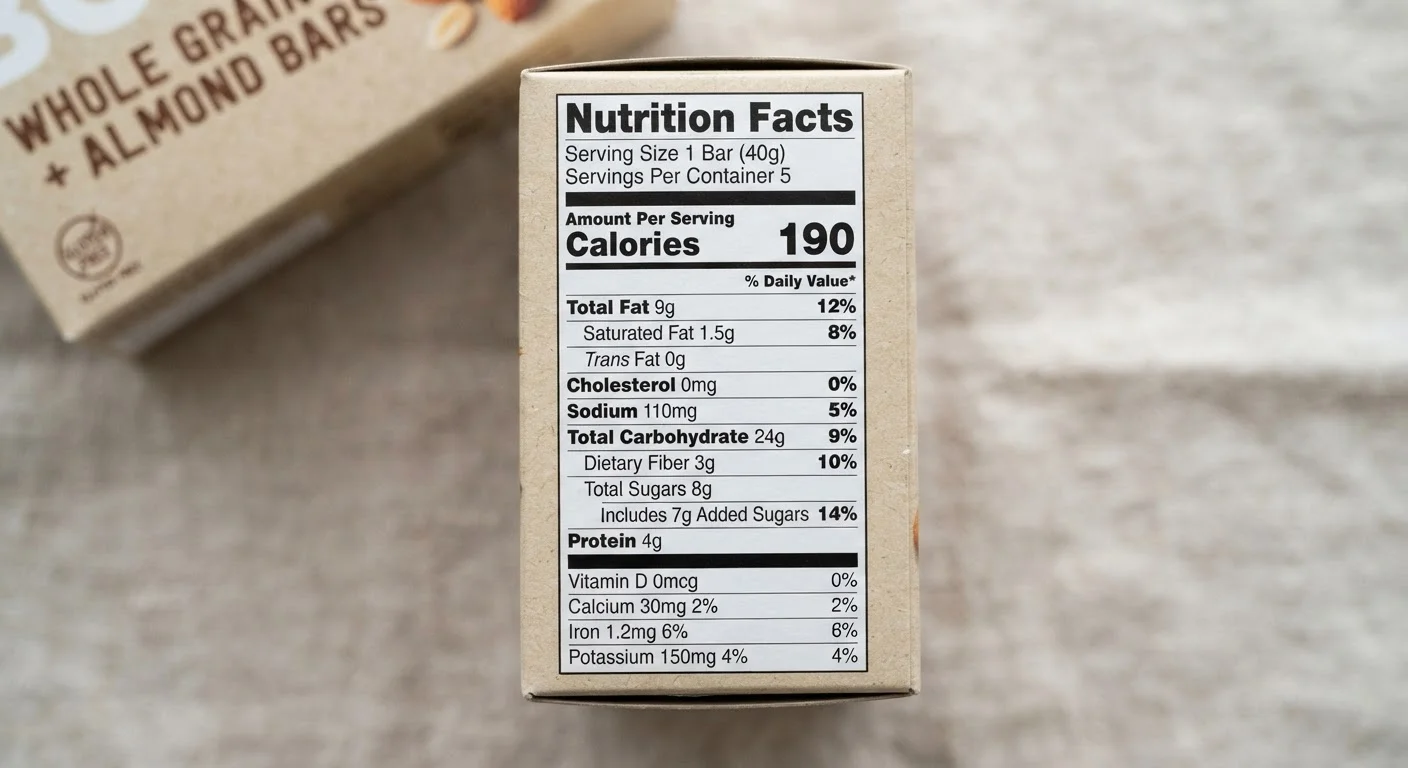
The nutrition label's very first line - serving size - is the foundation for every number that follows. All calories, nutrients, and percentages on the label are calculated for one serving, not the entire package. If a bag of chips lists a serving size of 15 chips but the bag contains three servings, eating the whole bag means tripling every value you see.
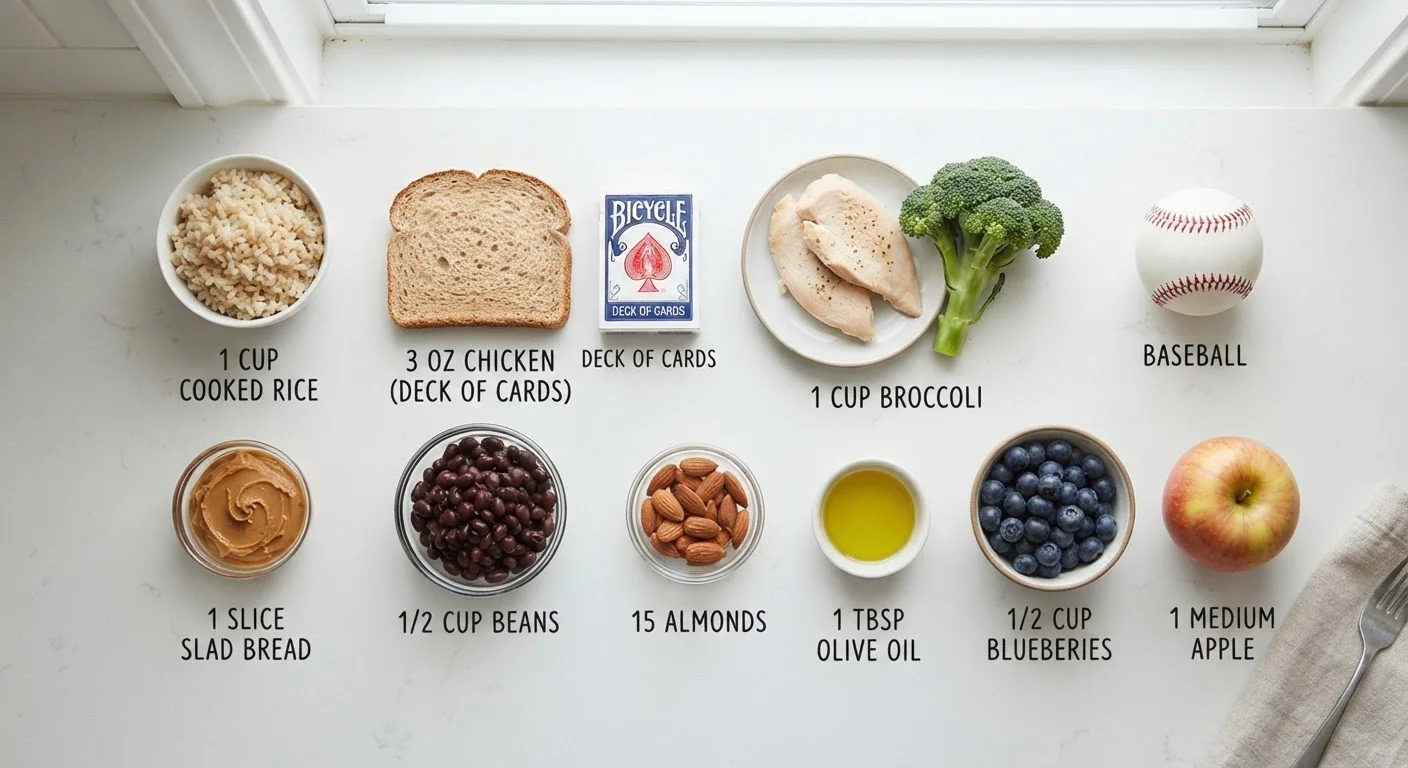
The U.S. Food and Drug Administration (FDA) updated its labeling rules in 2020 to require that serving sizes reflect amounts people typically eat, not idealized portions. Even so, these are reference amounts - not recommendations. For a deeper look at how labeled servings compare to real-world eating, see our guide to portion sizes.
| Label Update Year | 2020 (FDA redesign effective) (U.S. Food and Drug Administration) |
| Reference Calorie Benchmark | 2,000 calories per day (FDA %DV standard) |
| Low %DV Threshold | 5% DV or less (FDA consumer guidance) |
| High %DV Threshold | 20% DV or more (FDA consumer guidance) |
| Required Micronutrients (post-2020) | Vitamin D, Calcium, Iron, Potassium (FDA Nutrition Facts label requirements) |
| Ingredient List Rule | Listed by weight, highest to lowest (FDA labeling regulations) |
Calories, Macronutrients, and What the Numbers Actually Tell You
Below serving information, the label lists calories - the total energy one serving provides. Directly beneath that are the three macronutrients:
- Total Fat - broken down into saturated fat and trans fat. Saturated fat is associated with cardiovascular risk at high intake levels; trans fat (artificially produced) is considered harmful even in small amounts and is largely banned in the U.S. food supply.
- Total Carbohydrate - subdivided into dietary fiber and total sugars, with added sugars now separately listed. Added sugars are those introduced during processing, as opposed to sugars naturally present in fruit or dairy.
- Protein - listed in grams but without a % Daily Value (DV), because individual protein needs vary significantly.
Sodium also appears here. Most Americans consume more sodium than health guidelines suggest, so this number is particularly worth noting.
Serving Size
The standardized amount of food used as the reference unit for all nutrition information on the label. It reflects typical consumption amounts, not a dietary recommendation.
% Daily Value (%DV)
The percentage of a nutrient that one serving provides relative to a 2,000-calorie daily reference diet. It helps compare nutrient levels across products and gauge whether a food is high or low in a given nutrient.
Added Sugars
Sugars incorporated into food during processing or preparation, distinct from sugars naturally found in whole foods like fruit or milk. They appear as a sub-line under Total Sugars on the label.
Trans Fat
A type of unsaturated fat created through industrial hydrogenation of vegetable oils. Artificial trans fats have been largely eliminated from the U.S. food supply due to their association with cardiovascular harm.
Dietary Fiber
The indigestible portion of plant-based foods. Fiber supports digestive health and is a nutrient health authorities generally encourage consuming in adequate amounts.
Saturated Fat
A type of fat found primarily in animal products and some tropical oils. Health guidelines generally recommend keeping saturated fat intake moderate, as high consumption is associated with elevated cardiovascular risk.
Decoding the % Daily Value Column
The right-hand column lists a % Daily Value (%DV) for most nutrients. These percentages are based on a 2,000-calorie-per-day reference diet - a general benchmark, not a universal prescription. Your actual needs may be higher or lower depending on age, activity level, and health status. Always consult a qualified healthcare professional about your specific nutritional needs.
A useful rule of thumb recognized by the FDA: 5% DV or less is considered low for a nutrient; 20% DV or more is considered high. Use this scale contextually:
- For nutrients you typically want to limit - saturated fat, sodium, added sugars - lower % DV is generally better.
- For nutrients you want to get enough of - fiber, vitamin D, calcium, iron, potassium - higher % DV is beneficial.
The 2,000-Calorie Baseline Is a Reference, Not a Target
The %DV column is calculated against a 2,000-calorie daily diet, which the FDA chose as a round, broadly representative figure. Many people's actual calorie needs differ based on body size, age, metabolism, and physical activity. Use %DV as a comparison tool between products rather than a precise personal target. A registered dietitian can help you understand nutrient needs specific to your situation.
Vitamins and minerals now required on every U.S. label include vitamin D, calcium, iron, and potassium - nutrients the FDA identified as commonly under-consumed. For a full overview of what each micronutrient does, see our plain-language guide to vitamins and minerals.
The Ingredient List: Order Matters
Below the Nutrition Facts panel, the ingredient list follows a strict rule: ingredients are listed in descending order by weight. Whatever appears first is present in the greatest amount. If sugar or a refined grain is the first or second ingredient in a product marketed as wholesome, that positioning is informative.
Ingredients can appear under many names - corn syrup, dextrose, maltose, and fruit juice concentrate are all forms of added sugar, for example. Similarly, sodium has many aliases: monosodium glutamate (MSG), sodium bicarbonate, and disodium phosphate all contribute to total sodium intake.
Families navigating labels together will find our nutrition literacy guide for families a practical companion resource.
70%+
Americans who exceed daily sodium recommendations
According to the U.S. Centers for Disease Control and Prevention (CDC), most Americans consume more sodium than the Dietary Guidelines suggest.
17 tsp
Average daily added sugar intake, U.S. adults
The CDC estimates average U.S. adult added sugar consumption well exceeds the American Heart Association's general guidance.
95%
Americans not meeting daily fiber recommendations
The USDA Dietary Guidelines Advisory Committee has identified dietary fiber as a nutrient of public health concern due to widespread under-consumption.
This article is for general informational purposes only and does not constitute medical or dietary advice. For guidance tailored to your health needs, please consult a registered dietitian or qualified healthcare provider.