Why Tire Wear Is Worth Reading
Your tires are the only part of your vehicle in constant contact with the road, which makes them reliable informants. When something goes mechanically wrong - whether it's a pressure issue, a suspension component wearing out, or wheels pointing in slightly the wrong direction - the tires register it first, often before any warning light appears.
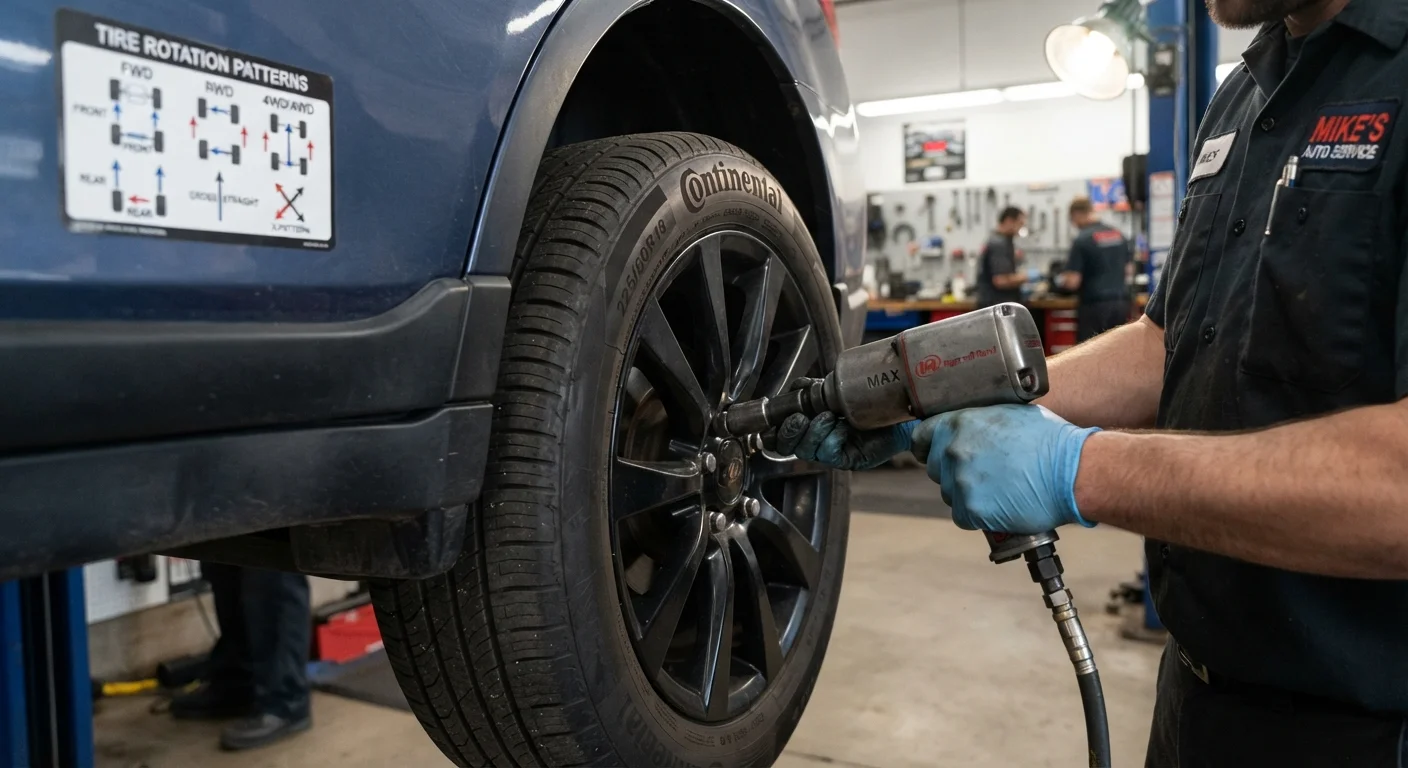
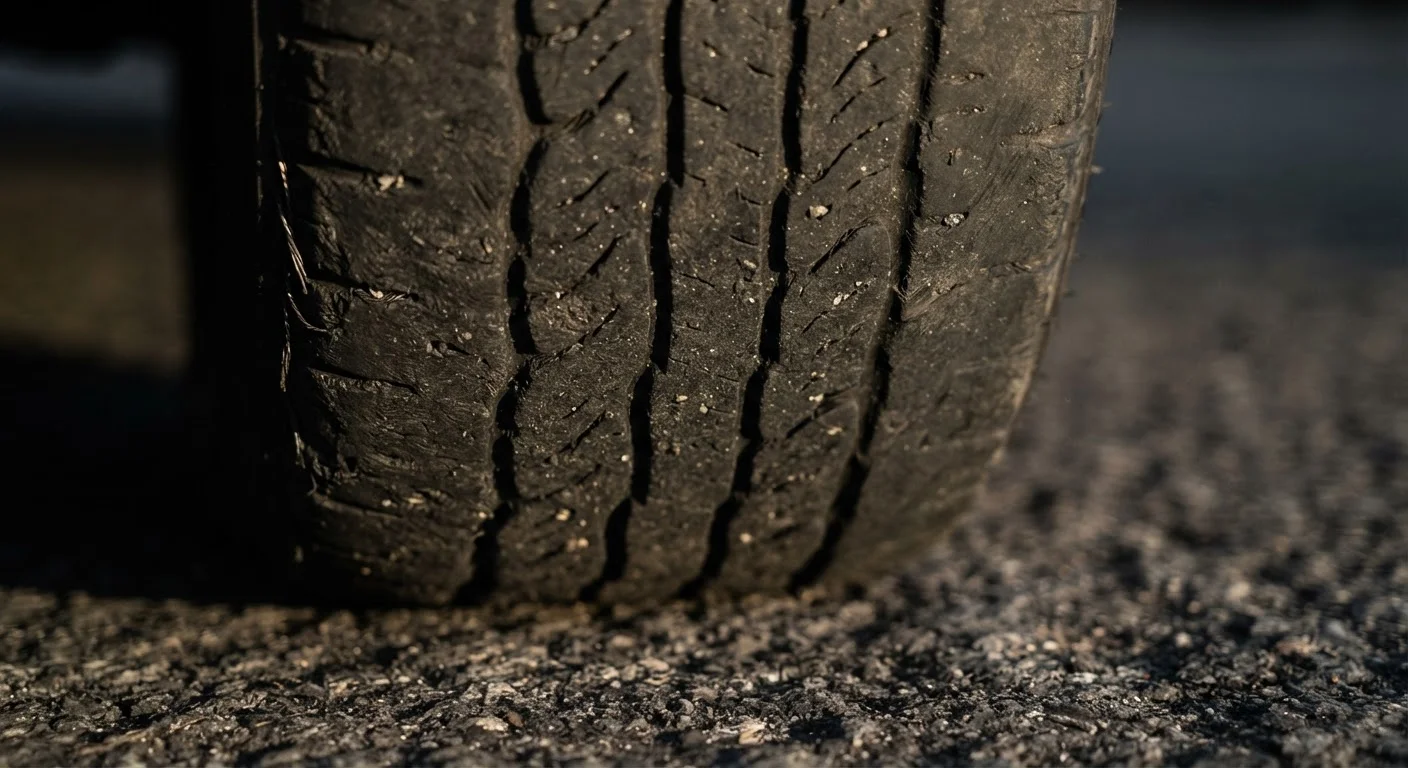
Most drivers glance at their tires occasionally and assume even-looking tread means everything is fine. But the differences that matter most are often subtle: a strip of rubber on one shoulder worn lower than the other, a corrugated texture across the center, or a slight rounding on the inside edge. Learning to spot these patterns transforms a quick visual check into a meaningful diagnostic habit. See our guide to rotation, balancing, and alignment for context on the services that directly influence how your tires wear.
Make the Penny Test a Monthly Habit
Insert a penny into your tire's tread groove with Lincoln's head pointing down. If you can see all of Lincoln's head, tread depth has reached 2/32" - the threshold at which most states consider the tire legally worn. Catching this early across all four tires gives you time to plan replacement rather than react to a flat or failed inspection.
The Five Most Common Wear Patterns - and Their Causes
Center wear (worn in the middle): When the center tread wears faster than the shoulders, the tire is carrying too much pressure. An overinflated tire bulges in the middle, concentrating contact on the center strip and lifting the edges. The fix is straightforward: bring pressure down to the specification listed on your door jamb sticker, not the maximum rating printed on the tire sidewall.
Edge wear (worn on both shoulders): The opposite pattern - both outer edges wearing down while the center remains higher - points to chronic underinflation. A tire that's consistently low in pressure flattens out, spreading the load to the shoulders. Check and correct pressure monthly; temperature changes of as little as 10°F can alter pressure by roughly 1 PSI.
One-sided wear (inner or outer edge only): When only one shoulder wears down, the wheel's camber angle - its vertical tilt - is off. This is an alignment issue. Driving habits don't cause this; suspension wear, bent components, or improper alignment settings do. A professional alignment check is the appropriate next step.
Cupping or scalloping (high-low scalloped pattern around the circumference): This rippled, uneven wear indicates the tire is bouncing as it rotates rather than maintaining steady road contact. Worn shock absorbers or struts are the most common culprit. This pattern is often noticed by feel - a rhythmic vibration or noise - before it's obvious visually.
Feathering (tread blocks rounded on one side, sharp on the other): Feathering is a toe alignment problem. If your wheels are toed in or out even slightly, the tread scrubs sideways with every revolution. A standard four-wheel alignment procedure corrects it.
2/32"
Minimum legal tread depth in most U.S. states
The penny test - Lincoln's head disappearing into the groove - is a widely recognized field check for this threshold.
1 PSI
Pressure change per 10°F temperature shift
The U.S. Department of Energy notes that tires lose roughly 1 PSI for every 10-degree Fahrenheit drop in ambient temperature.
~$150-$200
Typical four-wheel alignment service cost
Costs vary by region and vehicle type; addressing alignment problems early is generally far less expensive than replacing prematurely worn tires.
What to Do When You Spot a Problem
Identifying a wear pattern is useful only if it leads to action. Here's a practical framework:
- Check tire pressure first. Many wear problems are caused or worsened by incorrect inflation. Use a reliable gauge and compare to the door jamb spec.
- Inspect all four tires together. Patterns across all four tires tell a fuller story than any single tire in isolation. A matched pair of worn inner edges on the rear axle, for example, points to a suspension geometry issue on that axle.
- Have alignment checked if wear is one-sided or feathered. Alignment can shift from road impacts alone - potholes, curbs, and even rough railroad crossings can knock a suspension component out of spec.
- If cupping is present, don't assume new tires will solve it. Installing new tires on a vehicle with bad shocks will reproduce the same wear pattern on the new rubber within months. Address the shocks first.
For a broader view of when these and other maintenance tasks genuinely need attention, the car maintenance intervals that actually matter article is a useful companion read. You can also cross-reference dashboard warning signals using our dashboard warning lights reference.
One Tire Replaced? Check the Opposite Side Too
Tires on the same axle work as a pair. If one tire is damaged or worn beyond use, the remaining tire on that axle may be significantly more worn than tires on the other axle - even if it looks acceptable. Replacing in axle pairs helps maintain balanced handling and braking performance. Consult a qualified tire technician for guidance specific to your vehicle and the remaining tread depth.
Building the Habit of Regular Checks
Monthly tire inspections take under two minutes and require no tools beyond a penny or a pressure gauge. Walk around the vehicle, crouch down to view the tread angle, and run a hand across the surface width of each tire. This simple routine is one of the highest-return maintenance habits a driver can develop - catching alignment drift or pressure loss early avoids both premature tire replacement (a set of four tires can cost $400-$1,000 or more depending on size) and the safety risks of degraded traction.
Tires don't lie. Once you know what the patterns mean, every inspection gives you a clearer picture of your vehicle's mechanical health - no diagnostic equipment required.