
What the Deductible Actually Does
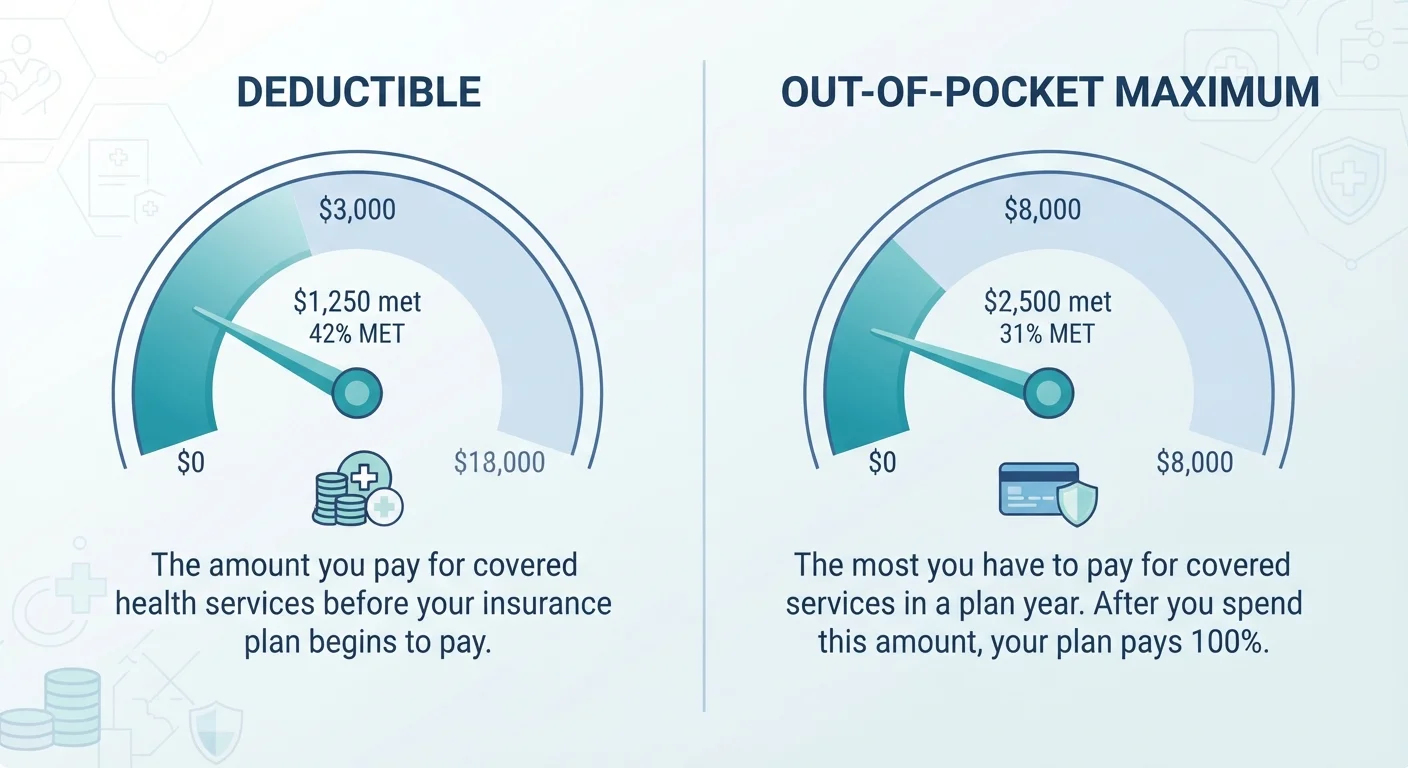
A deductible is the amount you pay for covered services before your insurer starts sharing costs. If your deductible is $2,000, you cover the first $2,000 of eligible expenses each policy year on your own. After that, cost-sharing - through copays or coinsurance - typically kicks in until you hit your out-of-pocket maximum.
Understanding this mechanic is essential before comparing plans. For a plain-language breakdown of how deductibles interact with premiums and copays, see this guide to insurance cost terms. It's also worth knowing how the deductible differs from your out-of-pocket maximum - two figures that are often confused but work very differently, as explained in this comparison of deductibles and out-of-pocket maximums.
How the Two Structures Compare
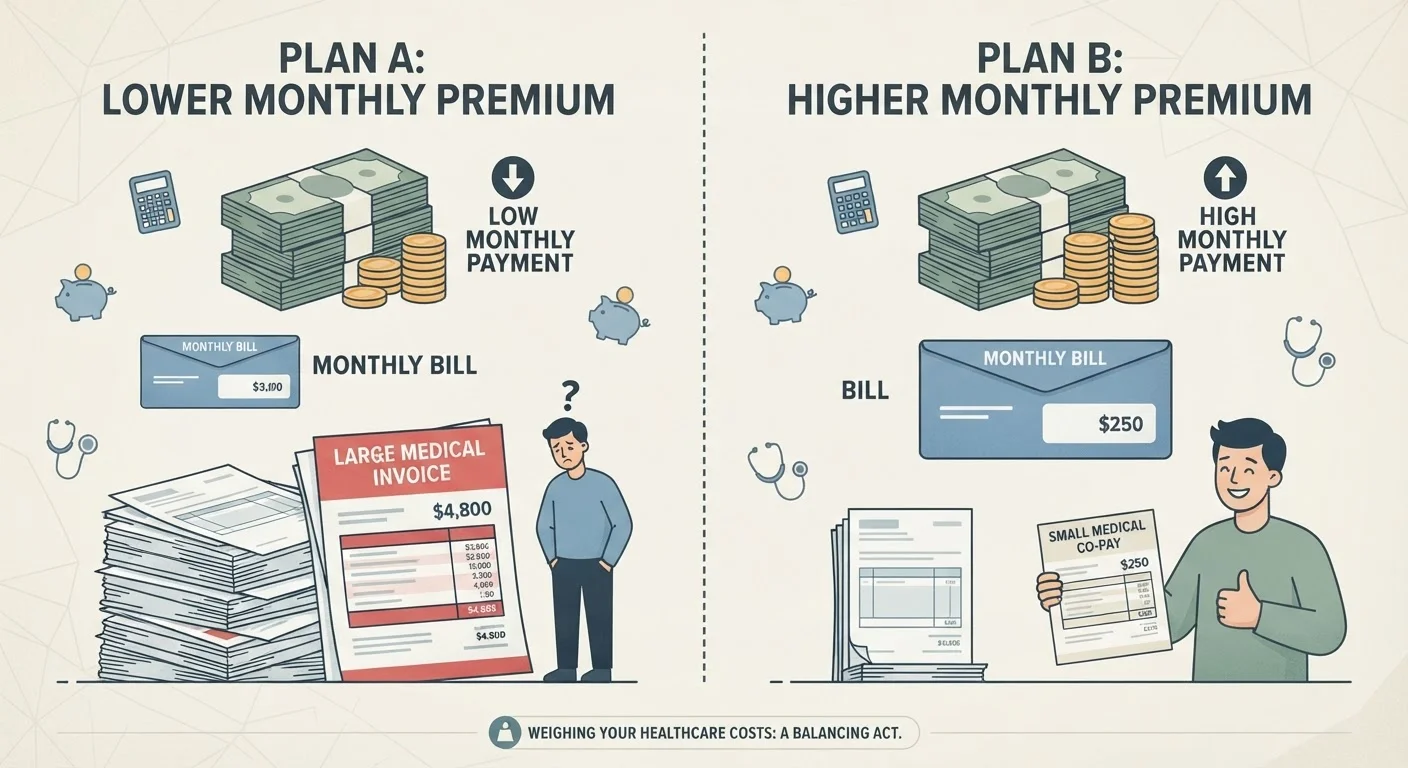
The core trade-off is simple: a higher deductible lowers your monthly premium, while a lower deductible raises it. But the real financial impact only becomes clear when you account for how often you actually use your coverage.
| High-Deductible Plan | Low-Deductible Plan | |
|---|---|---|
| Monthly Premium | Lower | Higher |
| Amount You Pay Before Insurance Shares Costs | Higher (often $1,500-$7,000+) | Lower (often $250-$1,000) |
| Best If You Use Coverage | Rarely or minimally | Frequently or predictably |
| Financial Risk if Major Event Occurs | Higher short-term exposure | Lower short-term exposure |
| HSA Eligibility (health plans) | Often eligible | Typically not eligible |
| Cost Predictability | Less predictable month-to-month | More predictable throughout year |
| Good Fit If Savings Are Limited | Riskier without emergency fund | Safer option |
Keep in mind that these are structural patterns, not guarantees. Specific premiums, deductibles, and plan designs vary by insurer and state. Always read a plan's full summary of benefits before enrolling.
When a High-Deductible Plan Works in Your Favor
High-deductible plans tend to work best for people who are generally healthy, use coverage infrequently, and have enough savings to absorb a large bill without financial hardship. If you end the year without filing a major claim, you pocket the premium savings.
One additional benefit: plans that qualify as High-Deductible Health Plans (HDHPs) under IRS rules allow you to contribute to a Health Savings Account (HSA). HSA funds can be used tax-free for eligible medical expenses, which can meaningfully offset the higher out-of-pocket exposure. This is a meaningful structural advantage - not just a minor perk.
Pair a High-Deductible Plan With an HSA
If you enroll in an IRS-qualifying high-deductible health plan, you may be eligible to open a Health Savings Account. Contributions are tax-deductible, growth is tax-free, and withdrawals for qualified medical expenses are also tax-free. Building up HSA funds over time can significantly reduce the financial risk of a high deductible. Check IRS guidelines or speak with a benefits administrator to confirm eligibility.
For a deeper look at the financial mechanics involved, this article on high-deductible trade-offs walks through specific scenarios where the math tilts each way.
When a Low-Deductible Plan Makes More Sense
If you have ongoing prescriptions, regular specialist visits, or a condition that requires frequent care, a low-deductible plan often produces lower total annual spending - even though you pay more each month. The math shifts once you expect to hit or exceed the deductible regularly.
Low-deductible plans also suit people with limited liquid savings. Facing a $4,000 or $6,000 deductible after an accident or diagnosis can be financially destabilizing if you don't have that money readily available. Paying a higher premium avoids that sudden exposure.
Don't Underestimate Your Likely Usage
Many people choose a high-deductible plan expecting a low-claim year, then face an unexpected diagnosis, accident, or emergency. If you don't have savings equal to at least your full deductible amount set aside, a high-deductible plan can create serious financial strain. Be honest about your health history and risk tolerance before prioritizing premium savings.
It's also worth noting that a low premium doesn't automatically mean a cheaper policy overall. This explainer on total policy cost shows how deductibles and coinsurance interact with your premium to determine what you actually spend.
How to Run the Numbers for Your Situation
The most useful exercise is to estimate your total annual cost under each plan type. Add up 12 months of premiums, then factor in your likely out-of-pocket spending based on how you've used coverage in prior years. Compare that total across a few realistic scenarios: a year with no claims, a year with one moderate claim, and a year with a serious event.
This kind of scenario modeling - rather than focusing on a single number like the premium - gives you a clearer picture of actual financial exposure. General guidance on reading the full cost picture is available from resources covering claims and coverage gaps, which can also help you spot situations where either plan type might leave you underprotected.
This article is for general informational purposes only and does not constitute personalized insurance, financial, or legal advice. Coverage terms, deductibles, eligibility, and costs vary by insurer, plan, and state. Consult a licensed insurance agent or financial adviser to evaluate options based on your individual circumstances.