What a High-Deductible Plan Actually Means
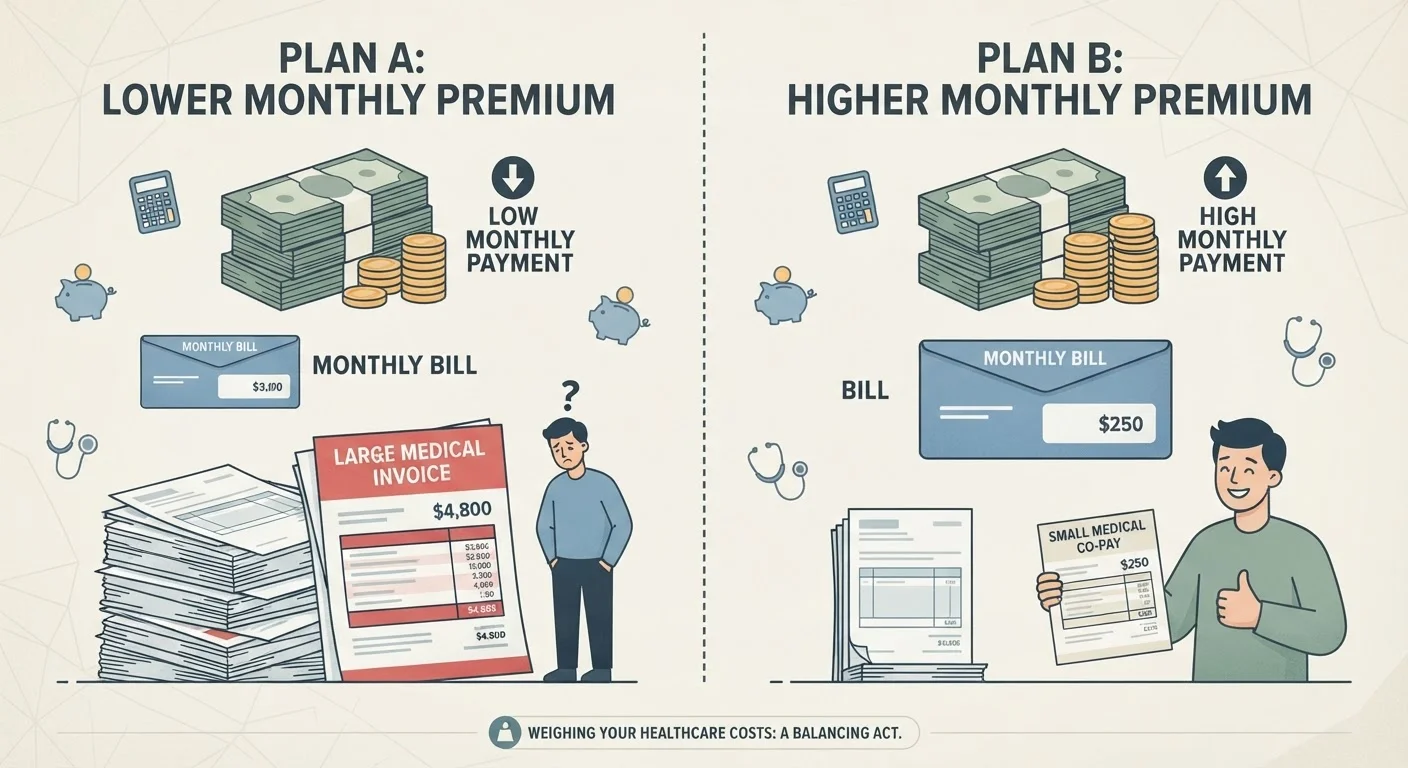
A deductible is the amount you pay out of your own pocket for covered services before your insurer starts sharing the cost. A high-deductible plan sets that threshold significantly higher than a standard plan - in exchange, the insurer charges you a lower monthly premium (the fixed amount you pay to keep coverage active).
This structure exists across multiple insurance types. In health insurance, a plan is officially labeled a High-Deductible Health Plan (HDHP) when it meets IRS-defined minimums. In auto and homeowners insurance, you simply choose a deductible tier when you purchase the policy - higher deductibles produce lower premiums in the same way.
The core mechanic is consistent: you take on more of the financial risk upfront; the insurer takes on less, and prices your premium accordingly. For a deeper look at how these terms interact, see Health Insurance Explained.
The Advantages Worth Considering
High-deductible plans are not simply a bad deal dressed up as savings. For the right person in the right situation, the benefits are real.
Lower monthly premiums free up cash
Paying less each month means more money available for day-to-day expenses or savings - a real advantage for people who rarely file claims.
HSA eligibility adds a tax benefit
Qualifying HDHPs allow you to contribute to a Health Savings Account, reducing taxable income and creating a dedicated fund for medical costs.
Encourages cost-conscious use of care
When you pay more out of pocket initially, you may comparison-shop for services and avoid unnecessary procedures - potentially reducing overall spending.
Efficient for low-utilization households
If you go years without a significant claim, the accumulated premium savings can far exceed what you would have paid under a lower-deductible plan.
For health insurance specifically, qualifying HDHPs unlock access to a Health Savings Account (HSA) - a tax-advantaged account you can use to pay medical costs. Contributions reduce your taxable income, growth is tax-free, and withdrawals for qualified medical expenses are also tax-free. That triple tax benefit can meaningfully reduce your real-world cost of care.
On the auto and home side, choosing a higher deductible often makes sense if you would hesitate to file small claims anyway - since filing can raise your future premiums. Filing a Claim Without Tanking Your Premiums explains why sometimes absorbing a small loss yourself is the financially smarter move.
The Disadvantages You Need to Weigh
The lower premium is only a genuine saving if you never - or rarely - need to use your coverage. When you do need it, the high deductible hits hard.
Large out-of-pocket cost when claims arise
Until you meet your deductible, you cover the full cost of care. A single hospital visit, car accident, or roof claim can mean thousands of dollars due at once.
Requires liquid savings as a safety net
Without readily accessible funds to cover the deductible, a covered event can cause serious financial hardship despite having insurance.
Less predictable annual spending
Monthly budgeting is simpler with a higher-premium plan; a high-deductible plan introduces uncertainty - you may spend very little or a great deal, depending on the year.
Can deter necessary medical care
Facing high upfront costs, some people postpone care they actually need, which can allow conditions to worsen and ultimately cost more to treat.
Savings vanish in a high-claim year
If you experience multiple claims in a single year - across health, auto, or home - the premium savings are quickly erased by stacked out-of-pocket expenses.
Out-of-Pocket Maximums Still Apply
Even with a high deductible, most insurance plans include an out-of-pocket maximum - a cap on how much you can be required to pay in a single policy year before the insurer covers 100% of additional costs. This ceiling exists for health insurance by federal law under the Affordable Care Act, and is a standard feature in many auto and home policies as well. Knowing your plan's out-of-pocket maximum is just as important as knowing your deductible.
It is also worth noting that high-deductible plans can subtly discourage necessary care. Research consistently shows that people with higher cost-sharing sometimes delay or skip recommended screenings and follow-up visits - not because the care is unnecessary, but because the out-of-pocket cost feels prohibitive in the moment. That deferred care can become more expensive later.
Running the Numbers Before You Decide
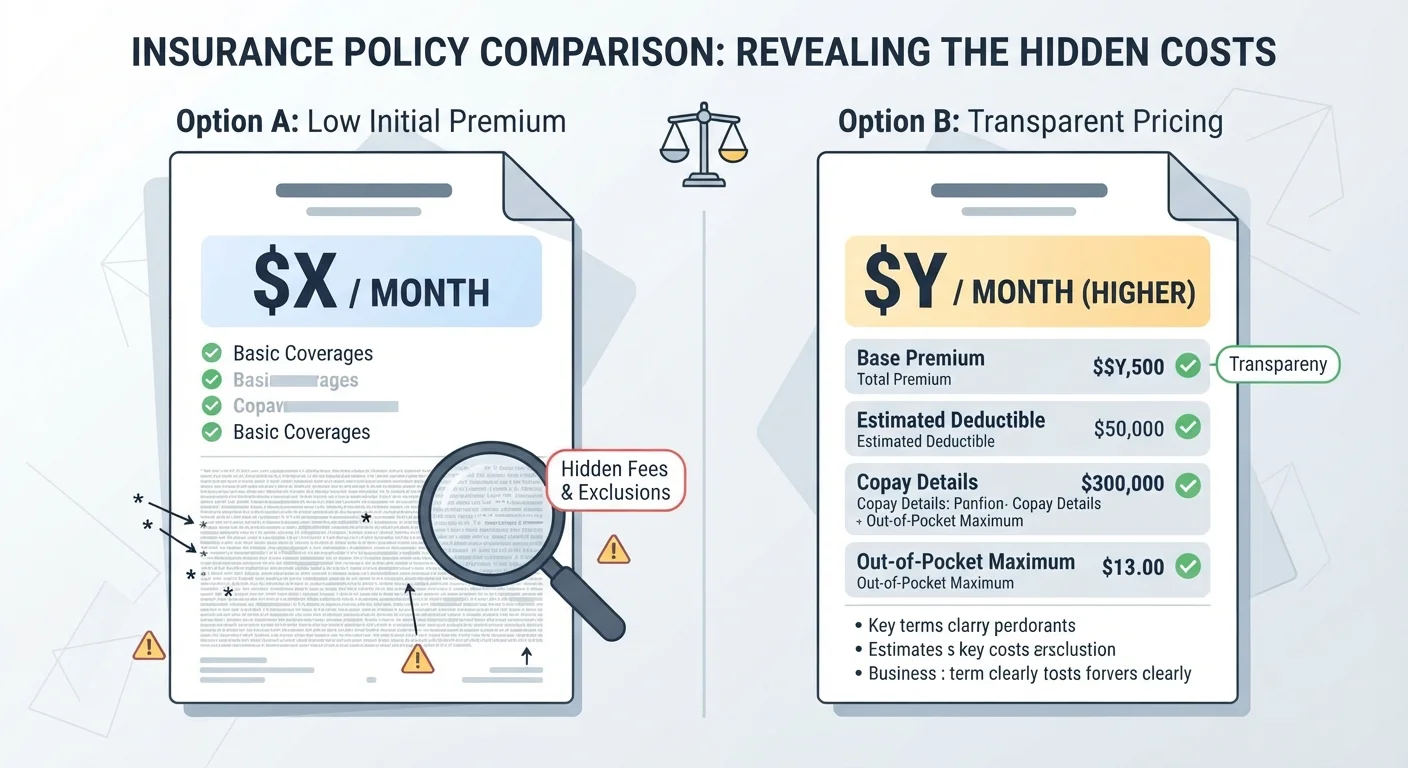
The honest way to evaluate a high-deductible plan is to compare your total annual cost under each scenario, not just the monthly premium. Add up 12 months of premiums, then ask: if I hit my full deductible this year, what do I actually spend?
~$1,600
IRS minimum deductible for individual HDHPs
The IRS sets annual thresholds defining what qualifies as a High-Deductible Health Plan for HSA eligibility purposes; these figures are adjusted periodically.
~40%
Adults enrolled in HDHPs in recent years
Data from the National Center for Health Statistics has shown roughly four in ten privately insured adults under 65 enrolled in an HDHP in recent survey periods.
Compare that figure to the total cost of a lower-deductible plan - higher premiums but less exposure when you file a claim. If the premium savings on the high-deductible plan exceed the gap between the two deductibles, you come out ahead in a bad year. If they do not, you are taking on risk without adequate reward.
This calculation is the foundation of the full cost picture that Why a Low Premium Doesn't Always Mean a Cheaper Policy walks through. For a direct side-by-side comparison of plan structures, High-Deductible vs. Low-Deductible Plans is a useful companion read.
Also factor in whether you have liquid savings to cover the deductible on short notice. A high-deductible plan without an emergency fund in place is not a cost-saving strategy - it is a financial risk. Readers navigating coverage gaps more broadly can find guidance in the Claims & Coverage Gaps resource hub.
This article is for general informational and educational purposes only and does not constitute personalized insurance, financial, or legal advice. Coverage terms, premiums, deductibles, and eligibility vary by insurer, policy, and state. Always read your actual policy documents and consult a licensed insurance agent or financial adviser before making coverage decisions.