What Each Term Actually Means
When your health insurance plan requires you to share the cost of care, it can do that in two very different ways: a copay or coinsurance. Both are forms of cost-sharing - meaning you pay a portion and your insurer pays the rest - but the math behind each is completely different.
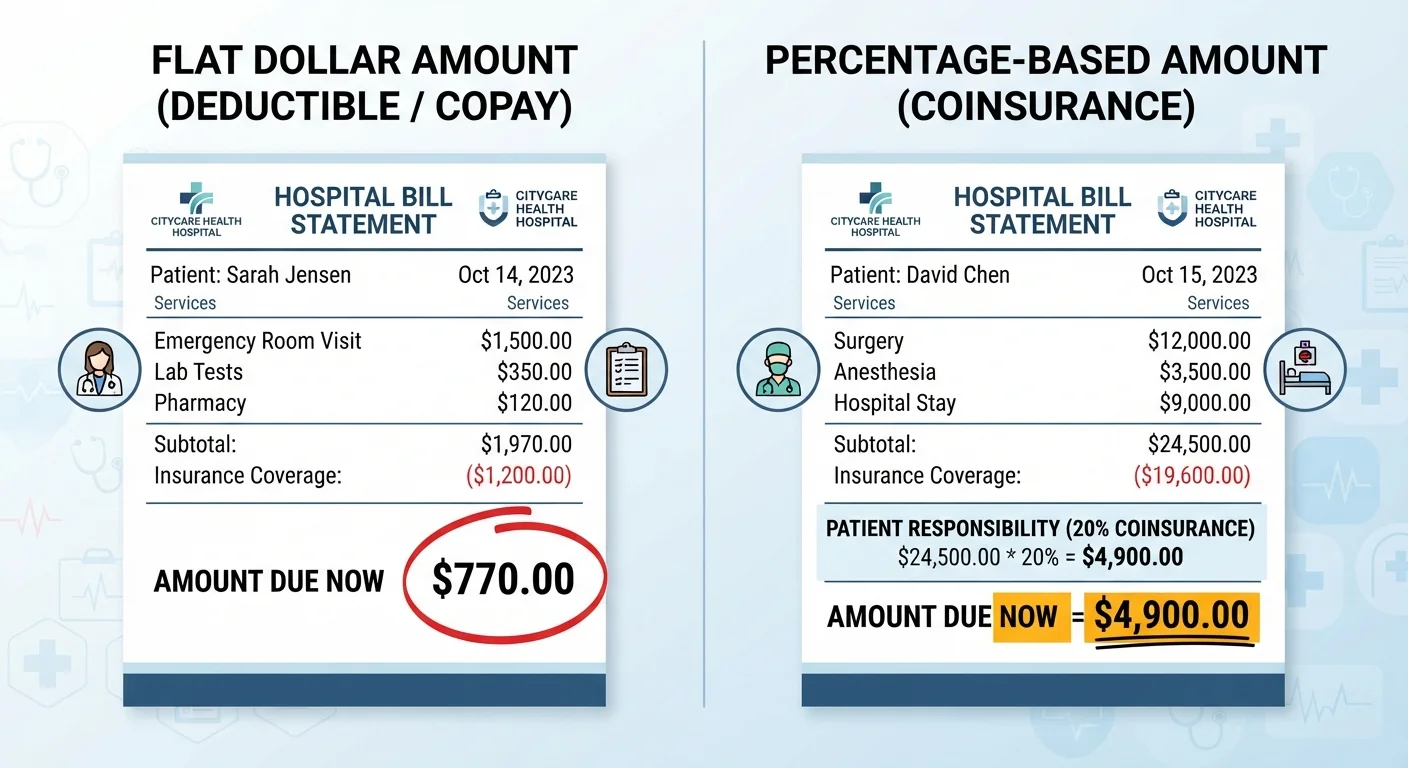
A copay (short for copayment) is a flat, predetermined dollar amount. Your plan might require a $30 copay for a primary care visit or a $15 copay for a generic prescription. That number doesn't change based on what the provider actually charged. You pay $30, your insurer handles the rest of the allowed amount.
Coinsurance works as a percentage instead. If your plan has 20% coinsurance and your insurer has negotiated an allowed cost of $500 for a procedure, you owe $100 - 20% of $500. If the service costs more, your share goes up proportionally. Unlike a copay, you often can't know your exact coinsurance amount until the claim is processed and the final allowed cost is determined.
For a broader look at how these costs fit into your overall plan, see our guide to premiums, deductibles, and copays.
| Criterion | Copay | Coinsurance |
|---|---|---|
| How your share is calculated | Flat dollar amount (e.g., $30) | Percentage of allowed cost (e.g., 20%) |
| Predictability | High - amount is fixed in advance | Variable - depends on total service cost |
| When it typically applies | Often before or independent of deductible | Usually after deductible is met |
| Common services | Office visits, prescriptions, urgent care | Hospital stays, surgery, imaging |
| Counts toward out-of-pocket max | Yes | Yes |
| Risk of a large surprise bill | Low - cost is known upfront | Higher - rises with total service cost |
How Deductibles Change the Picture
One of the most confusing things about copays and coinsurance is that they don't always apply at the same time - and your deductible is the reason why.
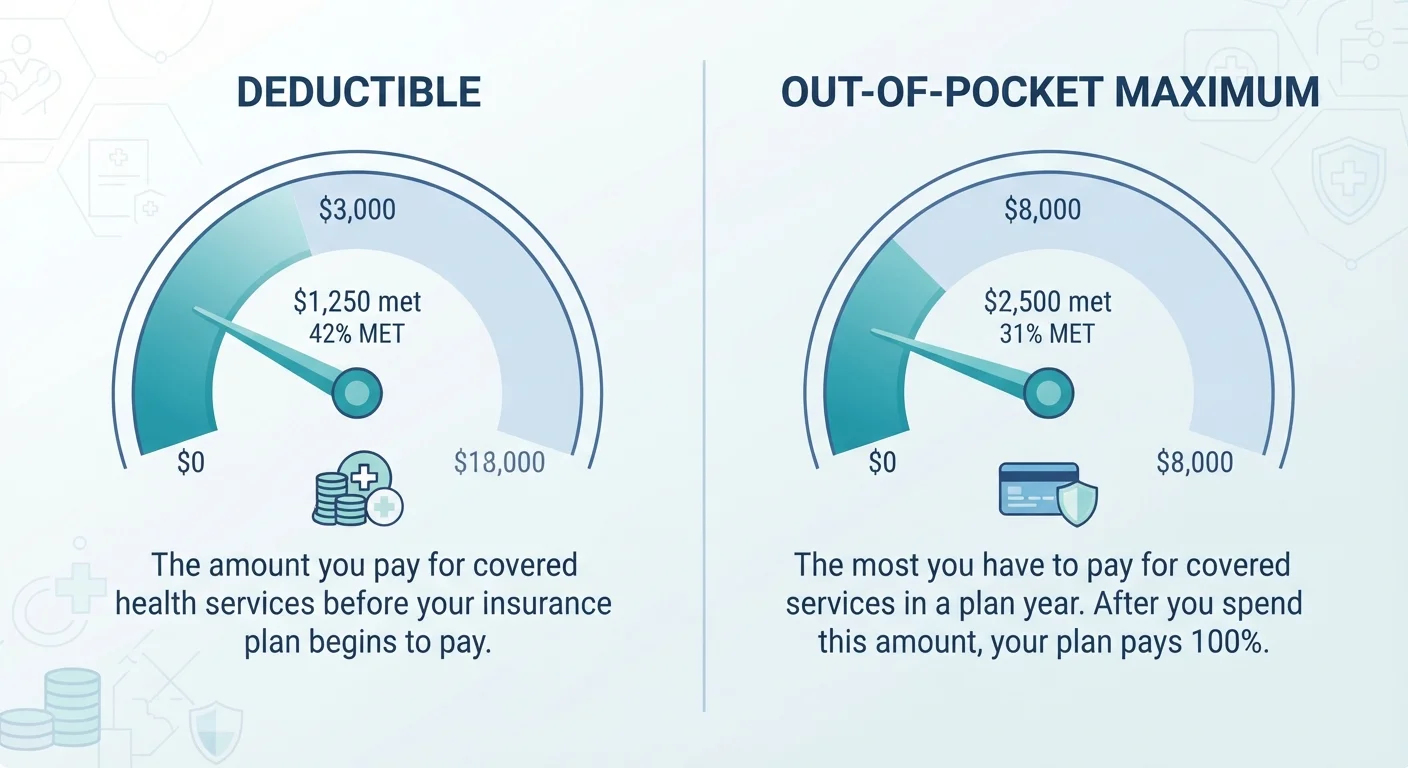
A deductible is the amount you pay out of pocket before your insurance begins sharing costs. Many plans require you to meet your deductible first before coinsurance kicks in. So if you have a $1,500 deductible, you may pay the full allowed cost of services until you've spent $1,500 - after that, your plan's coinsurance rate applies.
Copays often work differently. Many plans apply copays right away, even before you've met your deductible. That's why a routine $30 office visit copay feels simple: you pay it regardless of where you are in the deductible cycle. However, some plans - particularly high-deductible health plans (HDHPs) - do require the deductible to be met before copays apply to anything other than preventive care.
20%
Typical coinsurance rate on many employer plans
A common plan structure sets the employee's coinsurance share at 20% after the deductible, with the insurer covering the remaining 80% of allowed costs.
$9,450
2024 out-of-pocket maximum for individual ACA plans
The IRS and HHS set annual limits on how much individuals can be required to pay out of pocket for covered services under ACA-compliant plans.
Always check your plan's Summary of Benefits and Coverage (SBC) document to see exactly when copays and coinsurance begin. The difference between your deductible and out-of-pocket maximum is another important concept to understand alongside these.
When Each Applies - and What Your Bill Will Look Like
In practice, most plans use both copays and coinsurance for different types of services. Here's a common pattern:
- Primary care visits: $25-$40 copay
- Specialist visits: $50-$75 copay, or sometimes 20-30% coinsurance
- Emergency room: flat copay (often $200-$350) or coinsurance after deductible
- Hospital stays or surgery: coinsurance, typically 10-40% of allowed costs after the deductible
- Prescription drugs: tiered copays based on drug type (generic, brand, specialty)
The key takeaway: copays dominate routine, lower-cost services. Coinsurance tends to govern the more expensive, unpredictable end of care. That's why your out-of-pocket exposure from a single hospitalization can be far greater than years of office visit copays combined.
Both copays and coinsurance count toward your plan's out-of-pocket maximum - the cap on what you'll pay in a given year. Once you hit that cap, your insurer covers 100% of covered services for the rest of the plan year.
Your Plan May Use Both - Check the SBC
It's common for a single health plan to use copays for some services and coinsurance for others. Your plan's Summary of Benefits and Coverage (SBC) is a standardized document insurers are required to provide that lists exactly which cost-sharing method applies to each category of care. Reading it before you need care - not after - is the most reliable way to avoid unexpected bills.
This article is general insurance education, not personalized advice. Coverage rules, copay amounts, and coinsurance rates vary by plan, insurer, and state. Always review your actual policy documents and consult a licensed insurance agent for guidance specific to your situation. See the full glossary of insurance cost terms for a complete reference.
This article is for general informational purposes only and does not constitute insurance, financial, or legal advice. Coverage details vary by plan and provider. Consult a licensed insurance professional for guidance tailored to your needs.