
What the Out-of-Pocket Maximum Actually Does
Most people focus on the monthly premium when picking a health plan - and that's understandable. But the out-of-pocket maximum is the number that can truly make or break your finances if something serious happens.
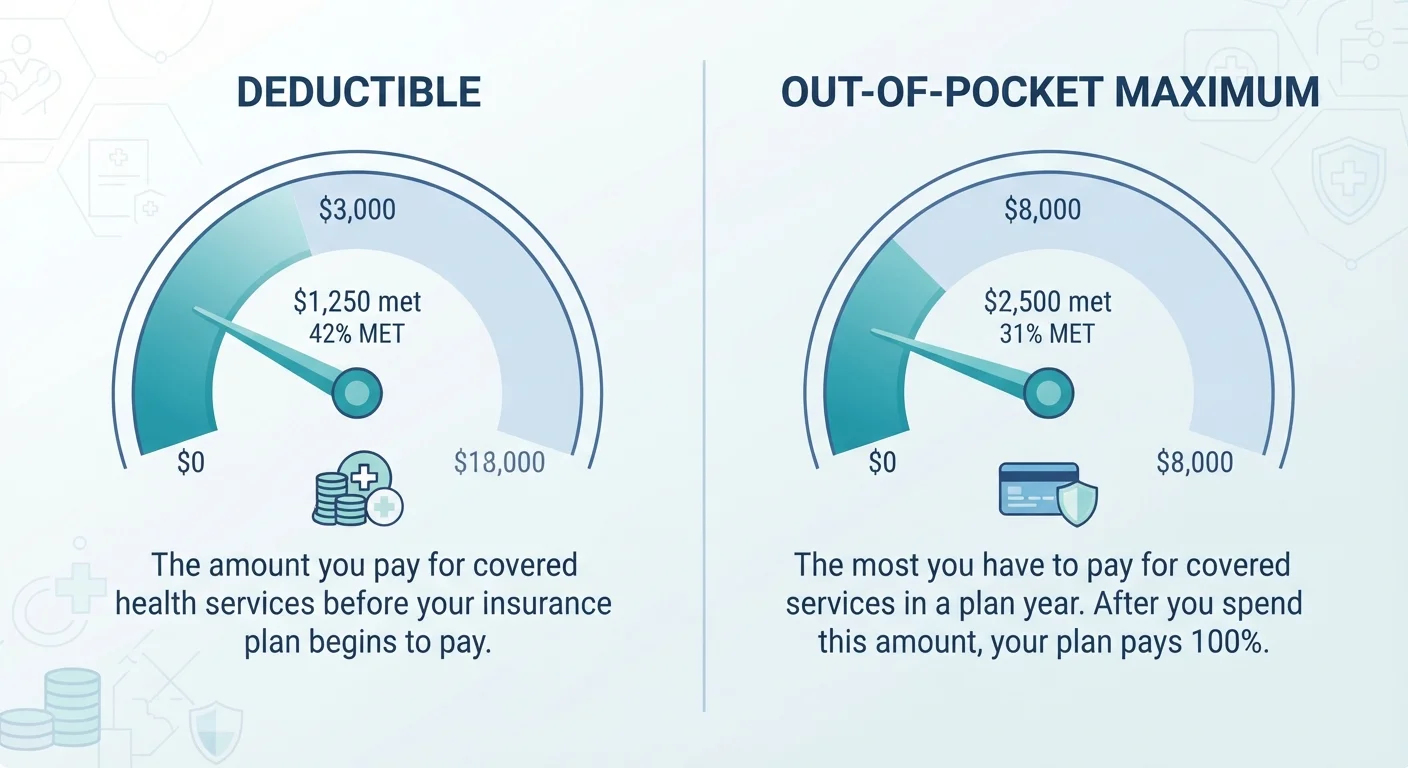
Here's how it works in plain terms: throughout the year, you pay for covered care through your deductible, copays, and coinsurance (your share of costs after the deductible). The out-of-pocket maximum is the point at which those payments stop. Hit that ceiling, and your insurer covers 100% of covered, in-network services for the remainder of the plan year.
This protection matters most when the unexpected happens - a hospitalization, a surgery, or a chronic condition requiring ongoing treatment. Without a cap, costs could theoretically spiral with no end point. The out-of-pocket maximum draws that line. For a broader look at how all these cost terms fit together, see our guide on health insurance premiums, deductibles, and what you're actually paying for.
$9,450
2024 ACA individual out-of-pocket maximum
The Department of Health and Human Services sets this federal ceiling annually for ACA-compliant individual health plans.
$18,900
2024 ACA family out-of-pocket maximum
Family plans face a combined cap twice the individual limit under ACA rules for 2024.
1 in 4
Americans with medical debt
Research from the Kaiser Family Foundation has found roughly one in four U.S. adults report difficulty paying medical bills.
What Counts - and What Doesn't
Not every dollar you spend on healthcare counts toward your out-of-pocket maximum. Understanding the distinction can save you from a rude surprise at billing time.
What typically counts:
- Your annual deductible payments
- Copays for office visits, urgent care, and prescriptions (check your plan - some exclude drug copays)
- Coinsurance - your percentage share of costs after the deductible is met
What typically does NOT count:
- Your monthly premium
- Costs for out-of-network providers (unless your plan has a separate out-of-network accumulator)
- Services your plan explicitly excludes from coverage
- Balance billing amounts from out-of-network providers
These exclusions are exactly where dangerous coverage gaps tend to hide. Always read your plan's Summary of Benefits and Coverage document - it will spell out what counts and what doesn't for your specific policy.
Check Your Plan's Accumulator Rules
Some plans use 'accumulator adjustment programs,' which can prevent certain manufacturer drug coupons from counting toward your deductible or out-of-pocket maximum. If you rely on prescription assistance programs, ask your insurer explicitly how those payments are tracked. This one detail can significantly affect when - or whether - you reach your out-of-pocket cap.
How to Use This Number When Choosing a Plan
The out-of-pocket maximum is a key variable when comparing plans during open enrollment. A plan with a lower premium often has a higher out-of-pocket maximum - meaning you'd pay more if you had a major health event. A plan with a higher premium may have a lower cap, offering more protection if you use a lot of care.
Neither is automatically better. The right balance depends on your expected healthcare use, your savings cushion, and your comfort with financial risk.
If you want a side-by-side look at how the deductible and out-of-pocket maximum interact during the course of a plan year, our article Deductible vs. Out-of-Pocket Maximum walks through that relationship step by step.
This article is for general informational purposes only and does not constitute personalized insurance, financial, or legal advice. Coverage terms, limits, and regulations vary by plan and state. Consult a licensed insurance agent or adviser for guidance specific to your situation, and always review your actual policy documents before making coverage decisions.