Why Your Policy Probably Covers Less Than You Think
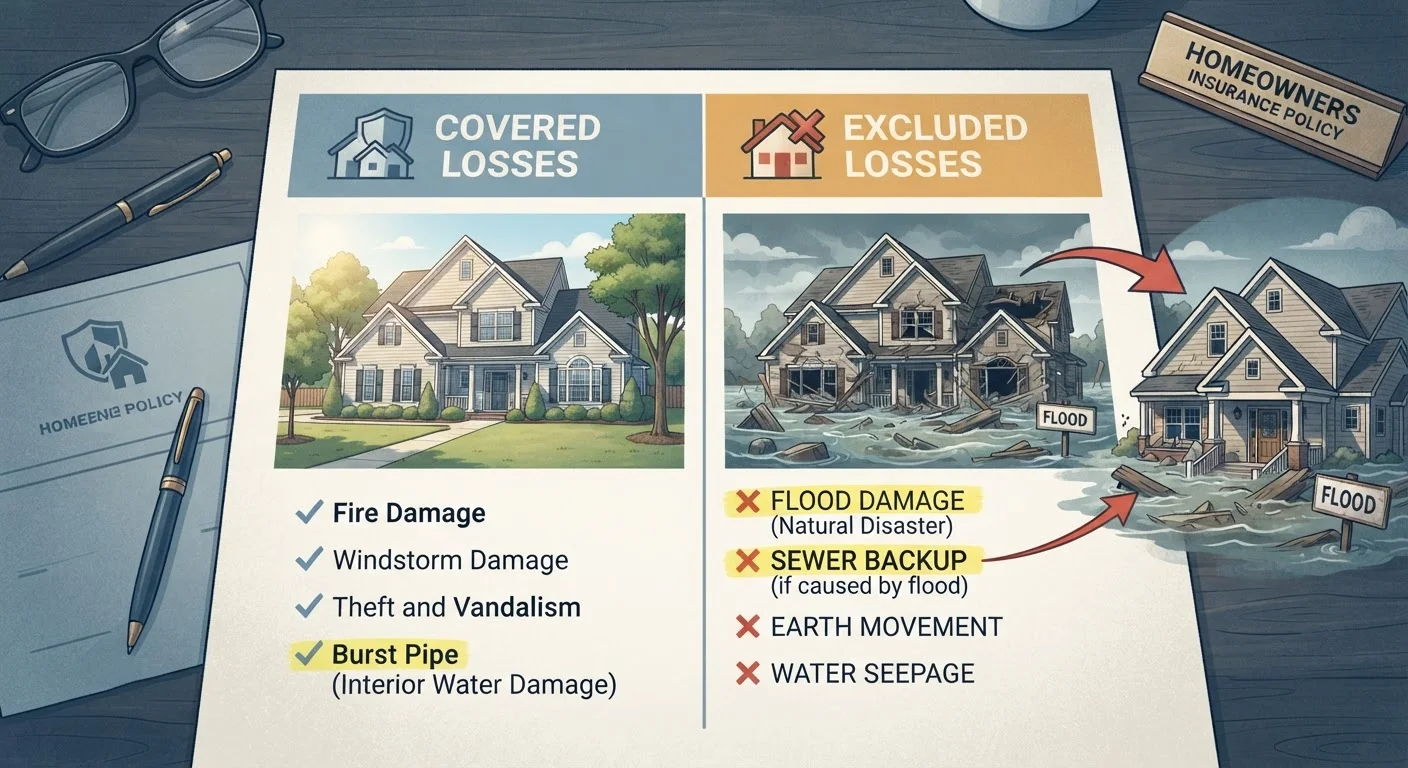
Most homeowners read the summary page of their policy and assume the rest is standard. It rarely is. A standard homeowners policy - typically based on the industry's HO-3 form - covers your dwelling and personal property against a defined set of perils, but it explicitly excludes several of the most financially destructive events a household can face.
The exclusions listed below are not obscure fine-print surprises. They appear in plain language in virtually every standard policy. The problem is that most people never read that far. Understanding these gaps now - before a loss happens - is the only way to make a deliberate choice about whether to fill them. This article is general information; coverage terms vary by provider and state, so always review your actual policy documents and speak with a licensed insurance agent about your specific situation.
For a broader look at how policies can leave households exposed, see where the most dangerous blind spots tend to hide.
Flood Damage
This is the exclusion that catches the most homeowners off guard. Flood damage - water that originates outside your home and enters due to storm surge, overflowing rivers, heavy rainfall runoff, or similar causes - is explicitly excluded from every standard homeowners policy in the United States.
The fix is a separate flood insurance policy. The federally backed National Flood Insurance Program (NFIP) is the most widely available source, but private flood insurance options have grown significantly and may offer broader coverage or higher limits. One important detail: NFIP policies typically have a 30-day waiting period before coverage takes effect, so purchasing after a storm watch is issued is usually too late.
It's also worth noting that you don't need to live in a designated high-risk flood zone to experience flood damage - a significant share of flood claims come from properties outside those zones.
Flood damage is excluded from every standard US homeowners policy - a separate policy is always required.
Earthquake Damage
Like flood, earthquake damage is universally excluded from standard homeowners policies. This applies to the structural damage to your home, damage to personal property, and costs associated with temporary housing while repairs are made - none of it is covered under a standard HO-3 policy if the cause is seismic activity.
Earthquake coverage is available as a standalone policy or as an endorsement added to your existing homeowners policy, depending on your insurer and state. In high-risk states such as California, earthquake policies are widely marketed and regulated, but premiums and deductibles can be substantial - deductibles are often expressed as a percentage of the insured value rather than a flat dollar amount. Homeowners in lower-risk states sometimes overlook this coverage entirely, which is a mistake given that earthquakes occur across a much broader geographic range than most people assume.
Earthquake deductibles are often a percentage of your home's insured value, not a flat dollar amount.
Mold Remediation
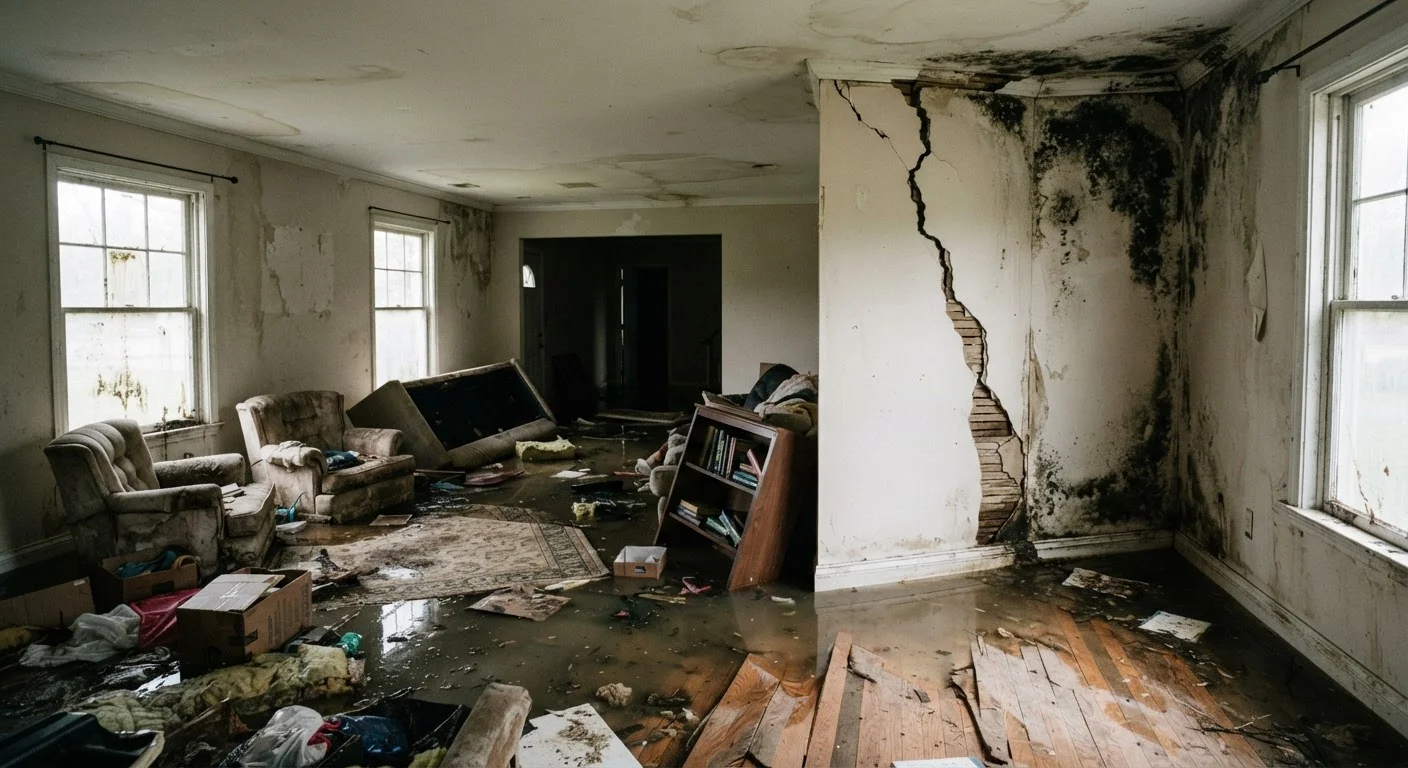
Mold coverage is one of the most nuanced exclusions on this list. Whether mold is covered depends entirely on what caused it. If mold results directly from a covered peril - say, a burst pipe that your policy covers - some of the mold remediation cost may be included. But if the mold grew because of a slow, undetected leak, high humidity, or gradual moisture buildup, it is almost certainly excluded.
Insurers treat gradual damage differently from sudden, accidental damage. Mold that develops over time falls into the gradual category. Some insurers offer limited mold endorsements that extend coverage up to a set dollar cap, which may be worth exploring if you live in a humid climate or have an older home. Keep in mind that remediation costs can run into tens of thousands of dollars for significant infestations, making this exclusion consequential.
Mold from a slow leak is almost never covered - the cause of moisture matters as much as the damage itself.
Sewer and Drain Backup
When a municipal sewer line backs up into your home through a floor drain or toilet, or when a sump pump fails and water floods your basement, the resulting damage is not covered under a standard homeowners policy. This surprises many policyholders because the water is inside the home, and they assume their dwelling coverage applies.
The distinction insurers make is between water that originates from a covered source - like a burst pipe in your wall - versus water that enters through a drain or backup. The latter requires a separate endorsement, often called water backup coverage or sewer and drain backup coverage, which is typically inexpensive relative to the risk. Basement finishes, appliances, flooring, and stored belongings can all be destroyed in a backup event, so this is a gap worth addressing regardless of home age.
Sewer backup coverage is a low-cost add-on that addresses one of the most common causes of basement damage.
Gradual Water Damage and Leaks
Insurance is designed to cover sudden and accidental losses, not wear, tear, or neglect. A pipe that bursts unexpectedly is generally covered; a pipe that seeps slowly for months until it rots the subfloor is not. The same principle applies to a roof that gradually allows water infiltration, a window seal that fails over time, or a dishwasher hose that drips unnoticed behind a cabinet.
The practical implication is that regular home maintenance isn't just good practice - it's a coverage requirement. Policyholders are expected to take reasonable steps to prevent loss. Failing to address a known leak can give an insurer grounds to deny a claim even for damage that might otherwise be covered. Routine inspections of plumbing, roofing, and appliance connections go a long way toward both preventing damage and preserving your right to a claim if sudden damage does occur.
For more examples of frequently misunderstood exclusions, see what else tends to catch homeowners off guard.
Insurers can deny claims for gradual damage if the policyholder knew about and failed to address the problem.
Service Line Failures
The underground pipes and wires that connect your home to municipal utilities - water lines, sewer lines, electrical conduits, gas lines - are typically your responsibility from the point where they enter your property. Standard homeowners policies do not cover the cost of digging up and repairing these lines if they fail due to age, corrosion, root intrusion, or ground movement.
Repair and replacement of underground service lines can cost thousands of dollars, and the excavation work alone is expensive. Service line coverage is now offered by many insurers as an endorsement, and some utility companies offer their own protection plans. It's worth understanding what is and isn't included before comparing options - some plans cover only specific line types, and costs vary. This is one of the less-discussed gaps, but it affects homeowners with older infrastructure particularly often.
Underground utility lines on your property are typically your financial responsibility - not the utility company's.
Closing the Gaps Before You Need To File
None of these exclusions are inevitable. Each one has a corresponding product or policy endorsement that addresses it - flood insurance through the federal NFIP or private carriers, earthquake policies available in most states, mold endorsements, sewer backup riders, and service line coverage. The cost of these additions varies, but it is almost always less than a single uncovered claim.
Review Your Policy Declarations Page First
Your declarations page lists what is and isn't covered in plain terms. Before calling your agent, pull that document and look specifically for the exclusions section. Knowing your current gaps gives you a concrete starting point for the conversation rather than asking broad questions that may not surface the specific risks you face.
A good starting point is treating your policy review as an annual habit rather than a one-time task. Compare what you own and where you live against what your policy actually covers. The coverage checkup framework can help you work through that systematically. And if your concern is whether your coverage limits are high enough - not just what's excluded - underinsurance is a separate but equally serious risk worth understanding.
This article is for general informational purposes only and does not constitute insurance, financial, or legal advice. Coverage terms, exclusions, and availability vary by insurer and state. Always read your policy documents carefully and consult a licensed insurance agent or adviser for guidance specific to your situation.