
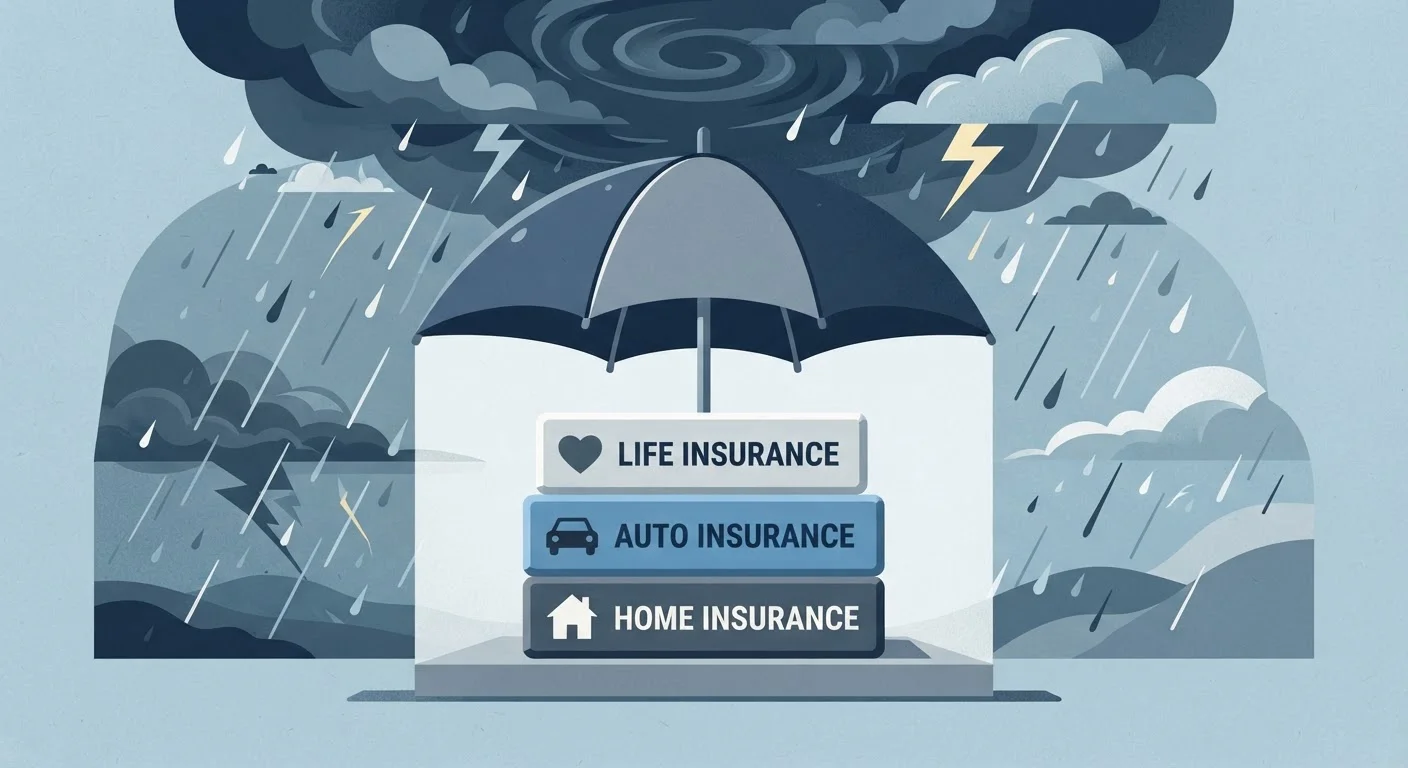
The Problem Umbrella Insurance Solves
Every liability policy has a limit - a ceiling on what it will pay in a single claim. Your auto policy might pay up to $250,000 for injuries you cause. Your homeowners policy might cover $300,000 in personal liability. Those numbers feel large until a serious accident happens and a court awards the injured party $900,000.
That gap - the difference between your policy limit and the final judgment - comes out of your pocket. It can mean savings accounts drained, wages garnished, or property liens. Umbrella insurance exists specifically to close that gap.
It's worth understanding that this isn't a niche product for the wealthy. underinsurance can catch anyone off guard, and liability judgments don't necessarily reflect how much money the defendant actually has.
Umbrella vs. Excess Liability: A Subtle Distinction
The terms 'umbrella' and 'excess liability' are sometimes used interchangeably, but they aren't identical. A true umbrella policy typically provides broader coverage than your underlying policies and may fill in certain gaps. An excess liability policy strictly extends the limits of an existing policy without broadening what's covered. When shopping, ask specifically which type you're being quoted.
How Umbrella Coverage Actually Works
Umbrella insurance is what's called "excess liability" coverage. It sits above your existing policies and only activates once those underlying limits are exhausted. Here's the basic sequence:
- An incident occurs - say, a guest slips on your icy driveway and sues you for $750,000.
- Your homeowners liability limit of $300,000 pays out first.
- Your umbrella policy picks up the remaining $450,000.
Beyond covering the overage, many umbrella policies also provide coverage for liability categories your standard policies exclude outright - things like libel, slander, or false arrest claims. This broader scope is part of what makes it useful. To understand what your underlying auto policy covers before an umbrella would activate, see our guide to auto insurance coverage types.
$1M+
Typical starting coverage amount
Most personal umbrella policies are sold in increments starting at $1 million, according to the Insurance Information Institute.
$150-$300
Estimated annual cost for $1M policy
The Insurance Information Institute estimates most consumers pay in this range annually for a $1 million umbrella policy, though premiums vary by insurer and risk factors.
1 in 6
Americans sued or threatened with lawsuit each year
Industry research has historically cited figures suggesting millions of Americans face some form of liability threat annually, underscoring broad exposure beyond high-income households.
Who Actually Benefits From It
Umbrella insurance is often described as a product for high-net-worth individuals, but that framing misses something important: liability exposure isn't limited to wealth. Anyone who could face a large judgment benefits from coverage that protects their future income - not just their current savings.
That said, some situations genuinely increase exposure:
- Dog owners - dog bite claims are among the most common homeowner liability losses.
- Parents of teen drivers - young drivers are statistically more likely to cause serious accidents.
- People who host frequently - social gatherings increase slip-and-fall and alcohol-liability risk.
- Those with pools, trampolines, or recreational equipment - these are sometimes called "attractive nuisances" because they draw visitors who may be injured.
If you're not sure whether your current policies have blind spots, common coverage gaps are worth reviewing before assuming you're adequately protected.
Review Your Underlying Limits First
Before purchasing an umbrella policy, check the liability limits on your existing home and auto policies. Insurers typically require minimum thresholds - often $300,000 in homeowners liability and $250,000/$500,000 in auto liability - before they'll issue an umbrella. Raising those underlying limits first may cost less than you expect and is usually required anyway.
What Umbrella Insurance Doesn't Cover
Knowing what umbrella insurance excludes is just as important as knowing what it covers. Standard exclusions typically include:
- Your own bodily injuries or property damage
- Intentional or criminal acts
- Business and professional liability
- Damage to your own vehicles or home
- Liability arising from certain watercraft above a size threshold
It also won't fill in coverage gaps within your underlying policies - it amplifies limits, it doesn't replace missing coverage types. For a broader look at what standard policies routinely leave out, see things people assume their insurance covers but doesn't.
This article is for general informational purposes only and does not constitute personalized insurance, financial, or legal advice. Coverage terms, exclusions, premiums, and eligibility vary by insurer, policy, and state. Consult a licensed insurance agent or adviser to evaluate your specific situation and read any policy documents carefully before purchasing coverage.