
Why These Gaps Catch So Many People Off Guard
Most people buy insurance and file it away - reading the declarations page but skipping the fine print. That approach works fine until you need to file a claim. The problem is that insurance policies are written to define what is covered, and then carve out long lists of what isn't. Those exclusions are buried in dense policy language that rarely gets a second look.
The result is a widespread pattern: policyholders assume they're protected, something goes wrong, they file a claim, and the insurer cites an exclusion they didn't know existed. This isn't a rare edge case. It happens across every line of insurance - home, auto, renters, and more. Our coverage blind spots guide details several of the most consequential examples consumers encounter.
The myths below represent some of the most common assumptions that lead to denied or reduced claims. None of them are obscure technicalities - they're everyday misunderstandings that cost real money.
Don't Wait for a Claim to Find Your Gaps
Coverage gaps are nearly impossible to fix after a loss has already occurred. Insurers won't let you add flood coverage after a flood warning is issued, and they won't backdate a rider to cover equipment that already broke. Review your policy annually - ideally before storm season or any major life change like starting a home business.
Common Coverage Myths - Corrected
Each of the following pairs a widespread assumption with what your policy most likely actually says. Keep in mind that specific terms, exclusions, and available endorsements vary by insurer and state - this is general educational information, not a review of your specific policy. A licensed insurance agent can help you assess your actual coverage.
Myth
My homeowners insurance covers flood damage since water came into my house.
Fact
Standard homeowners policies explicitly exclude flood damage. Flood coverage requires a separate policy, typically through the National Flood Insurance Program (NFIP) or a private flood insurer.
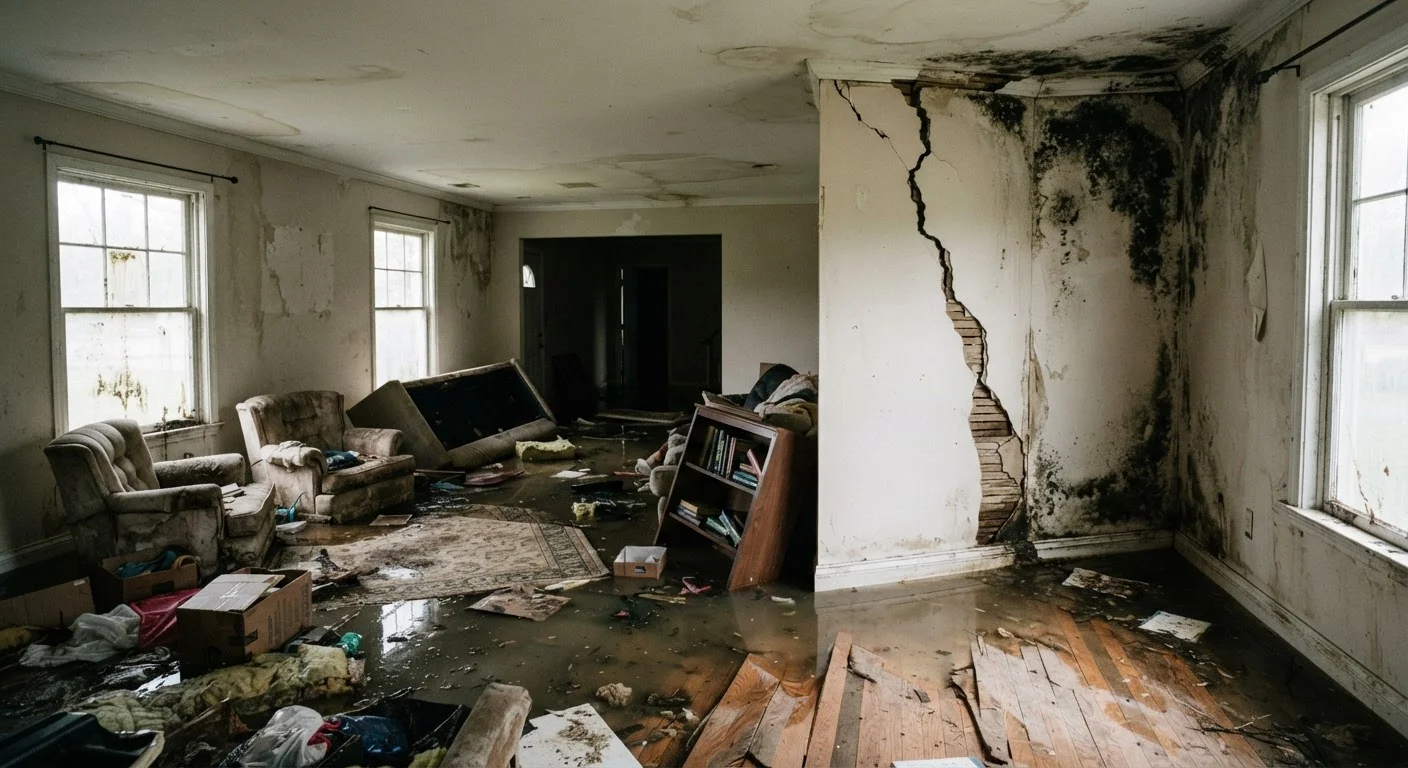
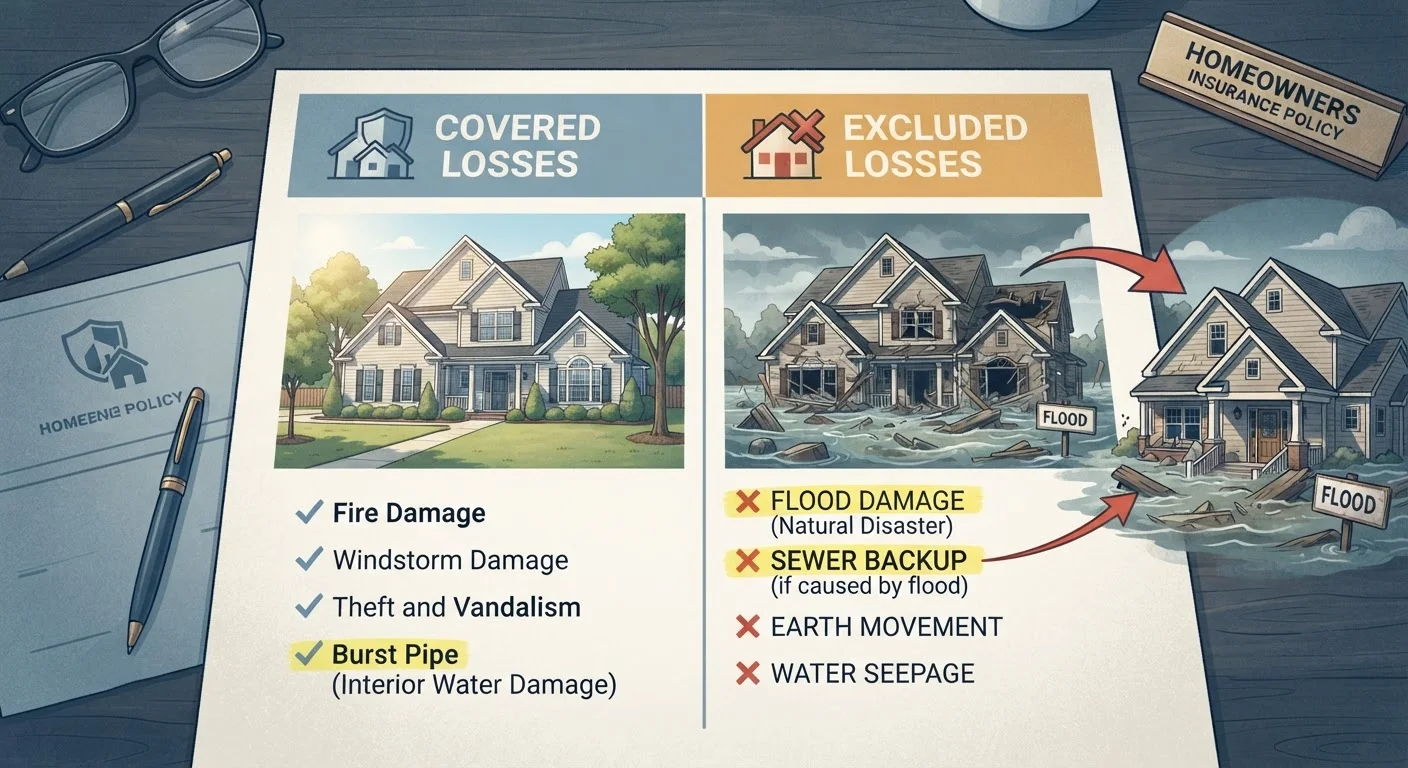
Water damage from a burst pipe inside your home is generally covered. Water that enters from outside - whether from a storm surge, overflowing river, or heavy rainfall - is not. Insurers draw a sharp line between internal water events and flooding. This exclusion catches many homeowners off guard, particularly in areas that aren't considered high-risk flood zones. See our guide to flood and earthquake exclusions for a fuller breakdown.
Myth
If a sewer backs up into my basement, my homeowners policy will pay for it.
Fact
Sewer and drain backup is a separate coverage add-on that most standard homeowners policies do not include by default.
Sewer backup is one of the most common - and most expensive - surprises for homeowners filing claims. Cleanup costs can run into the tens of thousands of dollars, yet the standard HO-3 policy form excludes it. Many insurers offer a sewer backup endorsement for a relatively modest additional premium. Check your current policy's exclusions and ask your agent whether this rider is available.
Myth
My laptop and work equipment are covered under my homeowners or renters policy.
Fact
Personal policies typically cap or exclude property used for business purposes, even when that property is kept at home.
A personal laptop used exclusively for browsing may be covered up to your policy's personal property limit. But if that same laptop is used for freelance work or running a home-based business, many insurers treat it as business property - which falls outside a standard personal lines policy. The same applies to cameras, specialized tools, and inventory. A home-based business endorsement or a separate commercial policy may be needed. Our renters insurance coverage guide explains similar limitations for renters.
Myth
Earthquake damage is included in my homeowners policy just like fire or theft.
Fact
Earthquake damage is a standard exclusion in virtually all US homeowners policies and requires a separate policy or endorsement.
Fire, theft, and wind damage are named perils typically covered under standard homeowners forms. Earthquakes are not - regardless of where you live. Even in states with lower seismic activity, standalone earthquake coverage is available and worth evaluating. California residents can access coverage through the California Earthquake Authority, while other states have private market options. This is general information; coverage availability and terms vary by state and provider.
Myth
If something just wears out or breaks down over time, my policy will cover the replacement.
Fact
Wear and tear, deterioration, and mechanical breakdown are universally excluded from property and homeowners insurance policies.
Insurance is designed to cover sudden, accidental losses - not gradual deterioration. A roof that fails after 25 years of aging, an HVAC system that stops working, or plumbing that corrodes over time are all considered maintenance issues, not insurable events. Neglected maintenance that leads to a larger loss can also result in a denied claim on the resulting damage. Understanding this distinction is covered further in our overview of common coverage gaps.
Myth
My car insurance covers personal belongings stolen from my vehicle.
Fact
Auto insurance policies cover the vehicle itself, not the personal items inside it. Stolen belongings from a car are typically a homeowners or renters insurance claim.
Comprehensive auto coverage pays for theft of the vehicle and damage to it. If a thief smashes your window and takes a laptop bag, your auto policy covers the window - not the laptop. The personal property portion of a homeowners or renters policy generally covers stolen belongings, though deductibles and sublimits apply. Check both policies before filing to determine where a claim makes more financial sense. For more on policy limits and what they mean for your out-of-pocket costs, see our guide to underinsurance.
Always Read Your Policy's Exclusions Section
The declarations page tells you what you're covered for in general terms, but the exclusions section is where the real limits live. Many claim denials happen because policyholders assumed coverage based on the declarations page alone. Before you assume something is covered, locate the exclusions section and read it carefully. If the language is unclear, ask your agent to walk you through it in plain terms.
This article is for general informational purposes only and does not constitute insurance, financial, or legal advice. Coverage terms, exclusions, and availability vary by insurer, policy type, and state. Always read your policy documents carefully and consult a licensed insurance professional for guidance specific to your situation.
What to Do If You Suspect a Gap
If any of the examples above sound familiar, the practical next step is a policy review - not a new purchase. Pull out your current policy documents and locate the exclusions section. Read it alongside the declarations page so you can see both what's listed as covered and what's explicitly ruled out.
If you find a potential gap, ask your insurer or agent about endorsements (also called riders or add-ons) that can close it. Flood backup coverage, earthquake riders, and home-based business endorsements are widely available and often inexpensive relative to the risk they address.
Understanding how deductibles work is also part of getting a clear picture of your real out-of-pocket exposure. A policy with low premiums but high deductibles and major exclusions may leave you far more vulnerable than you realize. For a broader look at how limits can fall short, see our underinsurance overview.
~40%
Homeowners without flood insurance
FEMA estimates that a significant majority of US homeowners in moderate-to-high flood risk areas carry no flood coverage, leaving them fully exposed to flood losses.
$11,000+
Average sewer backup claim cost
Industry estimates place average sewer or drain backup remediation costs well above $10,000 when structural damage and cleanup are included.
1 in 6
Homeowners claims denied or underpaid
Consumer advocacy research suggests a substantial share of homeowners insurance claims result in partial payment or denial, often due to exclusions the policyholder was unaware of.