
Why Deductible Confusion Is So Common
Insurance policies are dense documents, and deductibles sit at the center of some of the most persistent misunderstandings in personal finance. Many people discover what their deductible actually means only after they've filed a claim - which is the worst possible time for a surprise.
The stakes are real. Misreading your deductible structure can leave you expecting coverage that won't kick in yet, or cause you to overpay when you do have costs that should count. Our plain-language breakdown of premiums, deductibles, and copays is a good starting point, but this article focuses specifically on the myths that cause the most real-world financial harm.
Below, we address the most common deductible misconceptions and replace them with what your policy actually says.
Myth
Once I pay my premium each month, I shouldn't have to pay much when I actually use my insurance.
Fact
Your premium keeps your policy active. Your deductible is a separate, additional amount you pay out of pocket before most coverage begins.
Think of your premium as a membership fee and your deductible as the first portion of any bill you're responsible for. A $300 monthly premium and a $1,500 deductible mean you could owe up to $1,500 in covered expenses before your insurer pays a dollar of claims - on top of what you've already paid in premiums. These are two distinct cost categories, and policies are priced assuming you'll pay both.
Myth
My deductible resets every time I have a new claim.
Fact
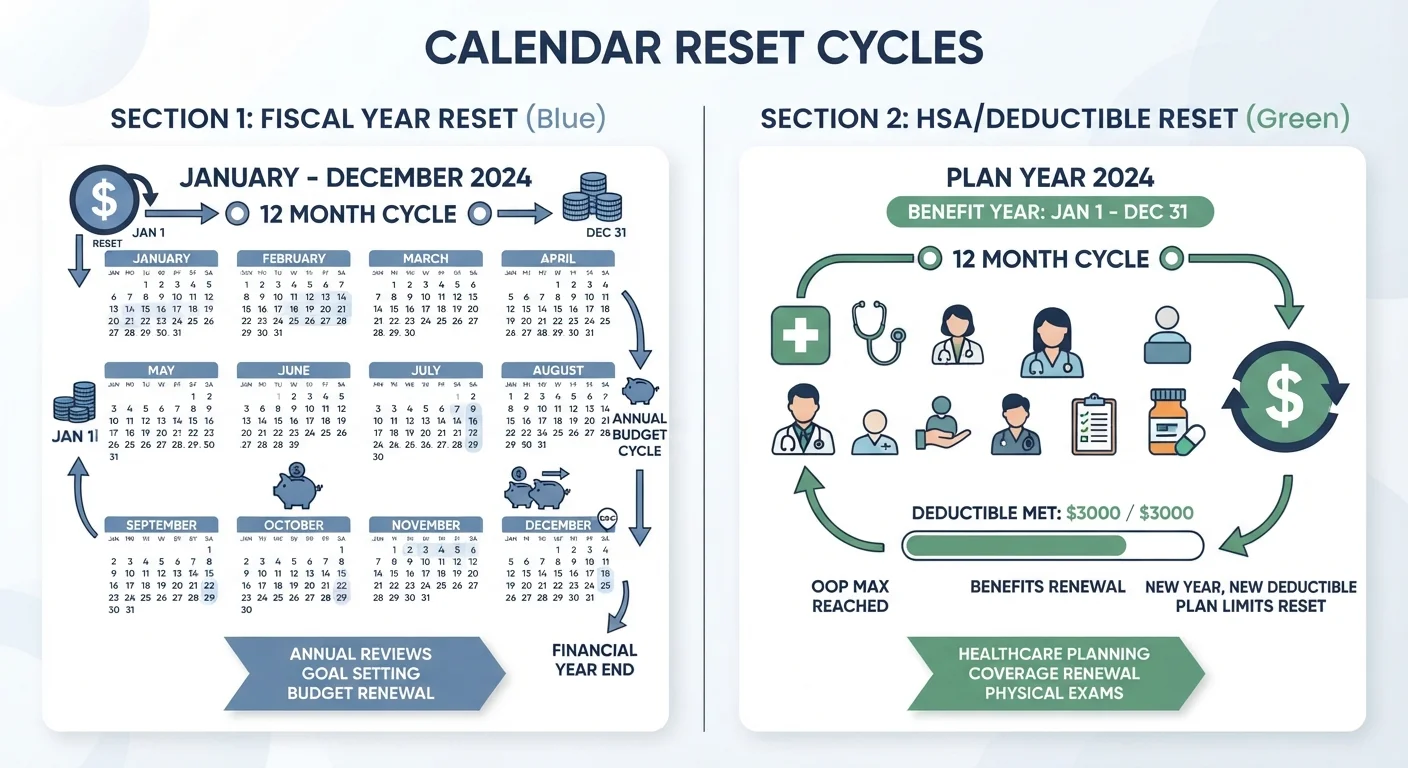
Health insurance deductibles typically reset once per year, regardless of how many claims you file. Auto and home policies generally apply a deductible per incident.
The reset schedule depends entirely on the type of insurance. Most health plans operate on a calendar-year or plan-year cycle - meaning once you've met your deductible for the year, additional covered claims don't require you to start over until the new plan year begins. Auto and homeowners insurance work differently: each separate claim event usually triggers its own deductible. Knowing which model your policy uses helps you time non-urgent care or repairs more strategically. For a deeper look, see our article on how annual vs. per-incident deductibles differ.
Myth
If I have a family plan, each person has to meet the full family deductible before coverage kicks in.
Fact
Family plans usually have both an individual deductible and a combined family deductible. Coverage can begin for one family member once that person meets their individual threshold.
Most family health plans use an embedded deductible structure. Each covered family member has their own individual deductible (say, $1,000), and there is also a family-wide aggregate (say, $3,000). If one person racks up enough medical bills to hit $1,000, their claims start being covered even though the rest of the family hasn't spent anything yet. Once the collective family spending reaches the aggregate, everyone's claims are covered. Some plans use a non-embedded structure where the full family deductible must be reached before anyone gets cost-sharing - so it's worth confirming which type your plan uses.
Myth
All medical services are subject to my deductible before insurance pays anything.
Fact
Many services - including most preventive care under ACA-compliant plans and some specialist copays - are covered before you meet your deductible.
Under plans that comply with the Affordable Care Act, a defined set of preventive services (such as annual wellness visits and certain screenings) must be covered at no cost to you, even if you haven't touched your deductible. Additionally, many plans apply flat copays for primary care or urgent care visits that are entirely separate from the deductible structure. The full breakdown of health insurance cost-sharing covers how these layers interact. Always check your plan's Summary of Benefits and Coverage (SBC) document - it's required to list what is and isn't subject to the deductible.
Myth
A lower deductible is always the smarter financial choice.
Fact
A lower deductible typically comes with a higher premium. Depending on your actual usage, a higher deductible may cost you less overall across the year.
Insurers price lower deductibles into higher monthly premiums because they're taking on more immediate financial risk. If you rarely file claims, you may pay significantly more in annual premiums than you would ever save from a lower deductible. The calculus changes if you have frequent medical needs or live in an area with high property risk. Neither option is universally better - the right balance depends on your expected usage, your cash reserves, and your risk tolerance. This is general information; a licensed agent can help you run the actual numbers for your situation.
How Deductible Structure Affects Your Real Costs
Understanding the mechanics behind deductibles isn't just trivia - it directly affects how you plan for healthcare bills, auto repairs, and property claims. One area that confuses people in particular is the difference between annual and per-incident deductibles. Annual vs. per-incident deductibles work on entirely different schedules, and mixing them up can lead to badly misjudged budgets.
$1,735
Average individual health plan deductible
According to KFF (Kaiser Family Foundation) data, the average deductible for single coverage in employer-sponsored health plans has risen substantially over the past decade.
43%
Adults underinsured or confused about cost-sharing
A Commonwealth Fund survey found that a significant share of U.S. adults with health coverage reported difficulty understanding their out-of-pocket costs, including deductibles.
It's also worth knowing that deductibles don't exist in isolation. Costs you can't predict - like those caused by exclusions most policyholders don't know about - can compound the financial hit when a deductible is higher than expected. And if a claim is ever denied, understanding your deductible correctly can be critical to disputing the outcome. See our guide on why insurers deny claims and what the fine print actually says for more on that process.
This article is for general informational and educational purposes only and does not constitute personalized insurance, financial, or legal advice. Coverage terms, deductible structures, and eligibility vary by policy, provider, and state. Always read your actual policy documents and consult a licensed insurance agent or adviser for guidance specific to your situation.