
What Each Deductible Structure Actually Means
If you're new to insurance cost terms, it helps to start with a foundation. A deductible is the amount you pay out of pocket before your insurer begins sharing costs. Premiums, deductibles, and copays all serve different roles in a policy, and the deductible structure - specifically, when it resets - shapes how your costs stack up over time.
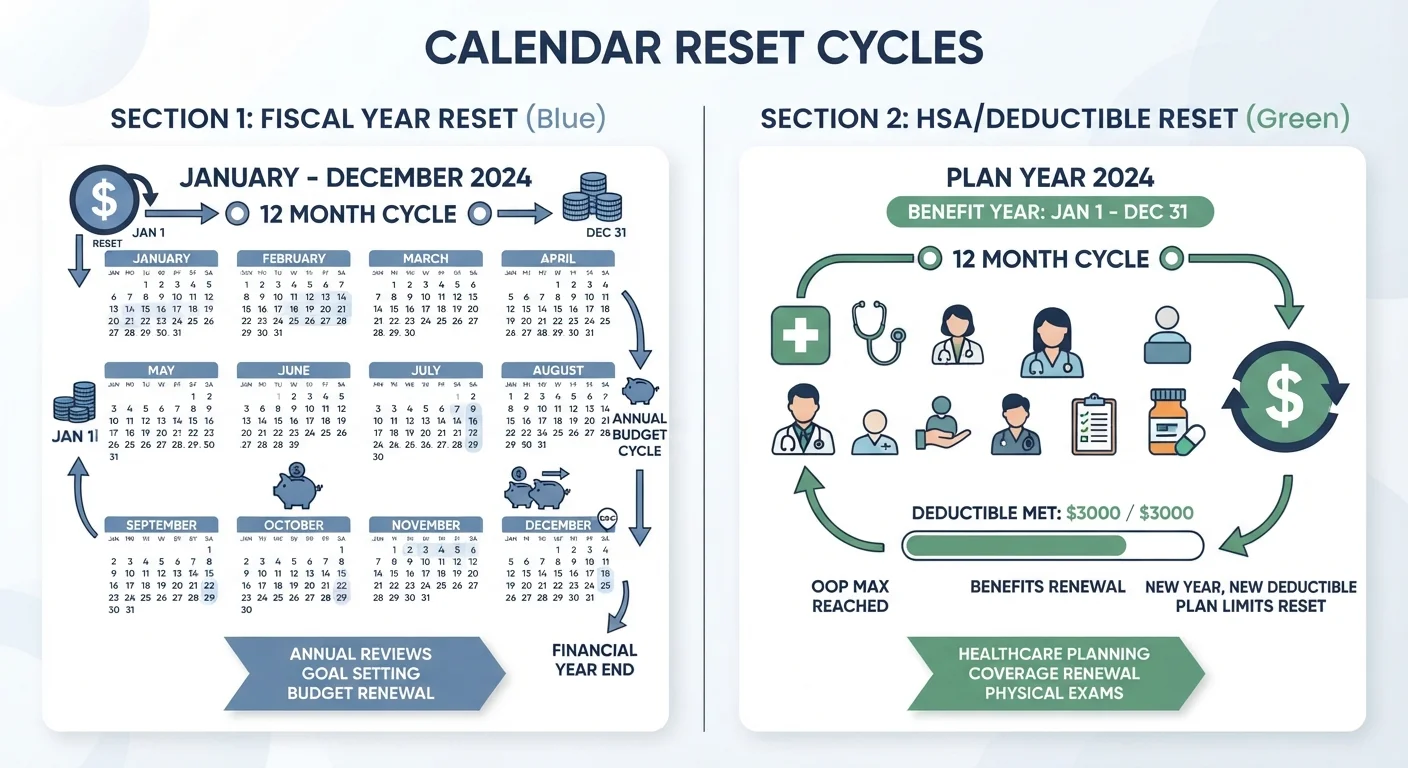
Annual deductible: You pay a set amount over the course of a policy year. Once you've met that threshold across all your claims combined, your insurer picks up its share of covered costs for the remainder of that year. The counter resets at the start of the next policy year.
Per-incident deductible: A separate deductible applies to each distinct claim, condition, or episode of care. Each new incident starts the clock over at zero, regardless of what you've already paid toward other claims that year.
Understanding which type your policy uses is essential to estimating your real exposure - especially if you anticipate needing coverage more than once in a year.
How the Cost Timing Plays Out in Practice
The practical difference becomes clear with a simple scenario. Suppose your policy carries a $500 deductible.
Under an annual structure, if you file three separate claims in one year - say, $300, $400, and $600 - you pay $300 on the first, $200 more on the second (reaching the $500 threshold), and nothing more toward the deductible on the third. Your total deductible outlay for the year: $500.
Under a per-incident structure, each of those same three claims triggers its own $500 deductible. If each claim is large enough to exceed $500, you could owe up to $1,500 in deductibles across that same year.
The math flips when claims are infrequent. If you file just one claim every few years, a per-incident deductible means you only ever pay when something actually happens - with no annual reset forcing you to start over. Many policyholders misunderstand how resets work and don't realize their deductible clock has restarted until they receive a bill.
| Annual Deductible | Per-Incident Deductible | |
|---|---|---|
| How often it resets | Once per policy year | Each new claim or condition |
| Cost when multiple claims occur | Capped at one threshold per year | Separate deductible owed each time |
| Cost when claims are rare | Year resets regardless of use | Only triggered when something happens |
| Common insurance types | Health, homeowners | Pet, some auto coverage lines |
| Predictability for budgeting | Easier to cap annual exposure | Harder to predict with multiple incidents |
| Best suits | Frequent or ongoing care users | Infrequent, isolated claimants |
Where Each Structure Typically Appears
Deductible structures aren't randomly assigned - they tend to cluster by insurance type.
Annual deductibles are standard in most US health insurance plans, including those offered through employers and the ACA marketplace. They're also common in many homeowners policies, where a single annual threshold applies to covered losses throughout the year.
Per-incident deductibles show up frequently in pet insurance, where each new illness or injury is treated as a separate event. Some pet policies use a per-condition variant, meaning a chronic condition like allergies carries its own deductible every year it recurs. If you're weighing coverage options for a pet, the trade-offs between pet insurance and a dedicated savings fund are worth examining alongside the deductible structure.
Auto insurance can go either way depending on the coverage line - comprehensive and collision coverages often carry per-claim deductibles, while some supplemental health riders use annual thresholds.
Read the Policy Definition of 'Incident'
Before assuming how your deductible applies, look up how the policy defines a single incident or condition. Some policies treat a recurring illness as one ongoing condition; others reset the deductible each policy year even for the same diagnosis. This distinction can mean hundreds of dollars in unexpected costs. When in doubt, ask your insurer or a licensed agent to walk through a hypothetical scenario.
What to Check Before You Assume
The deductible label alone doesn't tell you everything. Policy definitions matter just as much as the structure type. Key questions to ask:
- What counts as one incident? If a condition recurs - say, a back injury treated in January and again in September - does that count as one incident or two?
- Does the deductible apply per person or per family? Many health plans have both an individual threshold and a higher family aggregate.
- What expenses actually count toward the deductible? Not all services may apply. The deductible and the out-of-pocket maximum are separate limits that work in sequence - understanding both prevents surprises.
If you're considering a plan with a higher deductible in exchange for lower premiums, the financial mechanics of high-deductible plans deserve a close look before you commit. The structure of the deductible - annual vs. per-incident - is one more variable in that calculation.
This article is for general informational purposes only and does not constitute personalized insurance, financial, or legal advice. Coverage terms, deductible structures, and eligibility vary by policy and provider. Always review your actual policy documents and consult a licensed insurance professional for guidance specific to your situation.