Why Standard Policies Leave Gaps
Every standard insurance policy is written around a defined set of covered perils and capped dollar limits. That structure keeps premiums manageable, but it also means certain risks are intentionally excluded or only partially covered. When a claim falls outside those boundaries, the out-of-pocket cost lands entirely on you.
Coverage gaps often go unnoticed until a claim is denied - and by then it's too late to buy the coverage you needed. The good news is that the insurance market has largely anticipated these shortfalls. Riders, endorsements, and standalone supplemental policies exist specifically to patch the most common holes. Understanding what each option does - and which gap it addresses - is the first step toward building coverage that actually holds up when you need it.
This article is for general informational purposes only and is not personalized insurance, legal, or financial advice. Coverage terms, exclusions, and pricing vary by insurer and state. Always read your actual policy documents and consult a licensed insurance agent or adviser before making coverage decisions.
Riders vs. Endorsements vs. Standalone Policies
These terms are often used interchangeably, but they describe slightly different structures. A rider or endorsement modifies an existing policy - adding, expanding, or restricting coverage under the same contract. A standalone policy is a separate contract with its own premium, terms, and claims process. Either approach can fill a gap; which makes more sense depends on what's being covered and what your current insurer offers.
Supplemental Options Worth Knowing About
Flood Insurance
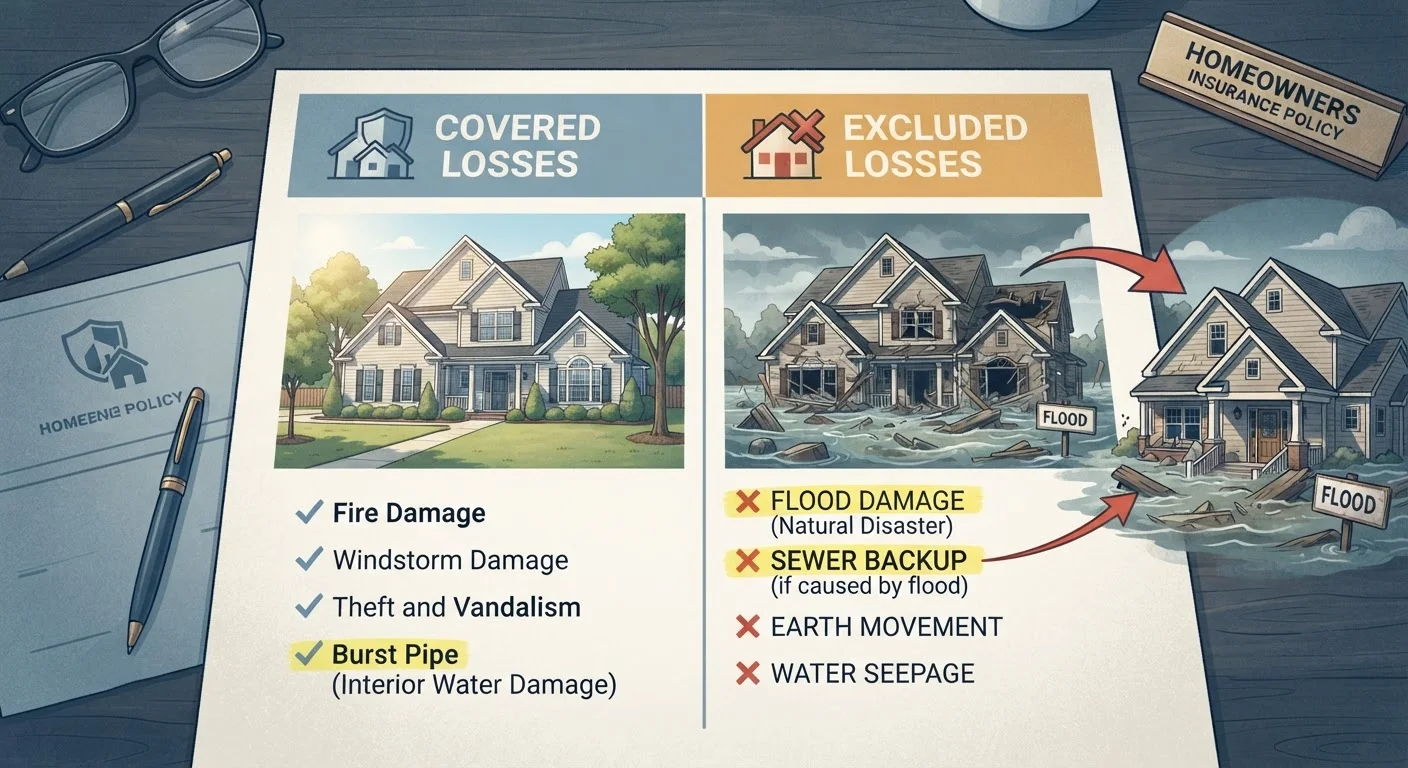
Standard homeowners and renters policies do not cover flood damage - full stop. This surprises many policyholders because water damage from a burst pipe is typically covered, but water entering from outside the structure is not. Flood insurance is sold as a separate policy, either through the federally backed National Flood Insurance Program (NFIP) or through private carriers.
Coverage generally applies to the physical structure and its contents, though limits and exclusions vary. Flooding is one of the most consequential exclusions in standard homeowners policies - and one of the most fixable with a standalone purchase.
Flood damage is never covered by a standard homeowners policy - it always requires a separate purchase.
Earthquake Endorsements and Policies
Earthquake coverage is excluded from virtually all standard homeowners policies. In high-risk states like California, Oregon, and Washington, this gap can be enormous. Coverage is available as an endorsement added to a homeowners policy or as a standalone policy, and it typically covers the dwelling, personal property, and additional living expenses if you're displaced.
Deductibles for earthquake coverage are usually expressed as a percentage of the insured value - commonly 10% to 25% - rather than a flat dollar amount. That means even with coverage, a significant out-of-pocket cost is possible after a major event. Knowing the deductible structure before you buy is essential.
Earthquake deductibles are often a percentage of your home's insured value, not a flat dollar figure.
Scheduled Personal Property Endorsements
Homeowners and renters policies place sub-limits on high-value items like jewelry, fine art, musical instruments, and firearms. A standard policy might cap jewelry coverage at $1,500 - far short of the replacement cost of an engagement ring or family heirloom. A scheduled personal property endorsement (sometimes called a floater) covers specific items at their appraised value, often with no deductible and broader coverage for accidental loss.
This is one of the most straightforward gaps to patch, and the added premium is typically modest relative to the item's value. You'll generally need a recent appraisal or receipt to schedule an item. See the related guide on blind spots in common insurance policies for more examples of sub-limit surprises.
A standard policy's jewelry sub-limit may cover only a fraction of what your ring is actually worth.
Umbrella Insurance
An umbrella policy kicks in when the liability limits on your underlying auto or homeowners policy are exhausted. If you're found liable for a serious accident - a car crash that injures multiple people, for example, or an injury on your property - a $300,000 homeowners liability limit can disappear quickly. An umbrella policy typically adds $1 million or more in coverage on top of those underlying limits.
Umbrella policies also extend to certain liability exposures not always covered under base policies, such as libel or slander claims. They're generally considered one of the higher-value supplemental purchases relative to cost, though eligibility requirements and pricing vary. Your auto liability coverage is one of the underlying policies an umbrella typically sits above.
An umbrella policy adds a layer of liability protection that kicks in after your base policy limits run out.
Critical Illness and Hospital Indemnity Insurance
Health insurance covers medical bills, but it doesn't replace lost income during a serious illness or pay for non-medical costs like transportation, childcare, or mortgage payments while you recover. Critical illness insurance pays a lump-sum benefit upon diagnosis of a covered condition - typically cancer, heart attack, stroke, or organ failure. Hospital indemnity insurance pays a fixed daily or weekly benefit for each day you're hospitalized.
Both are supplemental health products, not substitutes for major medical coverage. They're worth considering if your health plan carries a high deductible or if a gap in income during recovery would create financial hardship. Underinsurance isn't limited to property policies - health coverage limits can leave significant exposure too.
Critical illness insurance pays cash directly to you - not to a provider - when a covered diagnosis occurs.
Auto Loan/Lease Gap Insurance
When a financed or leased vehicle is totaled, your auto insurer pays the actual cash value (ACV) of the car - what it's worth on the market at the time of the loss. If you owe more on the loan or lease than the car is worth, you're responsible for the difference. Gap insurance (Guaranteed Asset Protection) covers that difference so you're not paying off a car you no longer have.
Gap coverage is most relevant in the early years of a loan when depreciation outpaces payoff, or when you've made a small down payment. It's often available through auto insurers as an endorsement, and sometimes through dealers or lenders - though terms and pricing vary considerably between those channels.
Gap insurance covers the difference between what you owe and what your totaled car is actually worth.
Start With Your Policy's Exclusions Page
Before shopping for any supplemental coverage, locate the exclusions section of your existing policies. This is where insurers list what they explicitly will not cover. Reading it carefully - ideally before you have a claim - tells you exactly which gaps are worth patching. If policy language is unclear, a licensed agent can walk you through it in plain terms.
Building a More Complete Coverage Picture
No single add-on fixes everything, and buying supplemental coverage you don't need wastes money just as surely as going without it. Start by reviewing your existing policies for explicit exclusions, sub-limits, and deductibles - those are the spots where supplemental options deliver real value. The Coverage Types hub is a useful reference for understanding how the core policy categories work before layering anything on top.
Once you've identified a genuine gap, compare what a rider or endorsement on your current policy costs versus a standalone policy from a different carrier. Either path can work; the fit depends on your specific situation and the terms being offered. A licensed insurance agent can help you map your exposures and weigh your options - that conversation is worth having before a claim forces the issue.