What Each Filter Actually Does
Despite being sold and replaced at similar intervals, these two filters exist in entirely separate systems inside your vehicle and have no functional overlap.
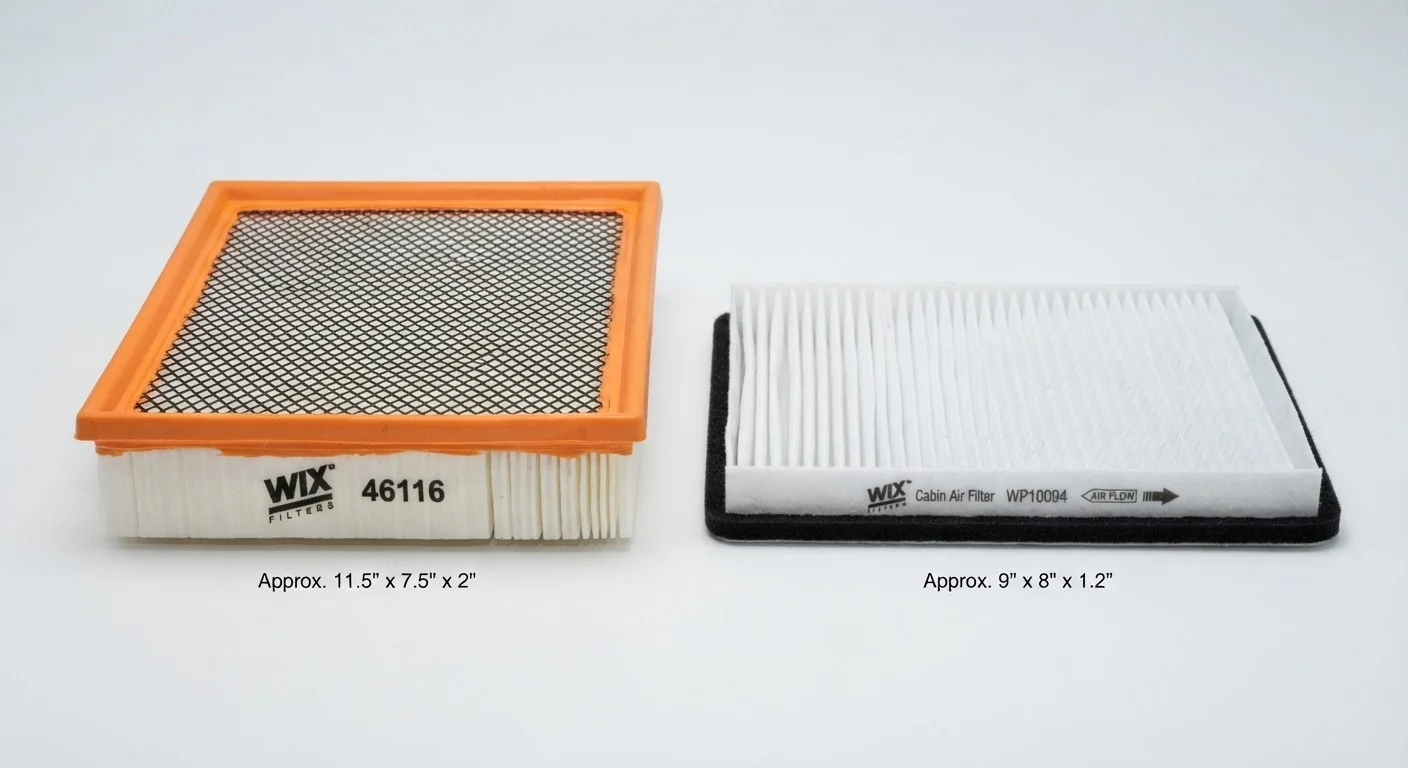
The engine air filter sits in the air intake path that feeds your engine. Its job is to trap airborne contaminants - dust, sand, insects, debris - before they enter the combustion chamber. An engine running on dirty air suffers increased internal wear, and over time, contamination can damage pistons, cylinders, and sensors. A clean filter ensures the engine receives the correct volume of clean air needed for efficient combustion.
The cabin air filter, by contrast, is part of your vehicle's heating, ventilation, and air conditioning (HVAC) system. It filters outside air before it enters the passenger compartment through the dashboard vents. It captures pollen, dust, soot, mold spores, and in some filter types, harmful gases. The engine never sees this filter; it only affects what you breathe inside the car.
| Criterion | Engine Air Filter | Cabin Air Filter |
|---|---|---|
| System served | Engine / combustion intake | HVAC / passenger compartment |
| What it filters | Dust, debris, insects, sand | Pollen, soot, mold spores, odors |
| Typical replacement interval | 15,000-30,000 miles | 15,000-25,000 miles |
| Symptom if neglected | Reduced power, worse fuel economy | Weak airflow, musty smell, poor air quality |
| Common location | Engine bay air intake housing | Behind glove box or under dashboard |
| DIY difficulty | Low - usually tool-free | Low - usually tool-free |
Symptoms of a Dirty Filter - and How to Tell Them Apart
Because the two filters affect different systems, the warning signs they produce are distinct.
Engine air filter symptoms tend to show up in vehicle performance. You might notice sluggish acceleration, a slight dip in fuel economy, a rough idle, or in severe cases, a check-engine light triggered by a mass airflow sensor reading abnormally. The engine is literally being starved of air.
Cabin air filter symptoms are about comfort and air quality. Weak or reduced airflow from the vents - even when the fan is on the highest setting - is the most common indicator. A musty or unpleasant smell when the HVAC runs, increased dust on interior surfaces, or worsening allergy symptoms during drives can all point to a saturated cabin filter.
15-25%
Potential fuel economy reduction from clogged engine filter
The U.S. Department of Energy notes that a dirty air filter can reduce fuel economy in older carbureted vehicles; modern fuel-injected engines may see reduced performance and increased emissions instead.
2x-3x
Higher indoor pollutant concentration vs. outside air
According to the U.S. Environmental Protection Agency, concentrations of some pollutants indoors - including vehicle interiors - can be significantly higher than typical outdoor levels.
Both filters are easy to inspect visually. A filter clogged with grey-black debris or visibly matted with dust almost always warrants replacement. If it still looks relatively clean, it likely has useful life remaining regardless of mileage.
Replacement Intervals and DIY Considerations
Manufacturer guidelines typically suggest replacing the engine air filter every 15,000 to 30,000 miles and the cabin air filter every 15,000 to 25,000 miles. However, these are general benchmarks - driving environment matters enormously. City drivers dealing with heavy traffic, construction zones, and pollution may find their cabin filter degrades faster. Rural drivers on gravel roads may clog an engine filter well ahead of schedule.
Both filters are among the more accessible DIY maintenance tasks on most vehicles. The cabin filter is often located behind the glove box or under the dashboard; the engine air filter is typically in a plastic housing in the engine bay. Your owner's manual will show exact locations. Replacing either usually requires no special tools - just the correct replacement part and a few minutes.
When Intervals Are Just a Starting Point
Manufacturer replacement intervals assume average driving conditions. If you frequently drive in heavy traffic, near construction, in arid or dusty climates, or through wildfire smoke, both filters may need attention sooner. Conversely, a low-mileage vehicle driven mostly on clean highways may find filters lasting well beyond the stated interval. Always let a visual inspection inform your decision alongside mileage guidance.
When a service advisor recommends both filters at the same visit, it's worth asking to see each one before agreeing to replacement. A visual inspection takes seconds and gives you the information you need to make an informed decision rather than an automatic one.