What the Research Actually Shows
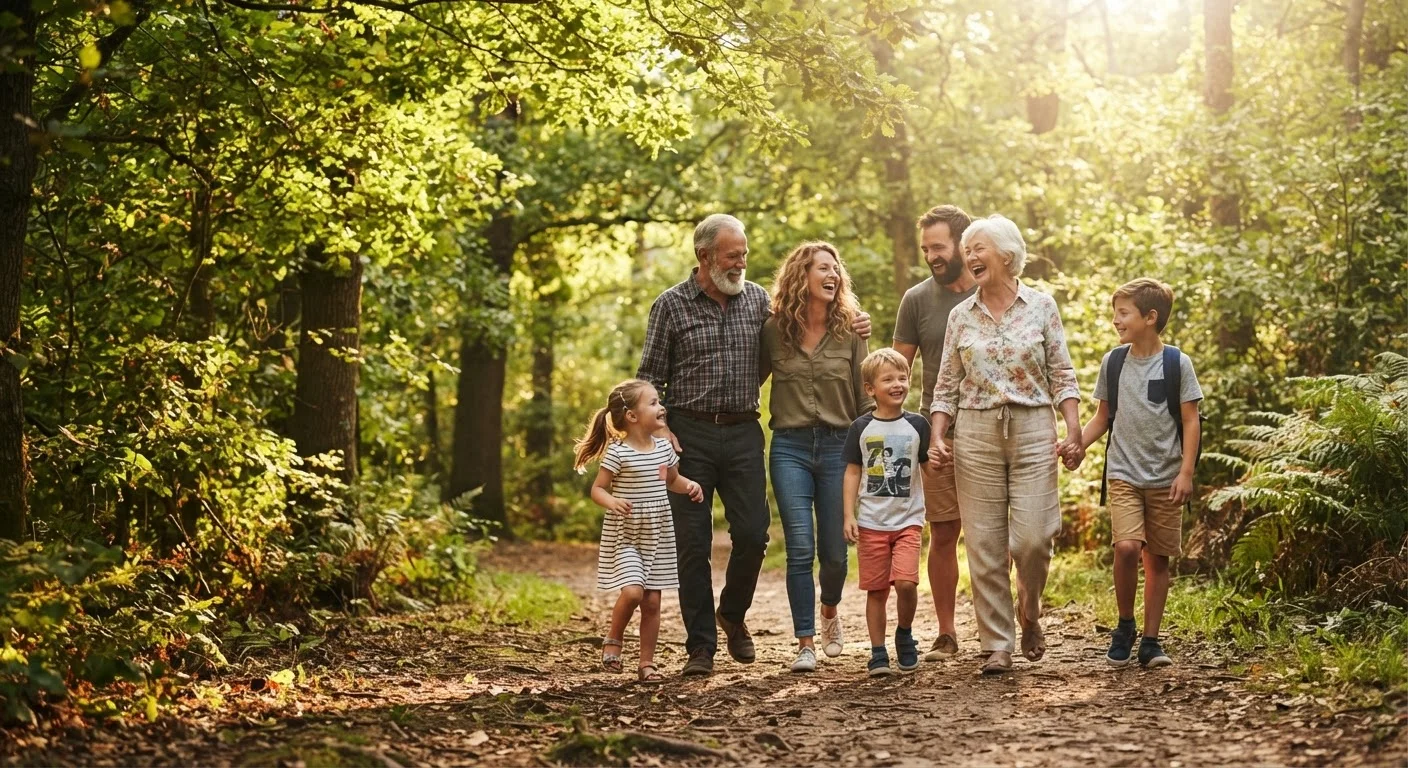
Time spent outside isn't just pleasant - it's supported by a growing body of public health research. Studies published in environmental health and psychology journals consistently find associations between regular nature exposure and lower cortisol levels, reduced symptoms of anxiety, and improved attention spans in children. These effects appear across urban parks, suburban backyards, and rural green spaces alike, meaning geography is less of a barrier than many families assume.
For children specifically, unstructured outdoor play supports motor development, risk assessment, and social skills in ways that structured indoor activities often don't replicate. For adults, even brief outdoor walks have been associated with improved mood and reduced mental fatigue. This makes outdoor time one of the few wellness habits that delivers returns across every household member simultaneously.
It's worth being clear: this is general health information, not a prescription. Individual responses vary, and families dealing with chronic health conditions should consult a qualified healthcare provider before making significant changes to activity levels.
120 min/week
Weekly nature exposure linked to better self-reported health
A large observational study published in Scientific Reports found associations between spending at least 120 minutes per week in nature and significantly better health and wellbeing outcomes compared to no nature contact.
20%
Reduction in stress hormone levels after outdoor walks
Research in environmental health has found that time in green or natural environments is associated with meaningful reductions in cortisol, a common marker of physiological stress.
Building the Habit Without Overhauling Your Life
The biggest barrier most families face isn't motivation - it's logistics. Between school schedules, work, and household responsibilities, carving out time can feel impossible. The families who succeed tend to attach outdoor time to existing anchors rather than treating it as an extra task.
Anchor outdoor time to an existing daily routine rather than scheduling it separately.
Habits attached to existing anchors - like a morning school drop-off walk or an after-dinner loop around the block - require less decision-making and survive schedule changes better than standalone commitments.
Start with a realistic minimum - even 10 to 15 minutes counts.
Families often abandon outdoor habits because they set an ambitious bar and then can't meet it consistently. A lower threshold keeps the habit alive on hard days and builds over time.
Let children help choose the outdoor activity to increase buy-in.
Children who have some say in where or how they spend outdoor time are more willing participants, and consistent engagement matters more than the specific activity chosen.
Use outdoor time as a screen-time counterpart rather than framing it as a restriction.
Framing outdoor activity as something the family does together, rather than a replacement for something taken away, reduces resistance and makes the habit feel positive. Research on screen time is more nuanced than headlines suggest - for a balanced look, see screen time and family health.
Adapt outdoor habits seasonally rather than abandoning them in cold or wet weather.
Families who treat outdoor time as a year-round habit - adjusting clothing and duration rather than stopping - maintain the health benefits continuously and avoid having to rebuild the routine each spring.
If you're looking to make outdoor habits part of a broader wellness approach, the guide to building a family health routine offers a framework for layering habits without overwhelming anyone in the household.
Quick Wins to Get Started This Week
You don't need a hiking plan or a new routine to begin. Small, immediate shifts can build momentum faster than waiting for the perfect setup.
Outdoor movement also complements other wellness pillars. Research suggests that daytime light exposure - particularly morning sunlight - plays a role in regulating circadian rhythms. If your household struggles with sleep, this connection is worth exploring; what sleep research says about family rest covers the evidence in plain terms.
For families thinking about mental health alongside physical activity, starting mental health conversations at home is a useful companion read - outdoor time and open communication often reinforce each other naturally.
Make It Low-Pressure for Everyone
Not every outdoor outing needs to be a hike or a structured activity. Sitting on a porch, letting kids dig in a garden patch, or reading outside are all valid forms of nature exposure. The goal is consistent presence outside, not athletic performance. Removing the pressure of 'doing it right' is often what makes the habit stick long-term.
This article is for general informational and educational purposes only. It is not a substitute for professional medical advice, diagnosis, or treatment. Always consult a qualified healthcare provider with questions about your family's health or activity needs.