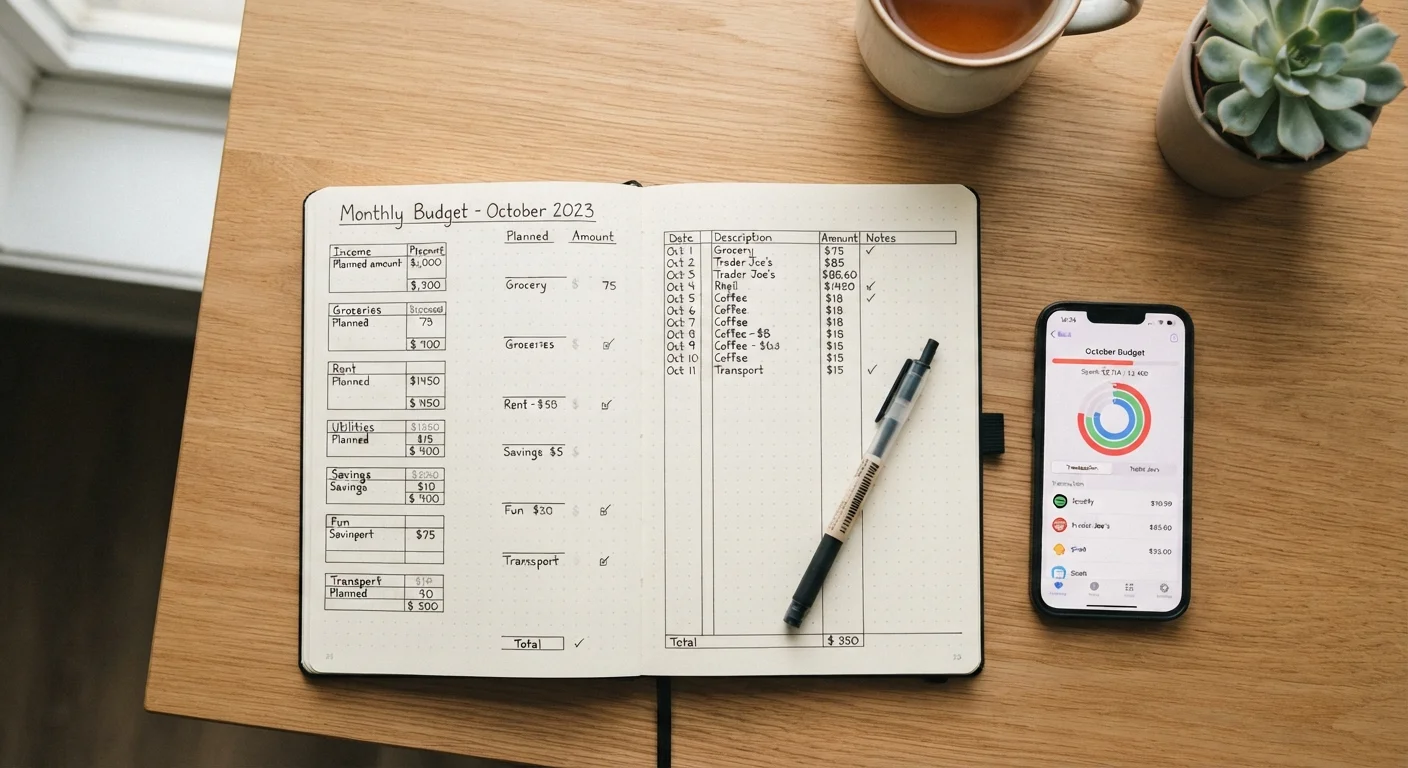

Why Most Budgets Fail After Month One
Creating a budget feels productive - you list income, subtract expenses, and assign every dollar a job. But the uncomfortable truth is that most budgets are abandoned within weeks. The spreadsheet collects dust, the app goes unchecked, and spending quietly drifts back to old patterns.
The problem isn't the budget itself. It's the assumption that setting it up is the hard part. In reality, the discipline lives in the maintenance - the small, repeatable actions that keep your financial plan connected to your actual life.
Think of it the way exercise researchers describe habit formation: a single workout doesn't build fitness; consistent movement over time does. The same principle applies to money. For a deeper look at how to structure that consistency, explore our guide on tracking spending by hand vs. using an app.
Quick Actions You Can Take This Week
You don't need a full financial overhaul to start reinforcing your budget today. These low-effort actions deliver real results fast - and build the foundation for longer-term habits.
For households where every dollar is already stretched, some of these actions still apply - but the context changes. See saving money on a tight budget for strategies tailored to thinner margins.
Building a Monthly Reset into Your Routine
Beyond weekly check-ins, a monthly reset is the single most powerful budget habit you can build. This isn't a punishment session - it's a short, structured review that keeps your categories realistic and your goals visible.
65%
Adults who don't track spending monthly
According to a National Foundation for Credit Counseling survey, a majority of U.S. adults do not keep a detailed monthly budget or track expenditures closely.
3 months
Average time to form a financial habit
Behavioral research generally suggests that consistent repetition over roughly 60-90 days is needed before a new routine becomes automatic.
A monthly reset should cover three things: comparing what you planned to spend versus what you actually spent, adjusting any categories that are consistently over or under, and confirming that your savings targets are still on track. Our monthly budget audit checklist walks through this process step by step.
The goal is to treat your budget as a living document rather than a fixed ruleset. Life changes - incomes shift, expenses surprise you, priorities evolve. Budgets that survive long-term are the ones that adapt. Pair your monthly reset with a recurring calendar event, a bill due date, or even a weekly household routine so it never feels optional. For more on building smart spending habits across categories, visit our Smarter Spending hub.
This article is for general informational purposes only and does not constitute personalized financial advice. For guidance specific to your situation, consider consulting a licensed financial professional.