What Makes an Expense Fixed or Variable
Every dollar you spend falls into one of two behavioral categories: it either stays the same month after month, or it changes. That distinction - not how big the expense is or whether it feels important - is what defines a fixed versus a variable expense.
Fixed expenses are costs that repeat at the same amount on a predictable schedule. Your rent or mortgage payment, a car loan installment, or a set monthly subscription at a locked-in price are all fixed. You signed an agreement, and the amount does not change based on how much you use the service or product.
Variable expenses are costs that shift in amount from one period to the next, usually based on your choices or consumption. Groceries, gasoline, dining out, and entertainment all qualify. Spend more, pay more. Spend less, pay less.
If you are new to budgeting, the key budgeting terms every beginner should know are a helpful starting point before diving deeper into expense categories.
Side-by-Side: How They Compare
The table below lays out the core differences so you can quickly see how each expense type behaves in a real budget.
| Criterion | Fixed Expenses | Variable Expenses |
|---|---|---|
| Amount each month | Stays the same | Changes based on usage or choices |
| Predictability | High - easy to forecast | Low - requires tracking |
| Common examples | Rent, car loan, set subscriptions | Groceries, gas, dining, clothing |
| Ease of reducing | Harder - requires renegotiation or major change | Easier - adjustable with daily decisions |
| Role in budgeting | Sets your monthly spending floor | Defines your financial flexibility |
| Best budgeting approach | List exact amounts; treat as non-negotiable | Average past spending; set monthly targets |
One category worth noting: semi-variable expenses (sometimes called mixed expenses). Utilities like electricity and water are common examples - you pay them every month, but the amount shifts with usage. The practical approach is to average several months of past bills and budget that average as a fixed line item, adjusting seasonally if needed.
Transportation costs often fall into this hybrid zone too. Gas, parking, and maintenance are all variable, but a car payment is fixed. For a deeper look at why transportation is especially tricky to track, see why monthly transportation costs are harder to track than people expect.
Why the Distinction Changes How You Budget
When you understand how each expense type behaves, you can build a budget that reflects reality rather than wishful thinking.
Fixed expenses set your floor
Add up all your fixed expenses first. That total is the minimum you must earn each month just to meet your existing obligations. If your income does not cover that floor, you face a structural problem - one that requires reducing a fixed commitment (like downsizing housing or refinancing a loan), not just cutting back on coffee.
Variable expenses reveal your flexibility
Once your fixed floor is established, your variable expenses are where your budgeting decisions actually live. These are the costs you influence with everyday choices. Tracking them honestly - even for just one month - often surfaces spending patterns that surprise people.
~33%
Average share of income spent on housing alone
The U.S. Bureau of Labor Statistics Consumer Expenditure Survey consistently finds housing is the largest single fixed expense for most American households.
1 in 3
Americans who do not track variable spending
Multiple consumer finance surveys suggest a significant portion of adults do not monitor day-to-day discretionary spending, making variable costs the most common source of budget overruns.
Savings targets become clearer
When you know which costs are locked and which are movable, you can set realistic savings goals. Vague intentions to "spend less" rarely work; identifying that your dining-out budget is variable and currently $340/month gives you a concrete number to work with.
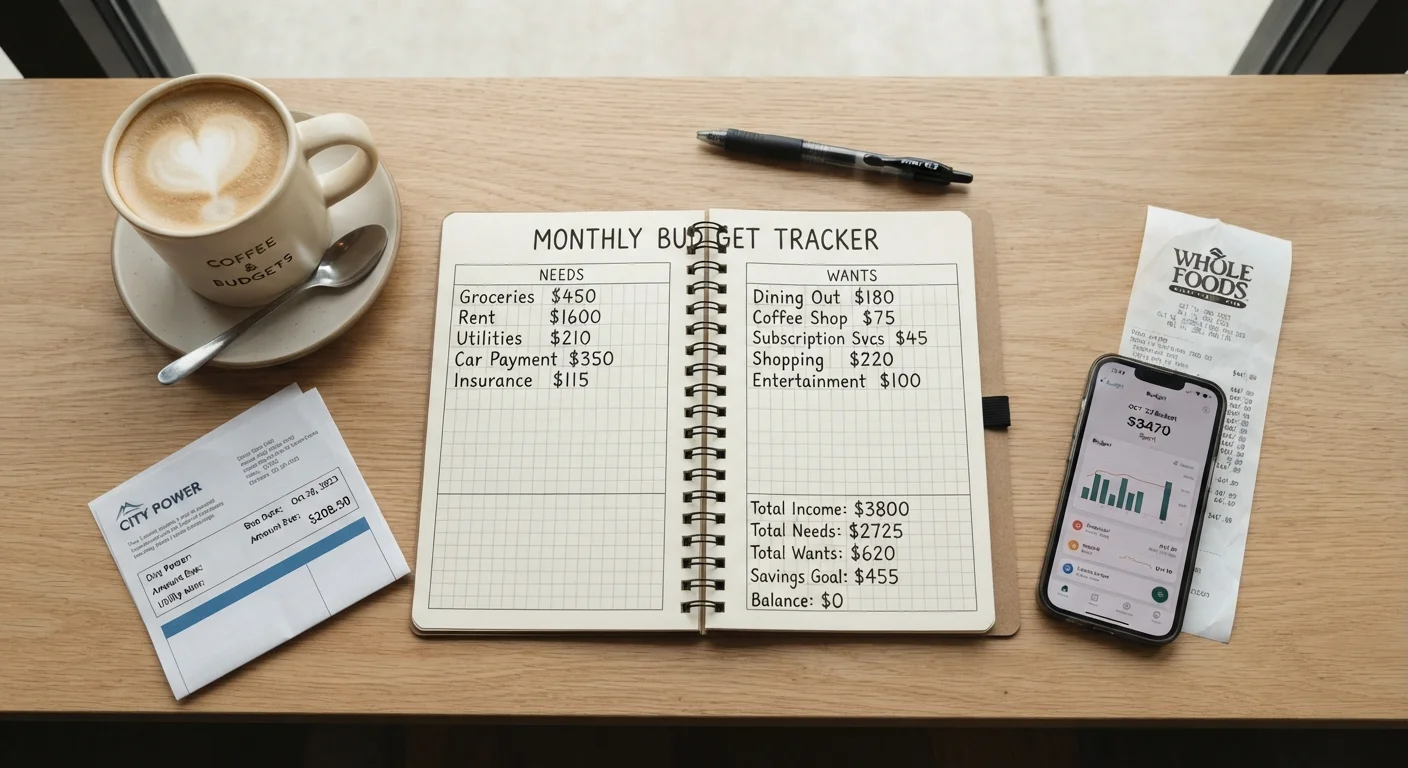
This framework also complements the needs vs. wants distinction, which helps you evaluate whether a variable expense is genuinely necessary or discretionary.
Watch Out for 'Invisible' Fixed Costs
Annual bills - like a car insurance premium paid once a year or a yearly subscription - are technically fixed but easy to forget in monthly budgeting. Divide any annual fixed cost by 12 and set aside that amount each month so the payment does not catch you off guard. This technique is sometimes called 'sinking fund' saving.
Putting It Into Practice
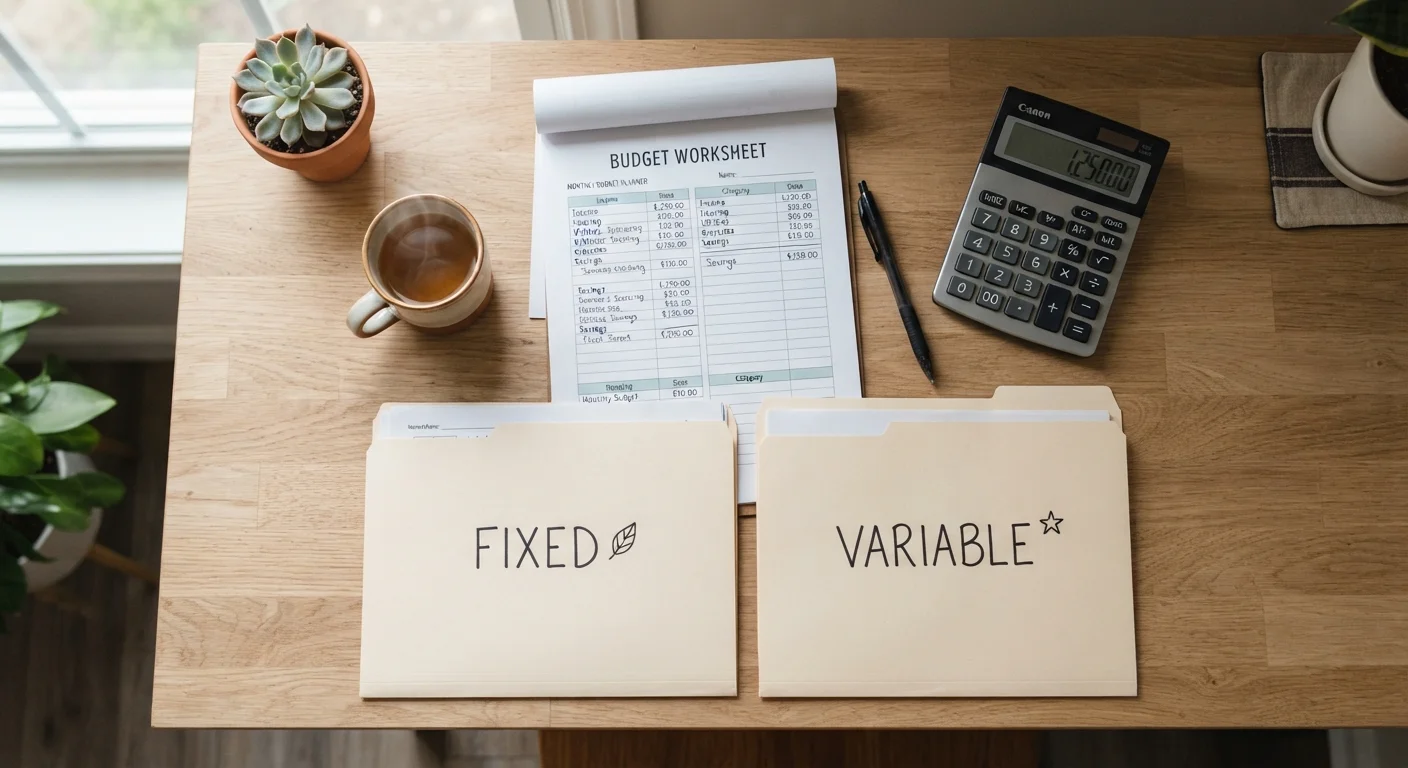
Start by pulling up your last two or three bank or credit card statements. Categorize each line item as fixed or variable. You do not need a special app - a simple spreadsheet or even a sheet of paper with two columns works fine.
- List every fixed expense with its exact monthly amount. Include rent, loan payments, insurance premiums, and any locked-in subscriptions.
- Estimate variable expenses by averaging what you spent over the past two to three months in each category: groceries, gas, dining, clothing, personal care.
- Compare the total to your monthly take-home income. What is left after fixed expenses is what you have available for variable spending and saving.
- Set targets for variable categories based on your goals - not on what you happened to spend last month.
Once your budget is set up, the real challenge is keeping it going. The habits that keep a budget working long after you set it up can help you maintain momentum beyond the first month. For broader money-saving ideas, the saving strategies hub is a practical next stop.
This article is for general informational and educational purposes only and does not constitute personalized financial advice. Consult a qualified financial professional for guidance specific to your situation.