
Why This Simple Idea Gets Complicated
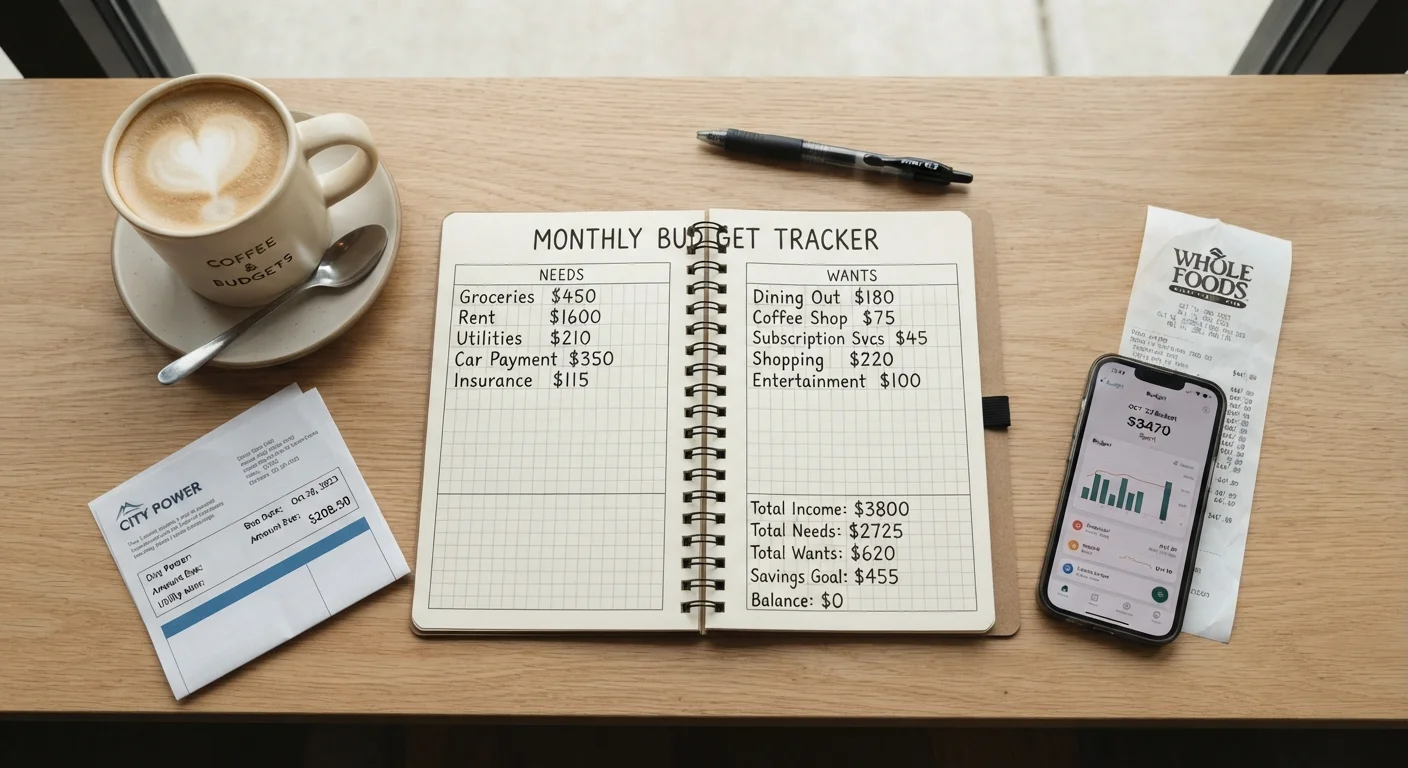
The concept sounds obvious: needs are things you can't live without, wants are extras. But real spending rarely sorts itself that cleanly. Is a car a need? Maybe - if public transit doesn't reach your job. Is name-brand clothing a want? Usually - but not always if a uniform is required for work. The blur happens because most expenses carry both a functional core and an optional upgrade layered on top.
Understanding where your money goes each month is the starting point. If you haven't already mapped your income to your actual monthly expenses, tracking where your paycheck goes is the natural first step before you try to categorize anything.
The goal here isn't perfection - it's honest self-awareness. Misidentifying wants as needs is how budgets quietly collapse, while misidentifying needs as wants leads to unnecessary guilt about spending you can't actually avoid.
Context Changes the Category
What counts as a need varies significantly by location, health status, family size, and employment type. A rural household may genuinely need a vehicle where an urban one doesn't. A person managing a chronic health condition may need services others would consider optional. Avoid applying a one-size-fits-all list - apply the underlying principles to your actual circumstances.
A Practical Test for Any Expense
When you're unsure which category an expense falls into, run it through three quick questions:
- Would skipping this expense harm my health, safety, or ability to earn income? If yes, it's almost certainly a need.
- Am I paying for the function or the upgrade? Basic internet service is a need for most remote workers. Upgrading to a premium tier for faster streaming is a want layered on top of that need.
- Could I meet the same underlying need for significantly less? If a cheaper version would fully serve the purpose, the cost difference belongs in the want column.
This test works across categories - housing, food, transportation, clothing, and health. It shifts the question from "is this item a need?" to "which part of this expense is a need?" That nuance is what helps you find real savings.
Start With One Month of Real Data
Before labeling any expense, pull one full month of bank and credit card statements. Categorize each line item as need, want, or unclear. The 'unclear' pile is where your most productive budget work will happen - those are your gray zones worth examining closely.
The Gray Zones Every Budget Faces
Most overspending happens not in obvious want categories like entertainment subscriptions, but in these common gray zones:
- Food: Groceries are a need. Gourmet meal kits delivered weekly are a want. The line runs right through the same category.
- Transportation: Getting to work reliably is a need. Whether that requires a new car, a used car, or a transit pass depends entirely on your circumstances.
- Housing: Shelter is a need. A larger apartment, a nicer neighborhood, or premium amenities are wants attached to that need.
- Healthcare: Prescribed medications and necessary appointments are needs. Elective procedures and premium wellness add-ons are wants - though individual health contexts always vary.
It also helps to understand how these expenses behave differently over time. Fixed and variable expenses cut across both the needs and wants columns and shape how much flexibility you actually have month to month.
50%
Income share recommended for needs
The widely referenced 50/30/20 budgeting guideline suggests allocating no more than half of after-tax income to essential needs.
~33%
Americans without a household budget
Surveys by financial research organizations have consistently found that roughly one-third of U.S. households do not follow any formal budget, making needs-wants clarity harder to apply.
Putting the Framework Into Action
Once you've honestly categorized your expenses, the framework pays off in three concrete ways:
- Targeted cuts
- When you need to reduce spending, the wants column tells you exactly where flexibility exists - without touching anything essential.
- Guilt-free spending
- Wants aren't bad. A budget that accounts for them honestly is more sustainable than one that pretends they don't exist. Knowing a want is a want lets you enjoy it on purpose rather than feel vague regret.
- Clearer priorities
- Over time, your wants column reveals what you actually value versus what you spend on automatically. That awareness alone tends to reduce mindless spending.
For a structured next step, a three-tier framework for every purchase decision extends this distinction into a practical tool you can apply before any significant buy. And if you're working through the broader picture of spending habits, the beginner's roadmap to smarter spending covers the mental models and habits that make every dollar work harder.
This article is for general informational and educational purposes only. It does not constitute personalized financial advice. For guidance specific to your financial situation, consult a qualified financial professional.