Why the Method You Choose Actually Matters
Tracking spending is one of the most foundational budgeting habits you can build. But the tool you use shapes your relationship with that habit. Use the wrong one for your personality and lifestyle, and the system quietly collapses within weeks. Use the right one, and it becomes nearly automatic.
This isn't a question with one correct answer. Both pen-and-paper tracking and budgeting apps have helped people take meaningful control of their finances - and both have caused others to give up out of frustration. Before choosing, it helps to understand what each approach actually demands of you. For a broader look at building spending habits that last, see habits that keep a budget working long after you set it up.
Hand Tracking: Pros and Cons
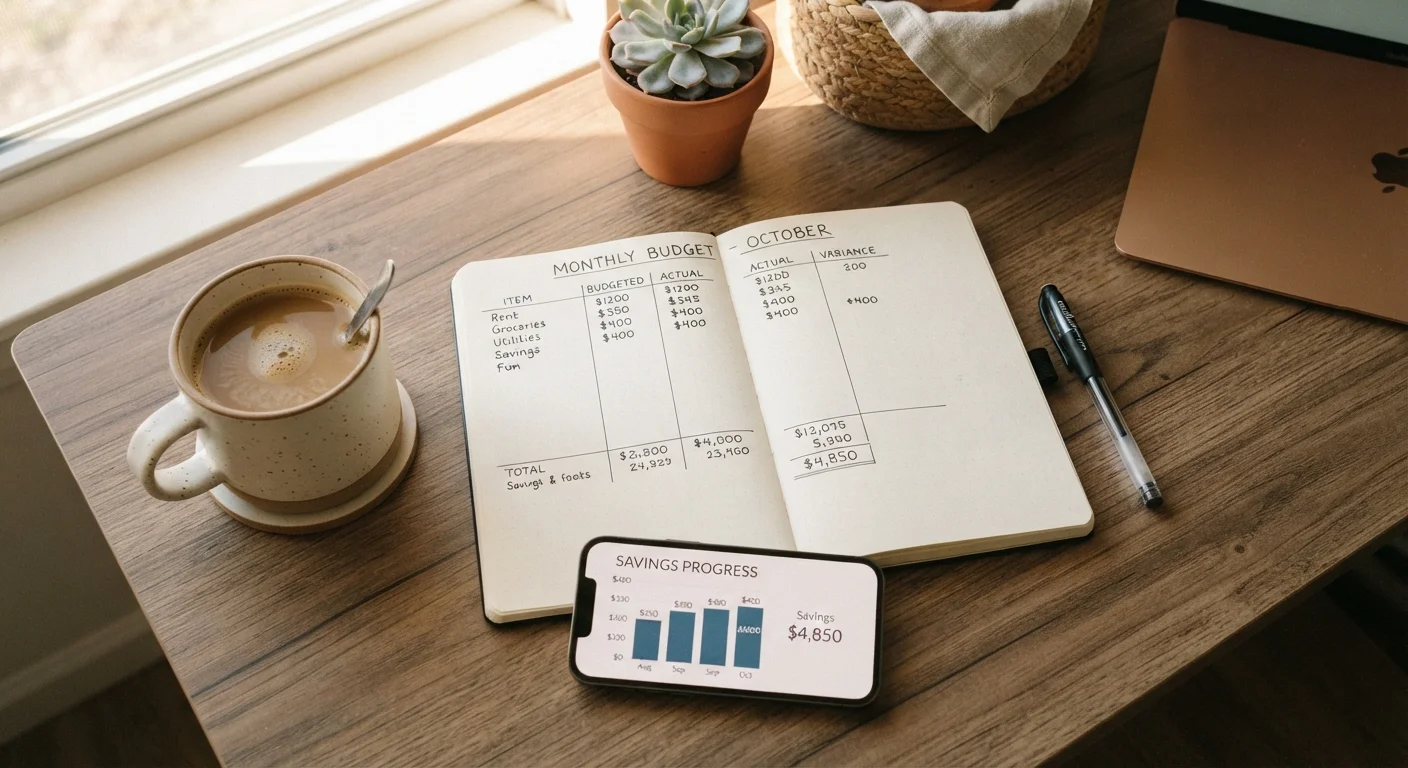
Writing down every transaction by hand - in a notebook, a printed ledger, or a simple spreadsheet you fill in manually - is the oldest form of personal accounting. It's low-tech, low-cost, and surprisingly effective for many people.
Builds stronger conscious awareness of each transaction
Writing down a purchase reinforces its cost in a way that passive automation doesn't. Many manual trackers report noticing spending patterns they had previously ignored entirely.
No account linking or data sharing required
Manual tracking keeps your financial data entirely offline and private, removing any risk of third-party data exposure.
Completely free and requires no technology
A notebook and pen cost almost nothing, making this accessible to anyone regardless of device access or technical comfort.
Flexible structure you can adapt to your own categories
You design the layout to match your actual life - no preset categories to work around or irrelevant fields to fill in.
The act of physically writing an expense forces a moment of conscious attention that tapping "approve" on an app never quite replicates. Research in behavioral economics consistently suggests that friction, when applied intentionally, can slow impulsive decision-making. That said, manual tracking also has real limitations.
Requires daily discipline that's easy to break
Skipping even a few days creates gaps that are difficult to reconstruct accurately, especially for cash purchases or small recurring charges.
No automatic summaries or visual spending reports
Identifying trends requires manual tallying, which is time-consuming and prone to arithmetic errors without a spreadsheet formula to help.
Easy to forget small or irregular transactions
Subscriptions, automatic renewals, and one-off expenses are frequently missed when there's no system pulling data from your accounts directly.
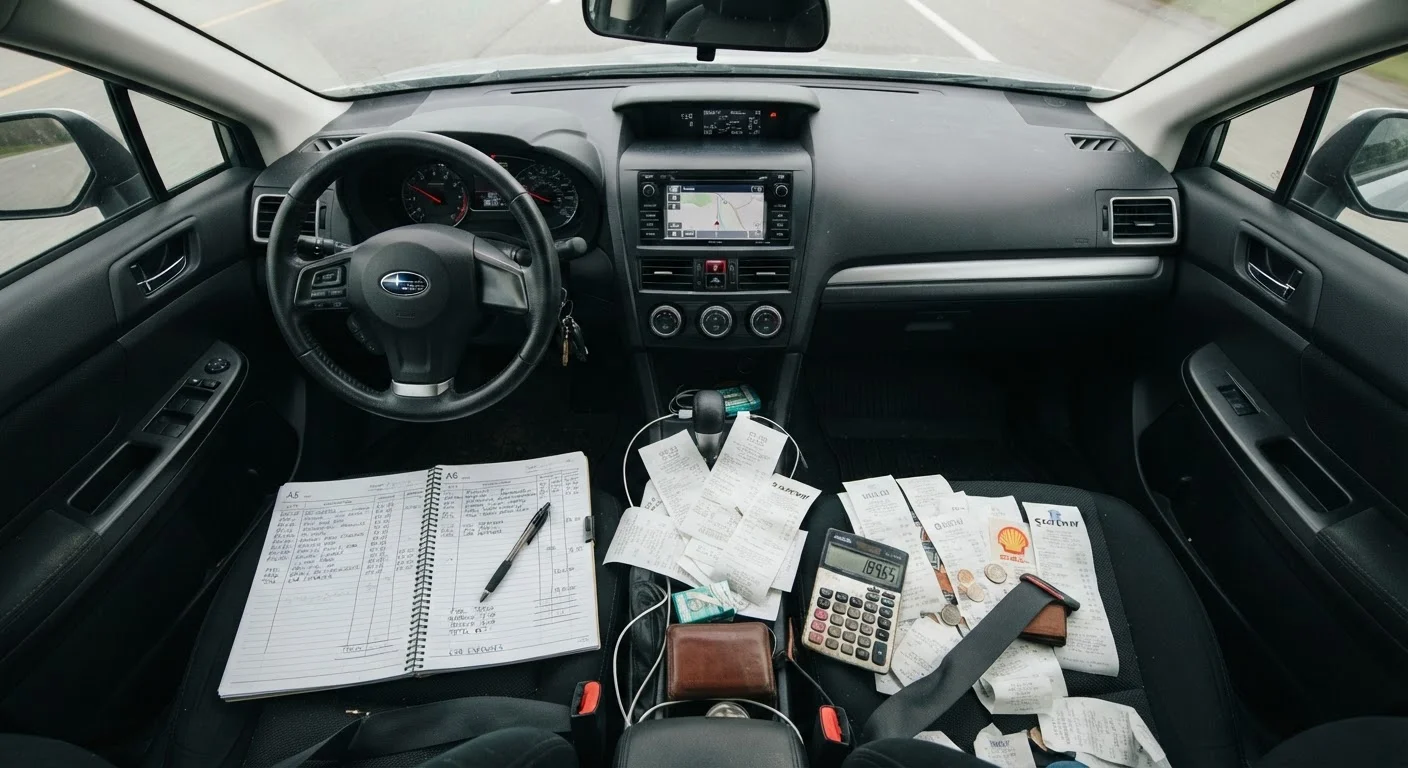
One common blind spot with manual tracking is variable costs that don't arrive as a single clear line item. Transportation is a good example - gas, tolls, maintenance, and insurance can each land in a different week. Monthly transportation costs are harder to track than most people expect, and manual logs can make that fragmentation even harder to consolidate.
Using a Budgeting App: Pros and Cons
Budgeting apps range from simple expense loggers to tools that connect directly to your bank and credit accounts, automatically categorize transactions, and send alerts when you approach a spending limit. The automation is the main draw - and the main concern.
~70%
Americans living paycheck to paycheck
Multiple annual surveys from financial services researchers have consistently found that a large majority of U.S. households report spending most or all of their income each month, underscoring the need for any tracking system at all.
1 in 3
Adults with a detailed household budget
Gallup polling has found that fewer than one-third of American adults maintain a detailed written or tracked budget, suggesting most people are flying financially blind regardless of the tools available.
Apps eliminate the daily discipline required to log manually, which helps many users stay consistent. Visual dashboards make it easier to spot patterns - a spike in dining-out spending, for example - without having to add up rows of numbers yourself.
Before Connecting Your Bank to an App
Review the app's privacy policy and data-sharing practices before linking any financial account. Look specifically for whether the provider sells or shares transaction data with advertisers or partners. Many reputable apps use read-only access and strong encryption, but terms vary significantly. If in doubt, a manual or spreadsheet-based approach keeps your data fully under your control.
The tradeoff is that you're often granting a third-party application access to sensitive financial data. Security practices vary across providers, and data-sharing policies are worth reading before connecting any account. Some apps also monetize by offering financial product recommendations, which means the app itself may have commercial interests that don't fully align with yours.
How to Choose - or Combine Both
The simplest decision framework: start with whichever method creates less resistance. If opening a notebook every evening sounds sustainable, start there. If you know you'll skip logging after a few days, an app with automatic import is probably more realistic.
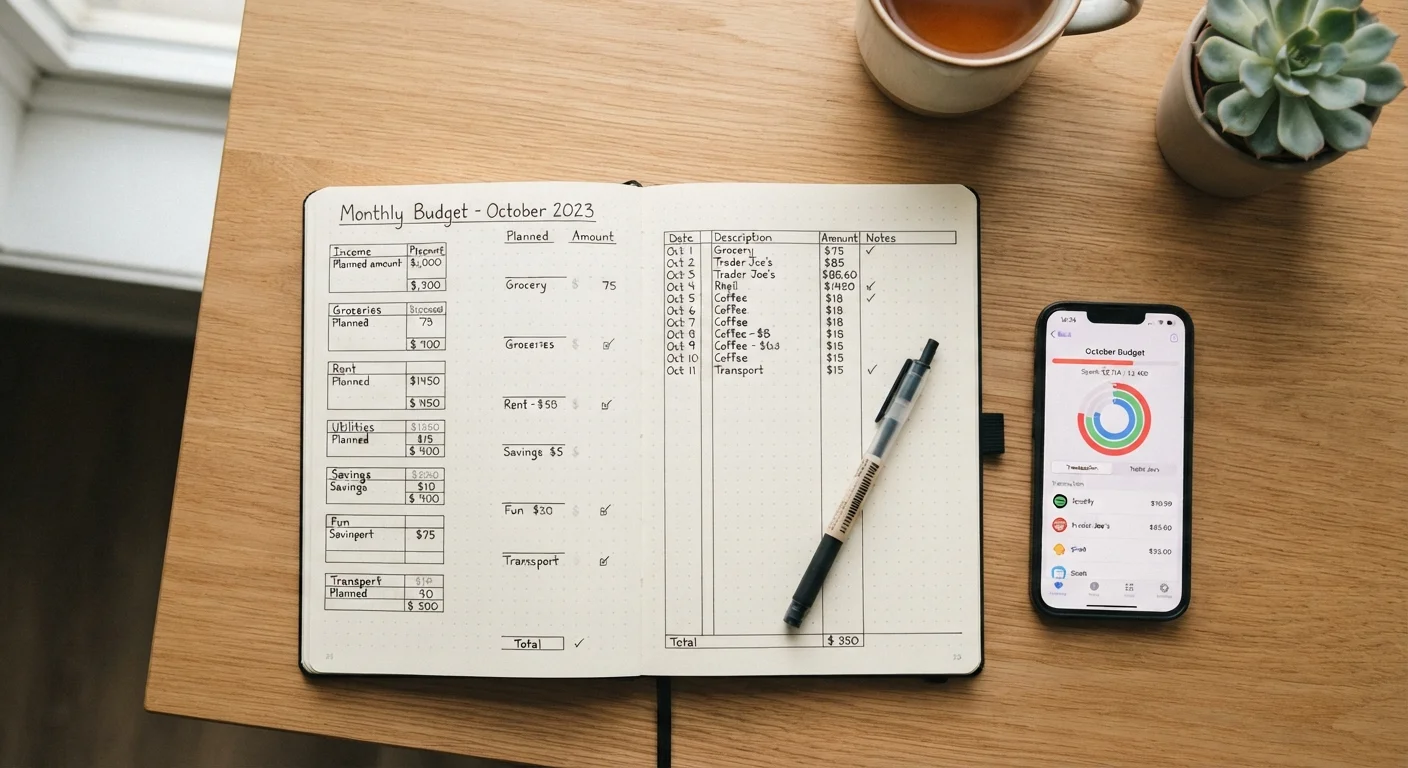
Many people find a hybrid works well - using an app to pull in transaction data automatically, then reviewing and annotating that data in a notebook or spreadsheet once a week. This preserves the automation benefit while adding the reflective step that deepens financial awareness.
Whichever route you take, pair it with a structured monthly review. A monthly budget audit checklist gives you a repeatable process for catching overspending, adjusting categories, and confirming your tracking method is actually capturing everything. And if you're just getting started with intentional spending, a beginner's roadmap to smarter spending can help you build the right mental models before you commit to any single tool.
This article is for general informational and educational purposes only and does not constitute personalized financial advice. Consult a qualified financial professional for guidance specific to your circumstances.