
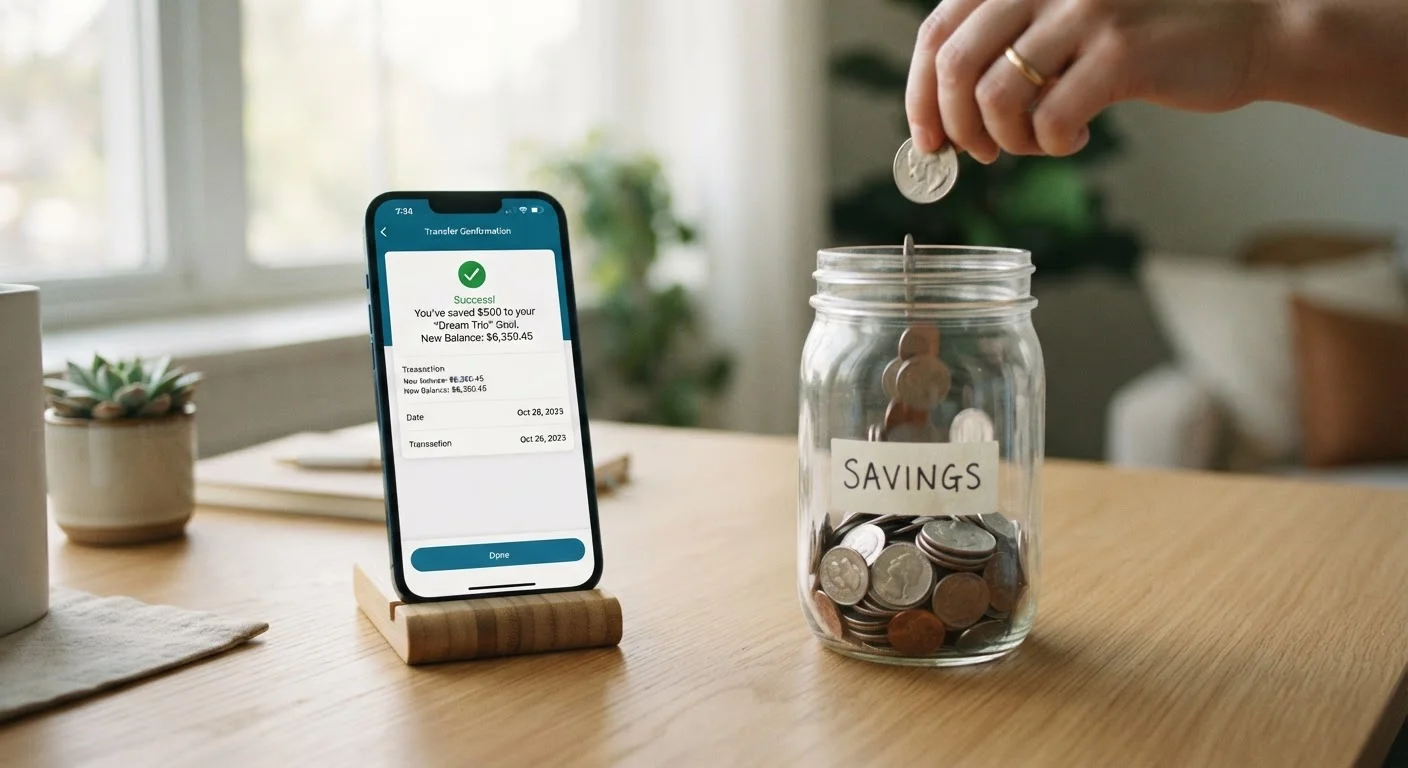
What Automated Savings Actually Means
The phrase "pay yourself first" gets repeated often in personal finance, but automation is the mechanical version of that idea. Instead of waiting to see what's left at the end of the month, a pre-set transfer moves money into savings before spending decisions can absorb it.
It's less a product and more a behavior built into your account structure. You decide the amount, the frequency, and the destination once. After that, the system handles execution.
This matters because financial research consistently shows that friction reduces follow-through. When saving requires a manual step each month, it competes with dozens of other demands on attention and energy. Automating removes that friction entirely.
Automation Works Across Account Types
You can automate transfers to a standard savings account, a high-yield savings account, a money market account, or even a retirement account like a Roth IRA - each has different rules, interest rates, and withdrawal terms. The automation mechanism is the same; what differs is where the money grows and how accessible it remains. Check your specific account's terms before setting up recurring transfers.
How the Mechanics Work
There are three primary ways Americans set up automated savings:
- Bank-to-bank scheduled transfers: You instruct your bank to move a fixed dollar amount from checking to savings on a recurring date. This is the most common setup and takes only a few minutes to configure online.
- Payroll direct deposit splits: Many employers allow you to route a portion of your paycheck directly to a savings account. The money never touches your checking account, which makes it psychologically easier to leave alone.
- App-based automation: Some financial apps analyze your spending patterns and move small, variable amounts - sometimes called "micro-saves" - when they detect a buffer in your account. These tools vary widely in methodology, so read their terms carefully before connecting bank credentials.
Each method uses the ACH network described above, meaning transfers are not instantaneous. Plan accordingly if you're saving toward a deadline. For a deeper look at how interest compounds in different account types, see our guide on how high-yield and traditional savings accounts compare.
69%
Americans with less than $1,000 saved
According to a GOBankingRates survey, nearly seven in ten Americans have limited liquid savings, highlighting why building consistent saving habits matters.
1-3 days
Typical ACH transfer settlement time
The Federal Reserve notes that standard ACH transfers between U.S. bank accounts generally settle within one to three business days.
$25-$100
Recommended starter automation range
Personal finance educators commonly suggest beginning automation at a modest amount to build habit without triggering overdrafts, then scaling gradually.
Setting the Right Amount and Timing
The most common mistake with automation is setting an amount that's too aggressive for the current budget. An overambitious transfer leads to overdrafts, which erode the savings you built and add fees on top.
A more reliable approach: start with a number that feels almost too small - even $25 per pay period - and increase it gradually. Consistent small contributions tend to build stronger habits than sporadic large ones. Our comparison of lump-sum vs. small consistent contributions explores the trade-offs in more detail.
Timing matters just as much as amount. Schedule your transfer to run one to two business days after your paycheck posts. This gives the deposit time to clear and prevents the transfer from hitting an empty account.
Start Small, Then Scale Up Gradually
If you're new to automated saving, begin with an amount that won't strain your checking balance - even $20 or $25. After two or three months with no overdrafts, increase the transfer by $10 to $25. This incremental approach builds confidence and establishes the habit before the stakes get higher.
If you're working with a tight margin, the principles in our guide on saving on a tight budget apply directly - even small automated amounts build meaningful habits over time.
What to Watch Out For
Automation simplifies saving, but it doesn't eliminate the need for periodic review. A few risks worth keeping in mind:
- Set-and-forget complacency: If your income or expenses change significantly, your transfer amount may become misaligned. Review your automated savings at least every six months.
- Spending the buffer: Some people unconsciously increase spending once they see automation "handling" savings. Awareness of this pattern - sometimes called lifestyle creep - is a necessary counterweight. Our article on spending triggers that undermine saving goals covers the behavioral dynamics in depth.
- Wrong destination account: Saving toward a specific goal in a general account can make funds feel available for everyday spending. A dedicated account with a clear label ("vacation fund" or "car repair") adds a psychological barrier that helps preserve the balance.
Pairing automation with a concrete goal - whether that's an emergency fund or a planned large expense - sharpens the motivation to leave the money untouched. See saving for a big purchase without going into debt for a practical framework.
This article is for general informational and educational purposes only and does not constitute personalized financial advice. Consult a licensed financial professional for guidance specific to your situation.