
How Interest Actually Works in Each Account
Both account types use Annual Percentage Yield (APY) - the rate of return that accounts for compounding - as the standard measure of interest earned. The math is the same; what differs dramatically is the rate applied to your balance.
Traditional savings accounts at large national banks have historically offered very low APYs, often well under 1%. High-yield savings accounts, typically offered by online banks and credit unions with lower overhead costs, have offered APYs that can be several times higher - though rates fluctuate with Federal Reserve policy and vary by institution.
To illustrate the real-world difference: a $5,000 balance at 0.50% APY earns roughly $25 in a year. That same balance at 4.50% APY earns roughly $225 - nine times as much - without any change in saving behavior. Over three years, the gap widens further due to compounding interest.
~0.46%
National average savings APY (traditional)
According to FDIC national rate data, the average savings account APY at traditional banks has remained well below 1% for extended periods.
Up to 5x
Potential APY difference vs. traditional accounts
Online banks and credit unions have at times offered APYs several multiples above the national average, depending on the prevailing rate environment.
$250,000
FDIC insurance limit per depositor, per institution
Both HYSAs and traditional savings accounts at FDIC-member institutions carry the same federal deposit insurance ceiling.
This is general financial information, not personalized advice. Your actual returns depend on the specific institution, prevailing rate environment, and your account balance. Rates can change at any time.
A Side-by-Side Look at Key Differences
Beyond the interest rate, several structural differences shape the day-to-day experience of each account type. Understanding these trade-offs helps you decide which fits your actual habits - not just your earning potential.
| Criterion | High-Yield Savings Account | Traditional Savings Account |
|---|---|---|
| Typical APY range | Often 4x-10x higher than traditional | Historically very low (often under 1%) |
| FDIC insurance | Yes (up to $250,000) | Yes (up to $250,000) |
| Access method | Primarily online or mobile app | Branch, ATM, online, mobile |
| Transfer speed | 1-3 business days (external) | Often same-day (same bank) |
| Minimum balance requirements | Varies; many have none | Varies; some require minimums |
| Rate stability | Variable; tied to Fed rate environment | Variable; typically slow to move |
One important note on accessibility: HYSAs held at online-only banks may take one to three business days to transfer funds to an external checking account. For most savers this is a minor inconvenience, but if you anticipate needing same-day cash access regularly, it's worth factoring in. For strategies to move money automatically between accounts, see how automated savings transfers work.
When the Gap Matters Most - and When It Doesn't
The interest difference between account types is most impactful when you're holding a meaningful cash balance for a defined period - an emergency fund, a house down payment fund, or a travel goal. The higher the balance and the longer it sits, the more compounding does the work for you.
The gap matters less when your balance is very low (under a few hundred dollars), when you're moving money in and out frequently, or when the convenience costs of switching accounts outweigh the interest gain. If you're working with a thin margin, our guide on saving on a tight budget covers approaches tailored to that situation.
Rates Are Variable - Not Locked In
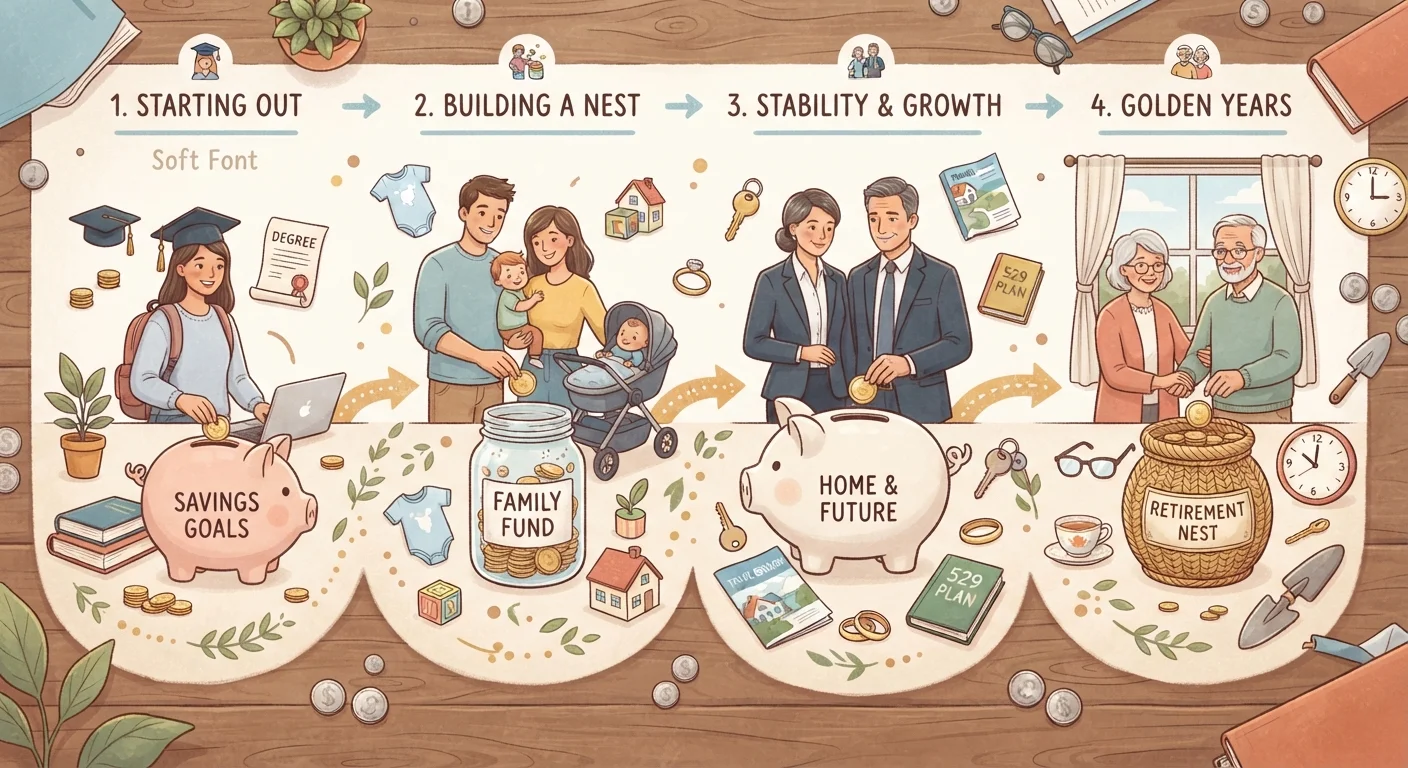
Unlike a certificate of deposit (CD), neither a HYSA nor a traditional savings account locks in your interest rate. When the Federal Reserve adjusts its benchmark rate, banks typically follow - HYSAs often move faster and more dramatically in both directions. A rate that looks attractive today may be lower next quarter, so it's worth reviewing periodically rather than assuming it stays constant. For a broader look at how saving priorities shift over time, see saving strategies across life stages.
It's also worth checking whether your current bank or credit union offers a competitive HYSA product - some institutions provide high-yield tiers for existing customers, which can eliminate the friction of opening an account elsewhere. Compare institutions carefully, and read the fine print on minimum balance requirements or rate tiers.
This article is for general informational and educational purposes only and does not constitute personalized financial, investment, or tax advice. Interest rates, product features, and account terms vary by institution and change over time. Consult a licensed financial professional before making decisions about your savings strategy.