
Why Standard Saving Advice Doesn't Fit Variable Income
Most saving advice assumes a fixed paycheck arriving on the first and fifteenth. For freelancers, gig workers, seasonal employees, and hourly earners with shifting schedules, that assumption breaks down quickly. A rigid monthly savings target can feel impossible during a slow week - and during a flush week, the temptation to spend rather than save is hard to resist without a system in place.
The challenge isn't discipline - it's that most conventional frameworks weren't designed for income variability. What works instead is a flexible, percentage-based approach that scales with your actual earnings. This article walks through exactly how to build that system from scratch.
If you're also working to structure a broader spending plan around unpredictable paychecks, our guide to budgeting on an irregular income pairs well with the steps below.
What you will need
Step-by-Step: Building Your Saving System
The following steps are designed to be implemented in order, though you can adapt the sequence to your current situation. If you already have a separate savings account, skip ahead to Step 2.
Calculate Your Income Floor
Look back at your last 6 to 12 months of earnings and identify the lowest-earning month in that range. That figure becomes your income floor - the conservative baseline you plan around. Building your saving habit on this number means you can always meet your commitments, even in a slow month. In stronger months, you'll simply save more.
Choose a Saving Percentage, Not a Dollar Amount
Rather than committing to saving a fixed dollar figure each month, commit to saving a percentage of every deposit you receive. A common starting range is 10-20%, but the right number depends on your expenses and obligations. The key benefit: when income dips, your saving amount automatically scales down - and when income rises, you save more without any extra effort. This approach is explored further in our guide to lump-sum versus small-contribution saving.
Treat Every Deposit as a Pay Event
Many irregular earners make the mistake of waiting until the end of the month to save whatever is left over. Instead, save a portion each time money hits your account - whether that's a client payment, a gig payout, or a freelance invoice. This approach keeps the habit active and prevents the illusion that a large balance is available to spend freely.
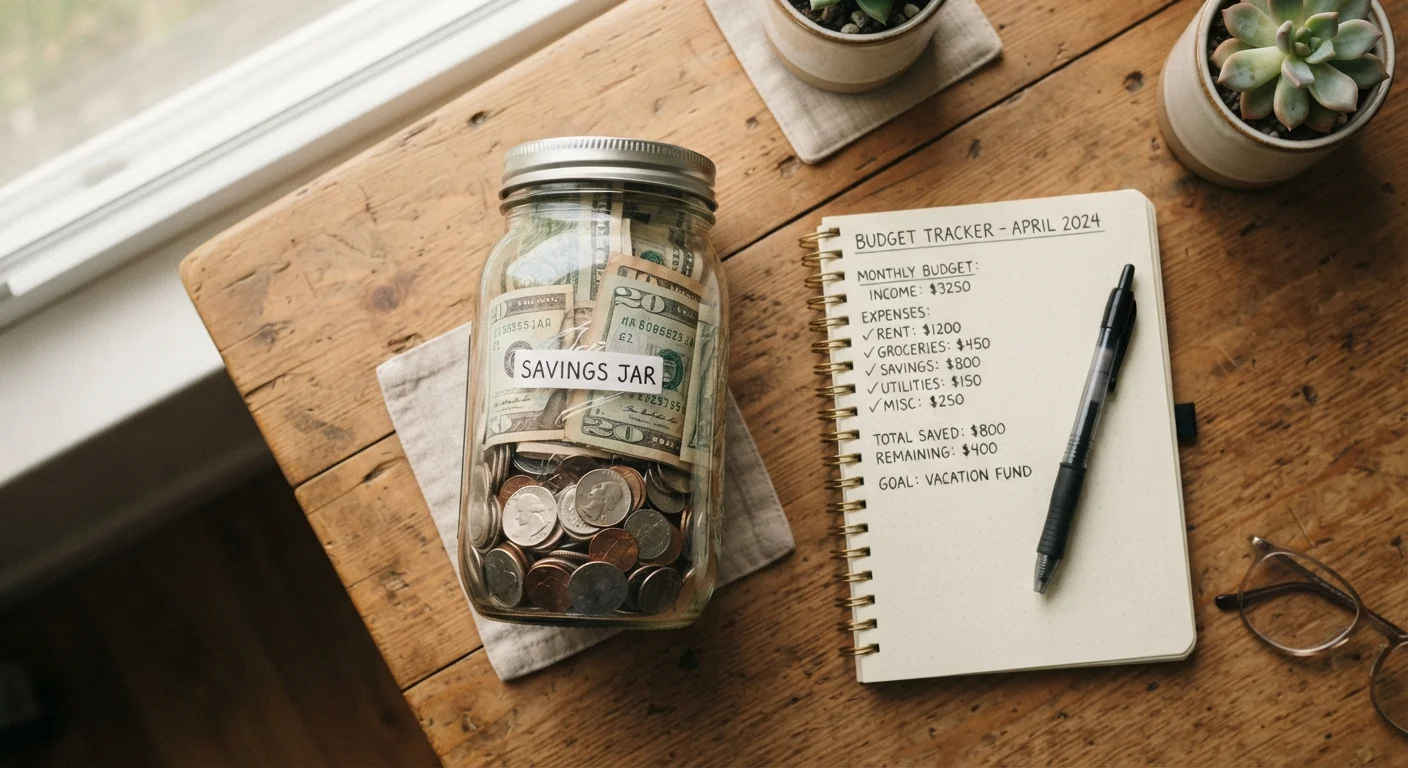
Open a Separate, Dedicated Savings Account
Money that lives in your checking account will be spent. A separate savings account - ideally at a different institution or at least a different account with transfer friction - creates a psychological and practical barrier. Label the account clearly (e.g., "Emergency Fund" or "Income Buffer") so its purpose feels concrete. For guidance on incorporating this into your broader plan, see our article on building an emergency fund into your budget.
Build a Small Buffer Before Targeting Larger Goals
Before focusing on long-term savings goals, prioritize a one-month income buffer - an amount equal to your income floor sitting in your savings account. This buffer smooths over the gaps between payments and prevents you from going into debt during slow periods. Once the buffer is established, you can direct additional savings toward other goals with more confidence.
Review and Adjust Every Quarter
Irregular income patterns shift over time. Set a recurring calendar reminder every three months to review your income floor, your saving percentage, and whether your buffer is still adequate. If you've had a strong run, consider increasing your percentage slightly. If a slow season is coming, make sure your buffer is fully topped up. This review habit is a cornerstone of the routines covered in our piece on habits that keep a budget working long-term.
Don't Skip Tax Set-Asides
If you're self-employed or a gig worker, you are likely responsible for paying estimated taxes quarterly. Before routing money into savings, make sure you're setting aside an appropriate portion for tax obligations. Failing to do so can result in penalties and an unexpected tax bill. A tax professional can help you estimate the right amount for your situation.
Automate the Moment Money Arrives
Many banks allow you to set up automatic transfers triggered by incoming deposits. Even a small automatic transfer - set as a percentage rather than a fixed amount - removes the decision from the equation. The less you have to consciously choose to save, the more consistently you will.
Watch out for spending triggers that quietly undermine saving goals - emotional spending and environmental cues are especially powerful when income feels uncertain. Awareness of these patterns strengthens any saving system you build.
This Is General Financial Information
The strategies in this article are educational and intended for general audiences. They are not personalized financial advice. Your situation - including tax obligations, debt, and cash flow - is unique. Consider consulting a licensed financial adviser before making significant changes to your saving or budgeting approach.
This article is for general informational and educational purposes only. It does not constitute personalized financial, tax, or legal advice. Consult a qualified financial professional before making decisions based on your specific circumstances.