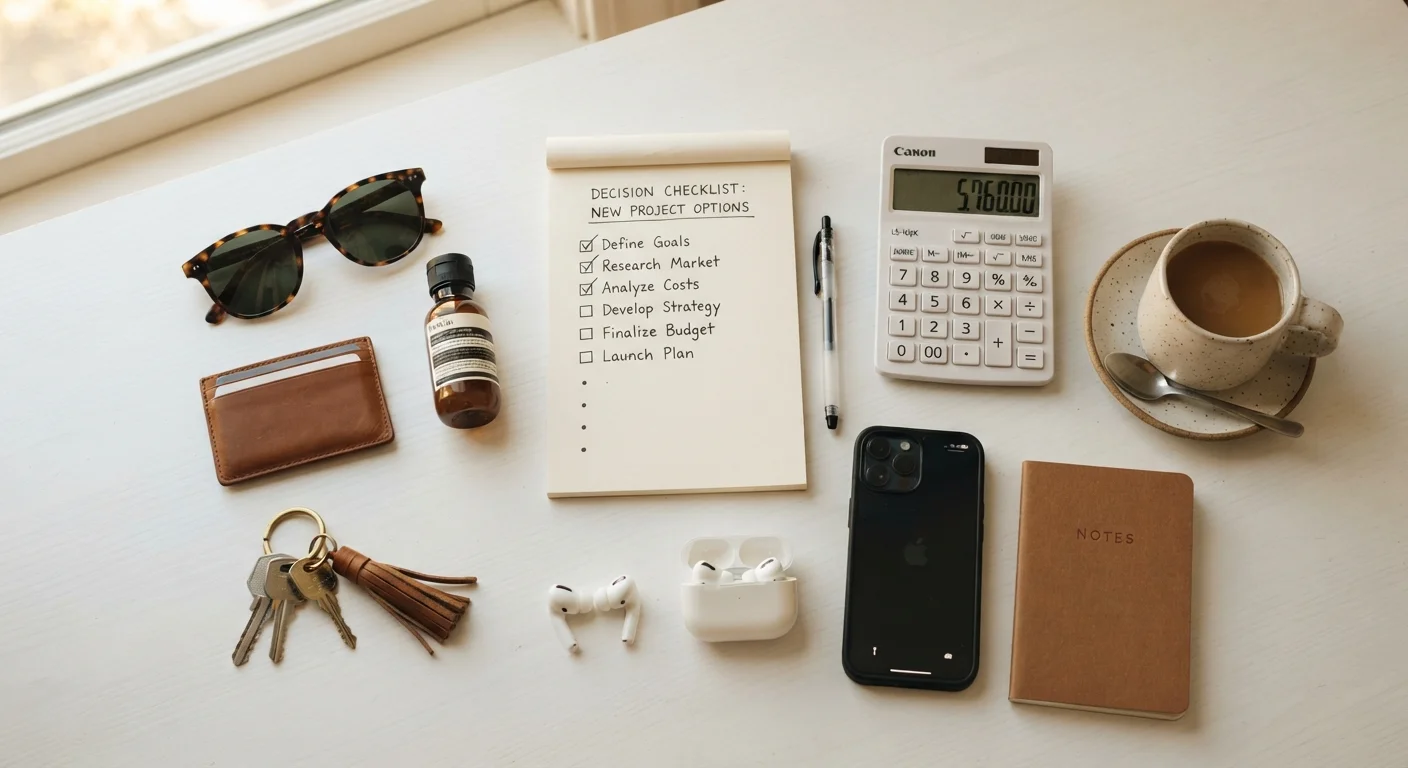

Why Some People Almost Never Have Buyer's Remorse
Most of us have experienced the deflating feeling of spending money on something we didn't really need - or that didn't deliver what we expected. But some consumers seem to sidestep this trap consistently. The difference isn't luck or income level. It's a set of repeatable habits applied before, during, and after every purchase.
Research in behavioral economics consistently shows that purchase regret stems less from what we buy and more from how we decide to buy it. Understanding those decision habits - and building them into your own routine - is the foundation of smarter, more satisfying spending. For a deeper look at what drives impulsive choices, see the psychology behind overspending.
The Core Habits That Separate Satisfied Buyers
These aren't complicated strategies. They're mental checkpoints that low-regret buyers apply consistently - even for everyday purchases.
Define the actual need before evaluating any specific item
Shoppers who start with a product rather than a problem often over-buy or buy the wrong thing entirely. Naming the specific gap you're trying to fill - not the item you're drawn to - keeps the evaluation honest and targeted.
Set a firm budget ceiling before you start shopping
Without a number established in advance, buyers are vulnerable to anchoring - where the first price they see reshapes what feels 'reasonable.' A pre-set ceiling prevents scope creep and eliminates post-purchase rationalization.
Apply a mandatory wait period to all non-urgent purchases
Impulse purchases feel urgent in the moment, but that urgency almost always fades. A 24-48 hour pause gives emotional arousal time to subside, allowing a clearer assessment of actual versus perceived need.
Calculate cost-per-use rather than focusing on sticker price
A $20 item used once is more expensive in practice than a $100 item used 200 times. Framing cost as a rate - price divided by expected uses - consistently leads to higher satisfaction because it aligns spending with actual utility.
Read critical reviews, not just top-rated ones
Five-star reviews confirm what you already want to hear. One- and two-star reviews reveal actual failure modes - durability problems, sizing inconsistencies, misleading descriptions - that predict whether a purchase will disappoint.
Check your purchase against your broader financial priorities
Even an individually reasonable purchase can be a poor decision if it competes with a savings goal or creates friction in your budget. Low-regret buyers see each purchase in context, not in isolation.
For a structured framework to apply these habits across any spending category, the complete guide to evaluating any purchase decision walks through each dimension in detail.
Quick Actions You Can Start Using Today
You don't need to overhaul your entire relationship with money to spend better. A few targeted actions, applied consistently, can meaningfully shift the quality of your purchase decisions starting with your very next buy.
If you want to go deeper on categorizing purchases before committing, the needs, wants, and nice-to-haves framework gives you a practical three-tier system for any decision.
The Habit That Ties Everything Together
All of these practices share a common thread: they introduce a deliberate pause between desire and action. That pause - whether it's 10 minutes or 48 hours - is where good decisions are made.
The 'Would I Buy This Again?' Test
When evaluating a purchase in the moment, project yourself forward: imagine you've owned this item for three months. Would you buy it again knowing what you know now? If the answer isn't a clear yes, that hesitation is worth taking seriously. This simple mental simulation cuts through the excitement of novelty and grounds your decision in likely reality.
It also helps to periodically look back. Low-regret buyers often do a quick monthly review of recent purchases, asking: Did this deliver what I expected? Would I buy it again? Over time, these reflections reveal personal spending patterns - categories where you consistently overspend, items that consistently underdeliver, and areas where your purchases genuinely add value.
Cognitive shortcuts like anchoring and the sunk cost fallacy can quietly undermine even well-intentioned buyers. Understanding them is worthwhile - see how cognitive biases skew spending for a practical breakdown. And if you're applying these habits to a specific area like clothing, the principles translate directly - everyday fashion guidance can help you build a wardrobe with fewer regrets too.
This article is for general informational and educational purposes only and does not constitute personalized financial advice. Consult a qualified financial professional for guidance specific to your situation.