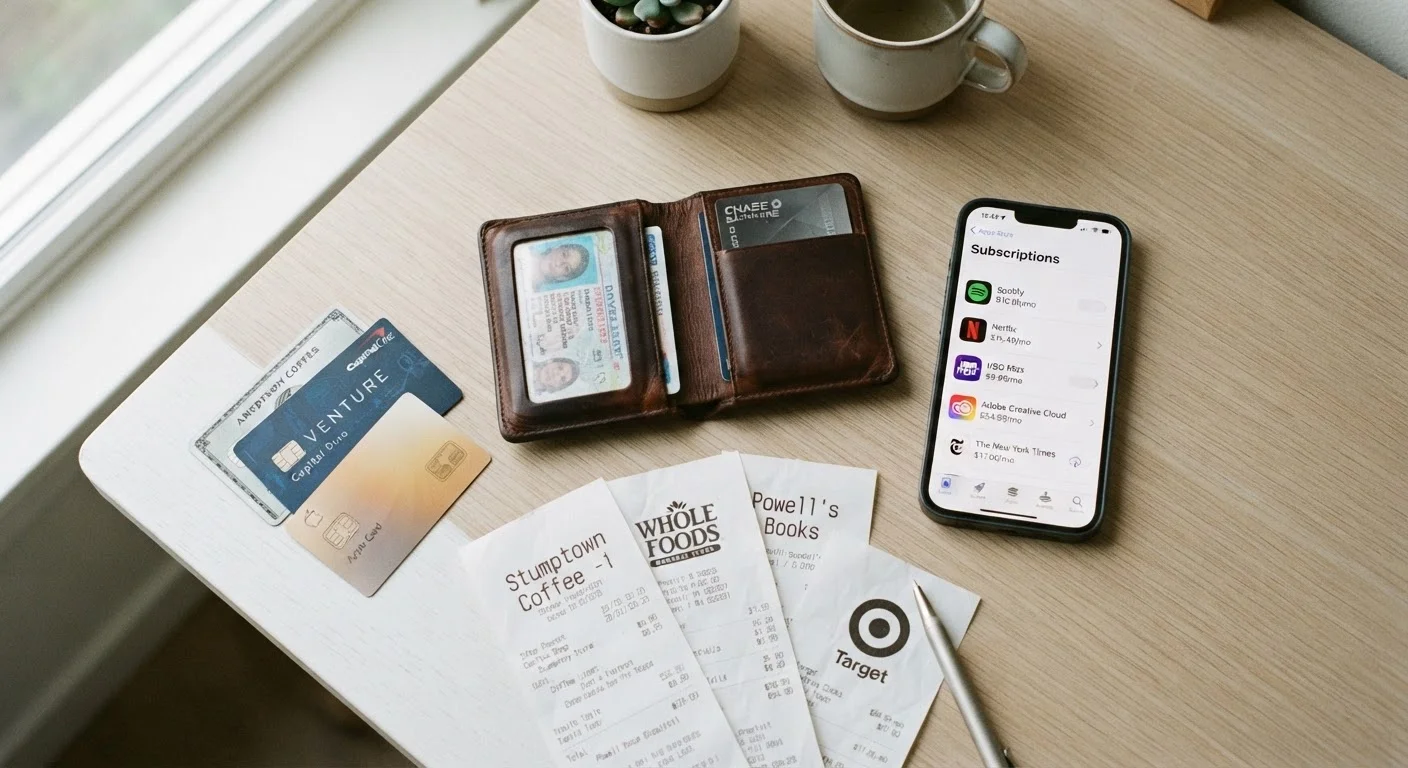

Your Brain Is Not Wired to Be Frugal
Overspending isn't a character flaw - it's a predictable outcome of how the human brain processes decisions under conditions of choice, emotion, and social pressure. The same mental shortcuts that helped our ancestors make fast survival decisions now work against us in a retail environment engineered to exploit them.
At the core is a tension between two modes of thinking: fast, automatic, emotionally-driven responses versus slower, more deliberate reasoning. Most purchase decisions - especially small ones - happen in the fast lane. You see, you feel, you buy. The deliberate part of your brain rarely gets a vote.
This isn't a new discovery. Behavioral economists have spent decades documenting how predictably irrational humans are with money. For a deeper look at how specific cognitive biases distort spending choices, see how cognitive biases skew your spending.
“The best way to change long-term behavior is to change the environment, not the person. Willpower is overrated as a tool for financial discipline.”
— Richard Thaler, Nobel Prize-winning behavioral economist and co-author of 'Nudge'
The Most Common Psychological Triggers
Understanding why you overspend starts with identifying which triggers affect you most. These tend to fall into three categories:
- Emotional triggers: Stress, boredom, loneliness, and even excitement can all activate spending as a form of self-regulation. The temporary mood boost a purchase provides is real - but short-lived, often followed by regret.
- Social triggers: Comparison with peers, social media exposure, and the desire to signal status or belonging push many consumers toward purchases they wouldn't make in isolation.
- Environmental triggers: Store layouts, website design, scarcity messaging, and default subscription settings are all engineered to reduce the friction between desire and purchase. These aren't accidental - they're deliberate.
The spending triggers that quietly undermine saving goals article explores how these forces compound over time and chip away at financial progress.
~33%
Of purchases made on impulse
Various consumer surveys over the past decade have consistently found that roughly one in three purchases is unplanned, with the figure rising significantly in online shopping environments.
5-10 min
Average duration of post-purchase mood boost
Behavioral research on 'retail therapy' suggests that the emotional benefit of impulse purchases is typically brief, often giving way to neutral or negative feelings within minutes to hours.
$314/mo
Average American's impulse spending estimate
A Slickdeals survey cited by multiple personal finance outlets found U.S. consumers self-reported spending an average of roughly $314 per month on unplanned purchases, though self-reported figures may undercount actual amounts.
What Retailers Know That You Might Not
Modern retail - physical and digital - is built around behavioral science. A few of the most widely used tactics include:
- Price anchoring: Showing a high 'original' price next to a lower current price creates the perception of a deal, even when the reference price is inflated or arbitrary.
- Artificial scarcity: 'Only 3 left in stock' or countdown timers trigger loss aversion - the fear of missing out - which accelerates decisions and bypasses careful evaluation.
- Bundling: Grouping items together can obscure the individual cost of things you wouldn't otherwise purchase separately.
- Frictionless checkout: One-click purchasing, saved payment methods, and autoplay remove the natural pause points that previously slowed impulse decisions.
Being aware of these mechanics doesn't make you immune, but it does give you a moment of recognition - and a moment is often enough. For a broader look at everyday traps, see spending traps hidden in plain sight.
Create Friction Before You Click 'Buy'
One of the simplest habit changes is removing saved credit card information from retail websites and apps. The extra 60 seconds needed to re-enter payment details is often enough to interrupt an impulse decision and give your deliberate thinking a chance to weigh in. Small friction, consistently applied, adds up to significant savings over time.
Practical Interventions That Actually Work
Changing spending behavior isn't about sheer willpower - it's about redesigning your decision-making environment so that the deliberate part of your brain has more opportunity to participate.
- Introduce a waiting period. A 24-hour pause before non-essential purchases is one of the most consistently effective habits. Many times, the desire simply fades.
- Use a purchase checklist. Before buying, ask: Do I need this or just want it right now? Do I already own something that serves this purpose? Can I afford this without adjusting other plans?
- Audit your environment. Unsubscribe from promotional emails. Remove saved payment information from retail sites. Unfollow accounts that consistently trigger spending urges.
- Track patterns, not just amounts. Reviewing when and why you spend - not just how much - reveals the emotional triggers at work. Many free budgeting tools support this kind of categorical analysis.
For a structured starting point, the beginner's roadmap to smarter spending covers the core habits and mental models that underpin intentional spending. And when you're ready to evaluate any specific purchase with more rigor, the complete guide to evaluating any purchase decision walks through each dimension in detail.
This article is for general informational and educational purposes only and does not constitute personalized financial, psychological, or legal advice. For guidance specific to your situation, consult a qualified financial advisor or licensed professional.