Why Spending Traps Are So Hard to See
Most budget problems aren't caused by one big, reckless purchase. They're caused by dozens of small, reasonable-seeming decisions that quietly compound. Spending traps work precisely because they feel normal - even smart - in the moment. Understanding why they're effective is the foundation of avoiding them.
Retailers, app developers, and service providers design pricing structures that exploit predictable human tendencies: our preference for certainty, our aversion to small losses, and our tendency to evaluate deals in relative rather than absolute terms. These aren't character flaws - they're documented patterns of human decision-making. Once you recognize them, they lose much of their power.
For a broader framework on building intentional spending habits, see our beginner's spending roadmap. And if you suspect emotion plays a role in your purchases, the psychology behind overspending explores those behavioral triggers in depth.
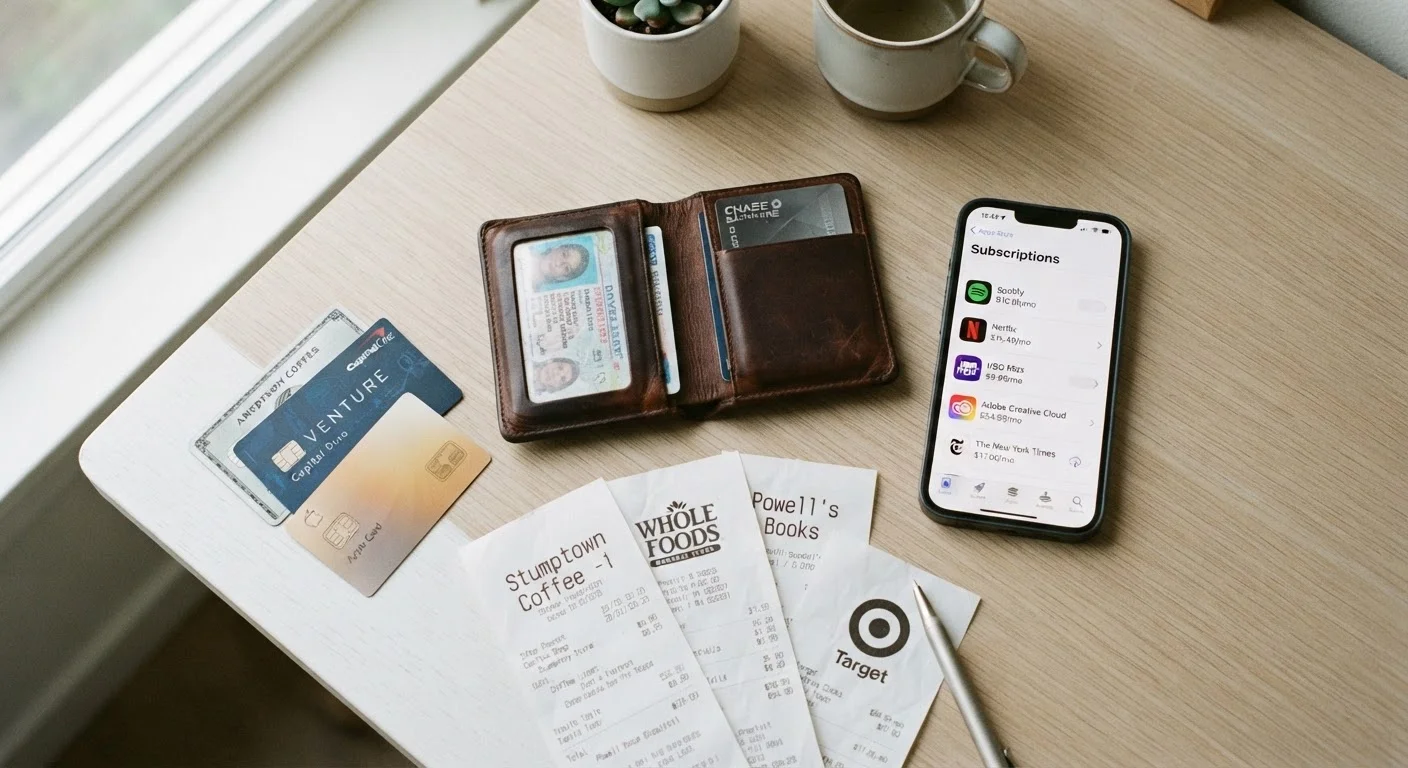
Letting subscription creep go unchecked - accumulating streaming, app, and membership charges that individually seem trivial but collectively drain hundreds of dollars per year.
Why it happens: Each subscription is signed up for a specific reason, and canceling requires deliberate action. Small monthly fees rarely trigger spending alarms the way a single large purchase does.
Treating bundles as automatic savings - buying a package deal that includes services you don't need because the headline price looks lower than the sum of parts.
Why it happens: Bundled pricing is marketed as a discount, which makes the value feel obvious. Most people never calculate the per-service cost of what they'll actually use versus what they're paying for.
Routinely paying a convenience premium - choosing delivery, one-click purchasing, or pre-packaged options when a minor shift in behavior would eliminate the extra cost.
Why it happens: Convenience fees are framed as small ("just $3.99 for delivery") and are presented at a moment when you've already committed to the purchase decision emotionally.
Anchoring to a sale price instead of evaluating whether you need the item at all - buying something because it's discounted rather than because it serves a real purpose.
Why it happens: Retailers present original prices alongside sale prices to make the discount feel like a gain. The brain responds to "saving $40" without fully registering that spending $60 is still $60 out of your account.
Ignoring automatic price increases on annual or monthly services - staying on a plan long after it's been quietly bumped up from the rate you originally agreed to.
Why it happens: Price increase notices are often buried in email or in-app notifications. Most people don't audit what they're currently paying versus what they signed up to pay.
The Patterns - and How to Break Them
Recognizing a trap is only half the work. The other half is building a concrete habit that makes falling back in harder. Each of the mistakes above has a practical countermeasure you can apply without overhauling your entire financial life.
$219/mo
Average underestimate of monthly subscription spend
A 2022 C+R Research survey found that consumers underestimated their monthly subscription spending by an average of $219 compared to their actual charges.
84%
Americans with at least one forgotten subscription
The same C+R Research study found that 84% of respondents had at least one subscription they had forgotten about but were still being charged for.
Start with a spending audit. Pull three months of bank and credit card statements and tag every charge by category. You'll almost certainly find recurring costs you'd forgotten - and some you genuinely can't remember authorizing. For a structured approach, our subscription audit guide walks through the full process.
Next, address the psychological layer. Cognitive biases like anchoring - where you judge a $60 item as a bargain because it was originally $120 - are explored in detail in our piece on cognitive biases that skew spending. Environmental and emotional spending cues deserve equal attention; spending triggers that undermine saving is a useful companion read.
Small Charges Add Up Faster Than You Think
Five $10-per-month subscriptions equal $600 per year. Add convenience fees, price-anchored impulse buys, and auto-renewing plans, and it's common for households to lose $1,000 or more annually to spending traps - without ever making a single obviously reckless purchase. Addressing these patterns isn't about deprivation; it's about directing money toward things that genuinely matter to you.
Finally, apply the same scrutiny to recurring household costs. Utility bills and service contracts are frequent sources of ongoing overspend that rarely get reviewed. Our article on energy bills and everyday utilities identifies the most common structural and behavioral culprits. For a complete framework on saving across spending categories, explore the Saving Strategies hub and Budgeting Basics hub.
This article is for general informational and educational purposes only and does not constitute personalized financial advice. Consult a qualified financial professional before making significant changes to your budget or financial plan.