Why Skincare Myths Stick Around
Skincare advice travels fast - through social media, family wisdom, and beauty marketing - and not all of it holds up to scrutiny. Some of these beliefs have been circulating for decades, long after dermatological research has quietly moved on. The result? Many of us are either doing too much, spending too much, or skipping steps that actually matter.
The good news: once you know what the evidence actually says, building an effective routine gets a lot simpler and a lot cheaper. Before we dig in, a quick note - this article is general skin-health education, not a substitute for advice from a board-certified dermatologist, especially if you're managing a skin condition.
Myths aren't unique to beauty, of course. If you've ever wondered how misinformation takes hold in other areas of daily life, our piece on nutrition myths that have outlasted the science shows the same pattern playing out at the dinner table.
Myth
Steam opens your pores and cold water closes them - so you can control pore size with temperature.
Fact
Pores don't have muscles and cannot open or close. They are fixed structures in the skin.
This is one of the most persistent myths in skincare. Warmth can soften the debris inside a pore, making it easier to cleanse - but it doesn't physically dilate anything. Similarly, a cold rinse may temporarily make skin look tighter, but pore size is largely determined by genetics and skin type. Consistent cleansing and certain ingredients like niacinamide may help pores appear smaller over time by keeping them clear.
Myth
If your skin is oily, you should skip moisturizer - adding more moisture will just make it worse.
Fact
Oily skin still needs hydration; skipping moisturizer can cause the skin to overproduce oil to compensate.
Oiliness and hydration are not the same thing. Oil (sebum) is produced by sebaceous glands, while hydration refers to the water content of skin cells. When the skin barrier is dehydrated, it can signal the sebaceous glands to ramp up production - making oiliness worse, not better. Lightweight, non-comedogenic moisturizers are generally well-tolerated even by oily skin types.
Myth
You only need sunscreen on sunny days or when you're going to be outdoors for a long time.
Fact
UV radiation - particularly UVA - penetrates clouds and glass and contributes to skin damage year-round.
UVB rays, responsible for visible sunburns, are stronger in summer and direct sunlight. But UVA rays, which penetrate more deeply and are associated with photoaging, are present at relatively consistent levels throughout the year and pass through windows. Dermatology organizations consistently recommend daily broad-spectrum SPF 30 or higher as a baseline, regardless of season or weather.
Myth
"Natural" or "clean" skincare ingredients are always safer and gentler than synthetic ones.
Fact
The source of an ingredient - natural or synthetic - does not determine its safety or effectiveness.
Poison ivy is natural. So is formaldehyde. Meanwhile, many synthetic compounds are carefully engineered to be stable, gentle, and effective. What matters is the ingredient itself, its concentration, and how your individual skin responds. Some plant-derived ingredients - like certain essential oils and citrus extracts - are common skin sensitizers. Always consider the full formulation rather than relying on marketing labels like "clean" or "natural," which have no standardized regulatory definition in the U.S.
Myth
A more expensive skincare product will always deliver better results than a drugstore version.
Fact
Price reflects branding, packaging, and marketing - not necessarily ingredient quality or efficacy.
Many active ingredients (retinol, hyaluronic acid, niacinamide, glycolic acid) are available at a wide range of price points. Clinical evidence supports the ingredient and its concentration, not the brand name on the bottle. That said, formulation matters - how ingredients are combined and stabilized affects performance. The takeaway: read ingredient lists rather than price tags, and don't assume luxury equals effectiveness.
Building a Routine That's Actually Based in Reality
Cutting through the noise comes down to a few reliable principles. First, identify your actual skin type before buying anything - many people are treating the wrong concern entirely. Our guide on identifying your real skin type walks through a straightforward self-assessment that doesn't require a single product purchase.
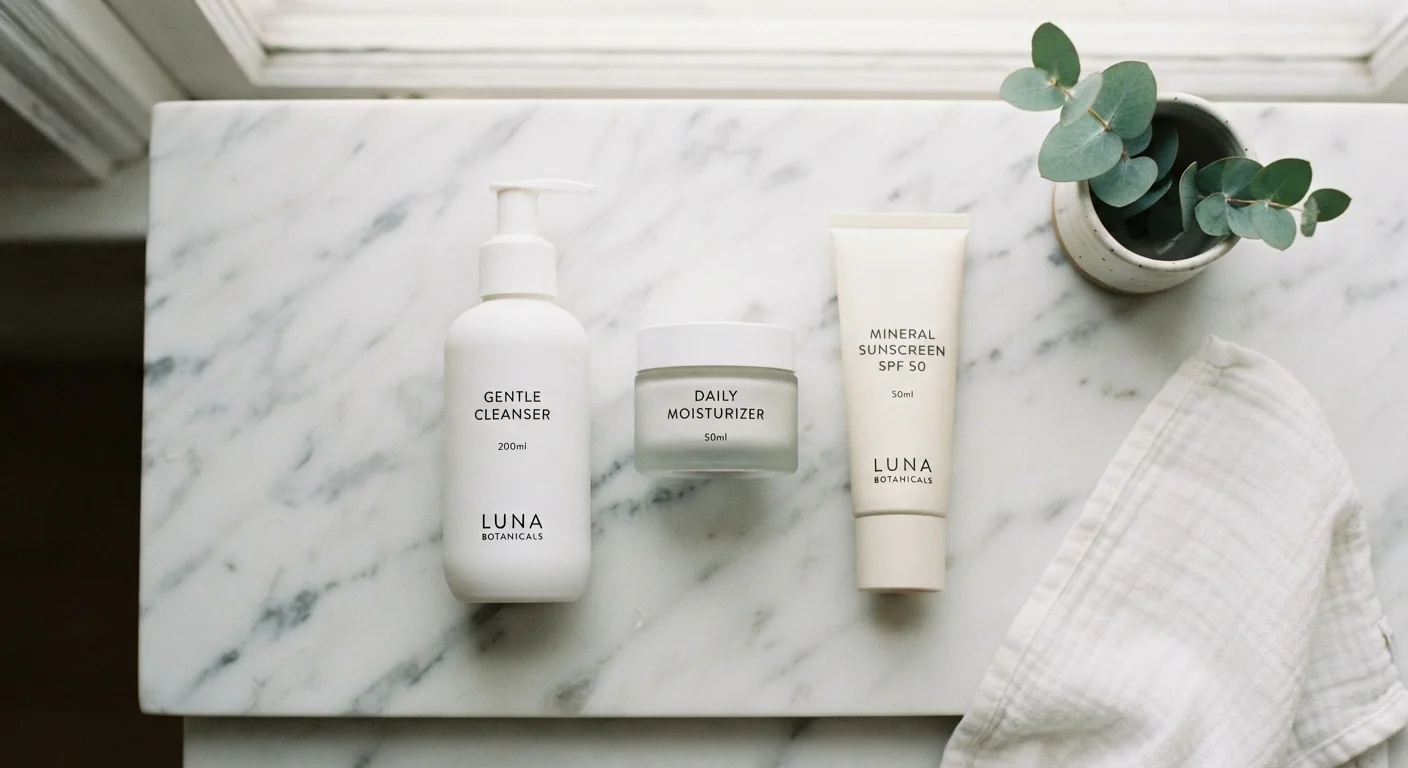
Second, a shorter routine done consistently will outperform an elaborate one done sporadically. Dermatologists generally agree that a cleanser, moisturizer, and broad-spectrum SPF 30+ cover the fundamentals for most people. Everything else is optional and should be added intentionally, not because of a trending ingredient.
Third, if a product isn't working for you after four to six weeks of consistent use, it's worth reconsidering - but don't abandon a routine after three days. Skin cell turnover takes time, and real results rarely happen overnight, no matter what the packaging implies.
90%
Of visible skin aging attributed to UV exposure
According to the Skin Cancer Foundation, cumulative sun exposure - including incidental daily exposure - accounts for the vast majority of photoaging.
~28 days
Average skin cell turnover cycle in adults
Dermatologists note that this cycle slows with age, which is why new topical treatments typically need four to six weeks of consistent use before results are apparent.
Finally, if you're struggling with persistent dryness, a common culprit is how you're applying - or choosing - your moisturizer. Our article on why your moisturizer isn't fixing your dry skin covers the most frequent missteps in detail.
This article is for general informational purposes only and is not medical or dermatological advice. Consult a qualified healthcare professional for personalized guidance about your skin.