
What the Check Engine Light Actually Monitors
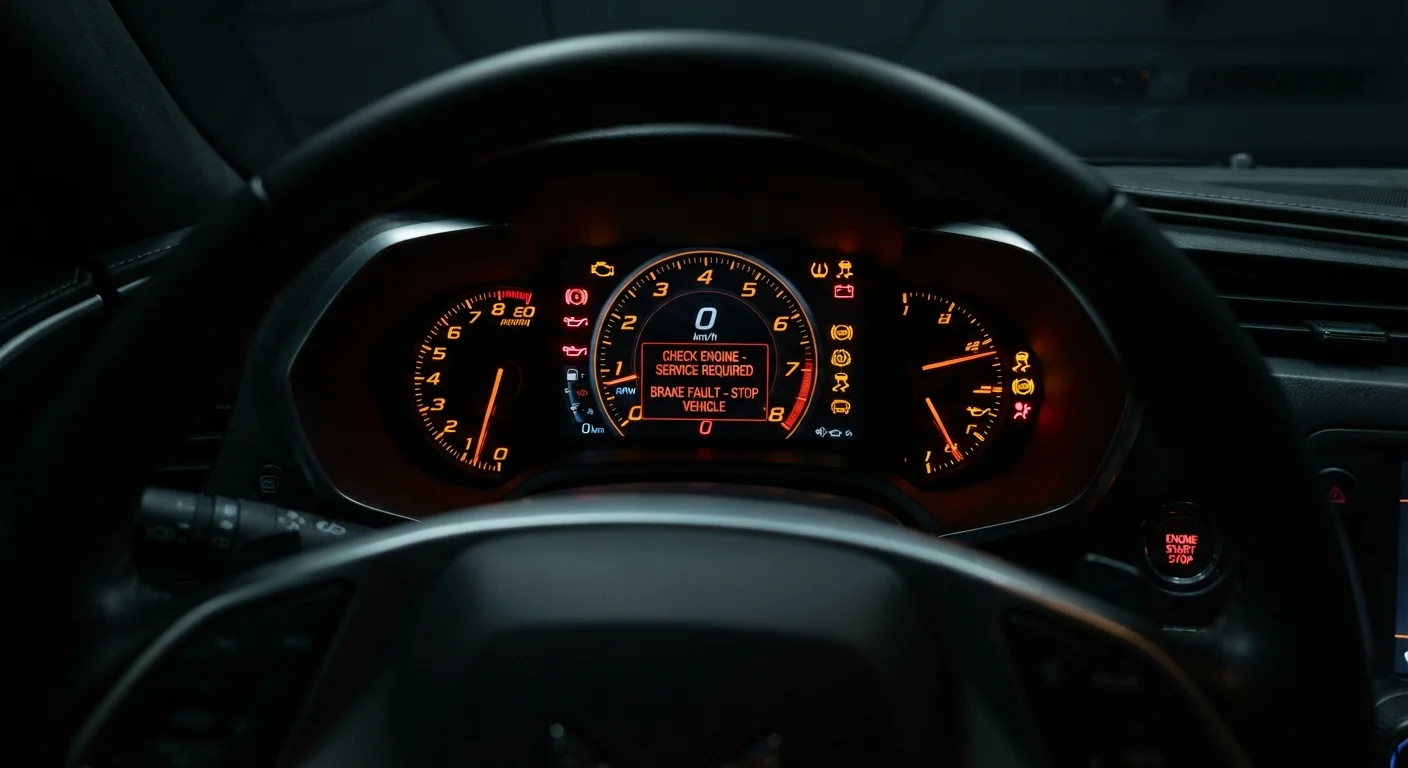
The check engine light - formally called the Malfunction Indicator Lamp (MIL) - is part of your vehicle's onboard diagnostic system, known as OBD-II. This system has been federally required on all cars sold in the U.S. since 1996. It continuously monitors dozens of sensors tied to your engine, transmission, and emissions equipment.
When any sensor reading falls outside its expected range, the system logs a diagnostic trouble code (DTC) and triggers the light. Because the system watches so many components simultaneously, a single illuminated light can represent hundreds of different fault conditions - ranging from trivially simple to genuinely serious.
Understanding that range is the first step toward responding appropriately rather than either panicking or dismissing it. For a broader look at what your dashboard is communicating, see the complete dashboard warning light guide.
Myth
If the check engine light comes on, you need to pull over immediately and stop driving.
Fact
A steady check engine light rarely requires an immediate stop - but a flashing light does.
A steady MIL means a fault has been detected and stored, but it doesn't automatically mean your engine is in immediate danger. If your car is running normally - no unusual sounds, smells, or loss of power - it is generally safe to drive to a repair shop within the next day or two. A flashing light is a different situation: it signals an active misfire that can rapidly overheat and destroy the catalytic converter, a repair that can cost well over $1,000. In that case, limiting driving and seeking prompt service is warranted.
Myth
A check engine light always means something expensive is wrong.
Fact
Some of the most common causes - like a loose gas cap - cost nothing to fix.
A loose, cracked, or missing fuel cap is one of the most frequent check engine triggers. It allows fuel vapors to escape the sealed emissions system, which the EVAP (Evaporative Emission Control System) sensors detect. Tightening or replacing the gas cap and driving a few cycles can clear this code entirely. Other low-cost causes include a faulty oxygen sensor wire, a stuck thermostat, or minor vacuum leaks. Expense depends entirely on what the diagnostic reveals - not on the light itself.
Myth
You can clear the check engine light yourself and the problem goes away.
Fact
Clearing the code removes the symptom, not the underlying fault - which will likely return.
Disconnecting the battery or using a scan tool to erase codes will turn the light off temporarily. However, if the underlying condition still exists, the code will reappear - often within a short drive cycle. More importantly, erasing codes also resets your vehicle's readiness monitors, which are the self-tests used during emissions inspections. A recently cleared vehicle may fail an emissions test not because of the original fault, but because the monitors haven't had time to complete their cycles. Address the root cause; don't just erase the evidence.
Myth
The check engine light covers all warning lights, so other lights aren't as important.
Fact
Each dashboard warning light monitors a separate system - some are far more urgent than the check engine light.
The check engine light is specific to the engine management and emissions systems. Other lights - oil pressure, temperature, brake system, battery - monitor entirely separate critical systems and can indicate conditions that require an immediate stop. An oil pressure warning, for instance, should prompt you to shut the engine off as soon as it's safe to do so, as running without adequate oil pressure can cause irreversible engine damage within minutes. Never assume the check engine light is the most serious indicator on your dashboard.
Steady vs. Flashing: A Distinction That Matters
One of the most practical pieces of information your check engine light conveys is its behavior. A steady, continuous light generally indicates a stored fault that needs attention but doesn't require you to immediately pull off the road. A flashing or blinking light, however, is a different signal entirely - it typically indicates an active engine misfire serious enough to damage the catalytic converter within minutes of continued driving.
A Flashing Light Requires Prompt Action
If your check engine light is blinking or flashing rather than glowing steadily, treat it as an urgent warning. An active engine misfire can damage the catalytic converter in a matter of minutes of sustained driving. Reduce speed, avoid hard acceleration, and have the vehicle inspected by a mechanic as soon as possible - ideally the same day.
If your check engine light is flashing, reduce your speed, avoid heavy acceleration, and have the vehicle inspected as soon as possible - ideally that day. If the light is steady and the car feels and sounds normal, you have a reasonable window to schedule a diagnostic appointment without treating it as a roadside emergency.
Keeping up with scheduled service intervals also reduces the likelihood of surprise warning lights. The maintenance intervals that actually matter is a useful reference for knowing what to prioritize.
~1 in 3
Cars on U.S. roads with an active check engine light
Various automotive service industry surveys have consistently estimated that roughly one-third of vehicles in operation have an illuminated check engine light at any given time.
$200-$400
Typical cost of an oxygen sensor replacement
Oxygen sensor faults are among the most common check engine triggers; replacement cost varies by vehicle make and labor rates in your area.
Getting a Real Answer: The OBD-II Scan
Guessing at the cause of a check engine light is inefficient and potentially expensive. The only reliable way to identify the fault is to read the stored diagnostic trouble code using an OBD-II scanner. Many auto parts retailers offer this scan free of charge at the counter. Scan tools are also available for consumer purchase at a range of price points, and some vehicles now display fault information directly through a connected smartphone app.
Keep in mind: a trouble code points to a system or circuit, not necessarily a specific failed part. For example, an oxygen sensor code might indicate a bad sensor - or it could reflect a vacuum leak or exhaust issue affecting that sensor's readings. A qualified mechanic uses the code as a starting point for diagnosis, not a final verdict. Relying solely on the code to replace parts without further testing is a common and costly mistake.
This article is for general informational purposes only. For diagnosis, repair decisions, or any safety concerns related to your vehicle, consult a qualified, licensed mechanic.