
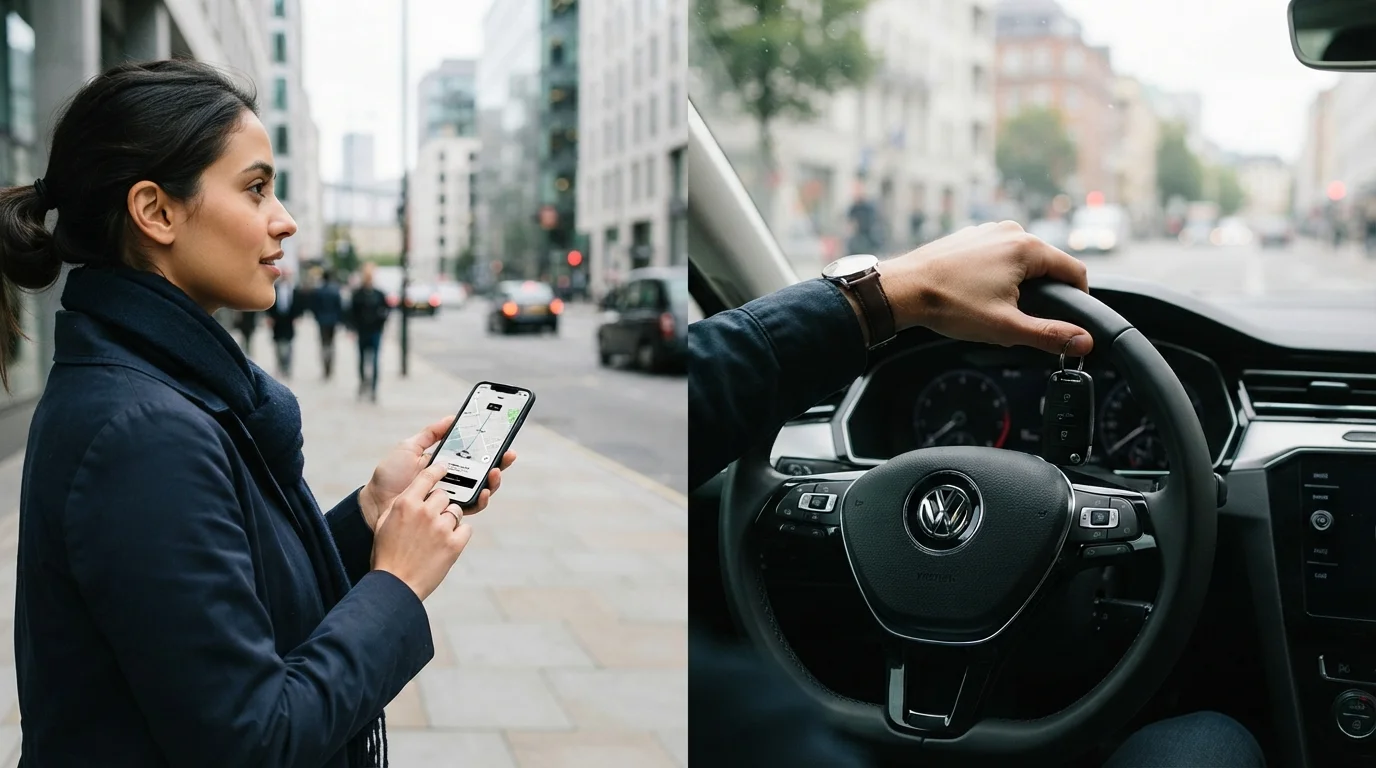
The Real Cost of Each Option
Before comparing lifestyle fit, it helps to understand what each option actually costs. Personal vehicle ownership is routinely underestimated because expenses are spread across the year and easy to overlook individually. According to AAA's annual driving cost studies, the average American spends roughly $10,000-$12,000 per year owning and operating a vehicle - covering loan payments or depreciation, insurance, fuel, maintenance, registration, and parking.
Rideshare costs depend almost entirely on how much you use it. At average per-mile rates (which vary by city, time of day, and service level), a daily commuter relying exclusively on rideshare in a mid-size city could spend $500-$800 per month - comparable to or exceeding full car ownership costs. But a low-mileage user making only occasional trips might spend a fraction of that.
$10,728
Average annual vehicle ownership cost
AAA's annual Your Driving Costs study consistently estimates total ownership costs in the $10,000-$12,000 range for a typical new vehicle.
5,000-7,000 mi
Approximate rideshare break-even mileage
Transportation researchers generally estimate rideshare becomes cost-competitive with ownership below this annual mileage threshold, depending on city and service.
The break-even threshold for most households sits somewhere between 5,000 and 7,000 miles per year. Below that, rideshare-only may pencil out. Above it, ownership generally wins on cost - though not always on convenience or stress. For a deeper look at what car-free budgeting looks like in practice, see structuring a car-free budget.
How Geography Changes the Equation
Where you live may be the single most important variable. In dense urban environments - think Manhattan, central Chicago, or San Francisco - car ownership carries punishing hidden costs: monthly parking can run $200-$500 or more, traffic increases fuel and wear costs, and insurance rates are elevated. Transit and rideshare often fill the gap effectively.
In suburban and rural areas, the picture inverts. Public transit is sparse or nonexistent, distances between destinations are longer, and rideshare surcharges for low-density markets make on-demand rides less practical. Ownership is often not optional - it's a necessity.
| Factor | Personal Vehicle | Rideshare-Only | |
|---|---|---|---|
| Annual cost (typical) | $10,000-$12,000 all-in | Varies widely by usage | |
| Best geography | Suburban and rural areas | Dense urban cores | |
| Flexibility and control | High - depart on your schedule | Moderate - dependent on driver availability | |
| Surge pricing risk | None | High during peak or bad weather | |
| Upfront financial commitment | High (purchase or lease) | None | |
| Family and cargo practicality | Strong | Limited or costly | |
| Parking burden | Owner's responsibility | None |
If you're evaluating a potential move and want to assess a city's mobility infrastructure before committing, this guide to evaluating a city's transit network offers a useful checklist. For a broader map of all available mobility options, Beyond Car Ownership walks through every alternative available to American commuters today.
Lifestyle Factors That Don't Show Up on a Spreadsheet
Cost analysis alone doesn't capture the full picture. Consider these practical dimensions:
- Schedule predictability: Rideshare works well when your timing is flexible. Surge pricing at rush hour, concert ends, or during bad weather can make it unreliable or expensive precisely when you need it most.
- Cargo and passengers: Families hauling kids, gear, groceries, or pets will find rideshare impractical or costly for routine trips. A personal vehicle is simply more functional for complex, high-load travel.
- Autonomy: Owning a vehicle means departing on your schedule, not waiting for a driver. For people with demanding or unpredictable schedules, the reliability of a personal car has real economic and emotional value.
- Stress and mental load: Some people find driving stressful and prefer being a passenger. Others find waiting for rides or depending on apps more anxiety-inducing. Neither preference is wrong - but it should inform the decision.
Track Before You Commit
Before switching strategies, spend 30 days logging every trip - distance, purpose, time of day, and cost. This exercise often reveals that your actual driving patterns differ significantly from your assumptions. Real data makes the cost comparison far more accurate than generalizations, and may point toward a hybrid model you hadn't considered.
For those who drive only occasionally but still need a vehicle sometimes, carsharing vs. car rental can offer a useful middle path without the fixed costs of ownership.
Building a Framework for Your Decision
Rather than treating this as a binary choice, most people benefit from mapping their actual driving patterns first. Track your trips over a month - how many, how far, at what times, and for what purposes. Then estimate realistic annual costs for each scenario using your specific geography and usage.
A hybrid approach is increasingly common and often practical: own a vehicle for regular commuting, family logistics, or longer trips, and use rideshare selectively for downtown outings, airport runs, or nights when you don't want to drive. This is different from assuming you need to pick one mode exclusively.
It's also worth considering how your lifestyle may evolve. A single person in a walkable city today might eventually have different needs with a family or a suburban job. Building flexibility into your transportation strategy - rather than locking into assumptions - tends to serve people better over time. The Car Ownership Basics hub covers the fundamentals every driver should understand when evaluating whether ownership makes sense for their situation.
This article provides general information for educational purposes and does not constitute financial or transportation planning advice. Costs cited are illustrative estimates that vary significantly by region, vehicle type, and individual circumstances. Consult relevant professionals for decisions specific to your situation.